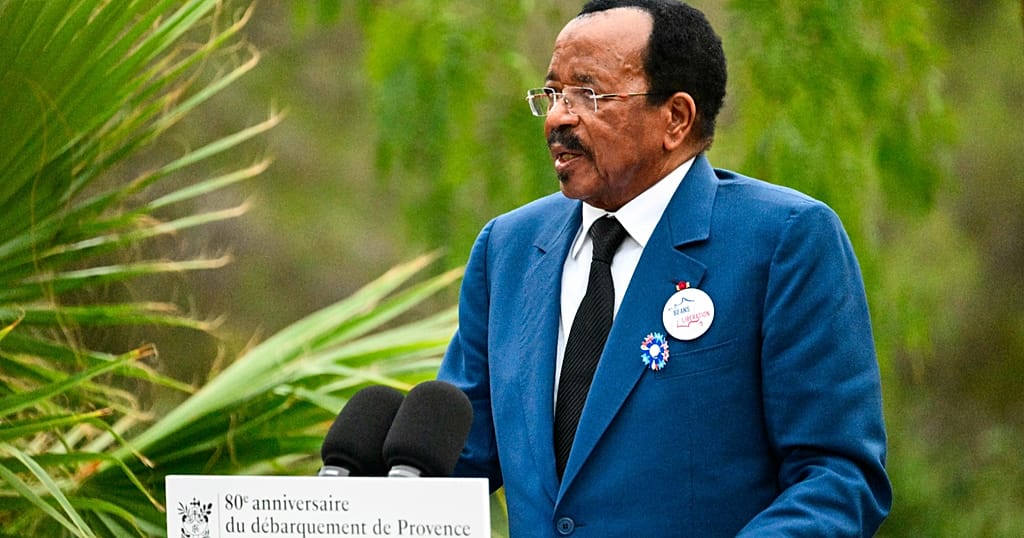
The prolonged absence of Cameroon’s 93-year-old President Paul Biya has fueled speculation over his health and the stability of the nation’s leadership. After departing for what was described as a “brief private stay in Europe” on June 7, Biya has yet to return, deepening concerns about his ability to govern.
In response to growing uncertainty, the president has intensified his use of presidential decrees to signal ongoing authority. This strategy aims to counter accusations of an institutional void and reassure both domestic and international observers of Cameroon’s continued governance.
Decrees reinforce presidential influence despite absence
On July 30, Biya signed a decree granting the Minister of Economy the power to finalize agreements with the Islamic Development Bank, securing nearly 28 billion CFA francs in funding. This financial move underscores his administration’s commitment to economic initiatives, even from afar.
A week later, on August 3, the president reshuffled the military leadership. Five colonels were promoted to brigadier general, and General Ebaka Hypolite was appointed as the new Chief of Staff of the Armed Forces. These appointments not only maintain Biya’s presence in state affairs but also strengthen control over the security apparatus.
Government dismisses health concerns amid opposition criticism
The government has firmly denied any decline in Biya’s health, insisting his return is imminent. However, opposition figures argue that his absence has created a dangerous leadership vacuum, with the country operating in “autopilot mode.”
Critics highlight the delayed formation of a new government and the long-awaited appointment of a vice president as evidence of institutional fragility. The prolonged silence from the presidency has intensified debates about succession and governance in Cameroon.