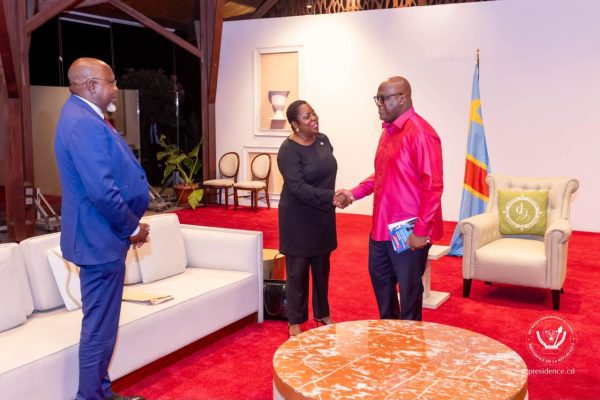
French lawmakers of Congolese descent are set to launch a major diplomatic offensive to secure France’s official recognition of the GENOCOST—a term referring to the mass atrocities committed in Democratic Republic of the Congo since 1996—during the upcoming parliamentary session. This initiative, unveiled following a meeting with President Félix Tshisekedi at the African Union headquarters in Kinshasa, aims to elevate the issue from humanitarian concern to a matter of national and international policy.
The Collectif des élus français originaires du Congo-Kinshasa (CEFOCK) plans to deploy a multipronged strategy: memorial campaigns, expert-led conferences, and targeted advocacy with French local governments, national institutions, and the Congolese diaspora. Their goal is to break the silence surrounding these crimes and ensure they are addressed through legislative and diplomatic channels.
The timing is deliberate. Just days before the announcement, the Diaspora congolaise marked the national GENOCOST remembrance day in Kinshasa, where President Tshisekedi inaugurated the construction of the National GENOCOST Museum and a dedicated memorial. These domestic efforts underscore Kinshasa’s commitment to institutionalizing remembrance and justice.
Strengthening the campaign with institutional backing
To amplify their impact, the CEFOCK will collaborate closely with the Commission interinstitutionnelle d’aide aux victimes et d’appui aux réformes (CIA-VAR), a Congolese government body tasked with documenting atrocities, supporting survivors, and preserving historical memory. Together, they aim to:
- Uphold the duty of remembrance to prevent the erasure of victims’ stories from public consciousness.
- Advocate for official recognition of the GENOCOST as a genocide, paving the way for justice and reparative measures.
During the meeting, President Tshisekedi praised the initiative, describing it as a reinforcement of Kinshasa’s memorial diplomacy—a strategic effort to shape global narratives around Congolese history and sovereignty.
The diaspora as a bridge between continents
The role of the Congolese diaspora in France cannot be overstated. Elected officials within municipal, departmental, and regional councils now serve as institutional voices capable of influencing French policy. By shifting from passive testimony to active political engagement, they are positioned to apply pressure at multiple levels of government.
The CEFOCK’s campaign targets both local and national French representatives, seeking to mirror the parliamentary recognition achieved for other genocides. This transnational mobilization aligns with Kinshasa’s broader strategy to leverage every available lever—domestic policy, public memory, and international advocacy—to secure justice for the victims of the GENOCOST.