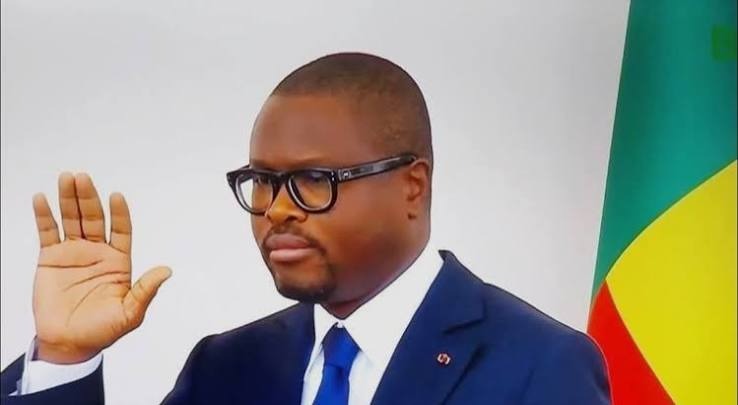
The head of the Democratic Republic of the Congo’s Higher Council for Audiovisual and Communication (CSAC), Christian Bosembe, has declared that TikTok will be blocked immediately to halt the spread of propaganda linked to the armed group AFC-M23. Negotiations with the platform’s leadership are already underway to enforce this decision.
Bosembe condemned the presence of Cornelius Nangaa, an alleged terrorist, on a major social network, arguing that such platforms should not provide a voice to individuals accused of destabilizing the nation. He stressed that TikTok’s failure to act enables content that threatens national security and undermines public order.
Why the Democratic Republic of the Congo is taking a firm stance against digital propaganda
In a pointed critique, Bosembe questioned international standards, asking: “Would a Hezbollah account operate freely in France? Would an Al-Qaeda account be tolerated in the United States?” He argued that no sovereign state would allow such platforms to facilitate extremist or rebel messaging—and the DRC should be no exception.
Highlighting TikTok’s inaction, he described the situation as both grave and undignified for a nation committed to protecting its citizens. The CSAC’s decision reflects its duty to preserve national cohesion and prevent the radicalization of public opinion.
Lessons from Gabon: a precedent for digital censorship
The regulator cited Gabon’s 2023 decision to ban TikTok nationwide as a model for the DRC. In Kinshasa’s view, such measures are essential when digital platforms become tools for foreign-backed insurgencies. The AFC-M23 rebellion, accused of systematic attacks on civilians in eastern DRC, is reportedly receiving support from external actors seeking to exploit the country’s mineral wealth.
Bosembe emphasized the urgency of cutting off the rebels’ digital channels, declaring: “At some point, the Congolese state must assert its authority. And to do so, these networks must be shut down.”
Sovereignty in the digital age: a turning point for Congo
This move signals a broader shift in the DRC’s approach to digital governance amid ongoing conflict. While social media platforms have revolutionized communication, they have also become weapons in hybrid warfare. Kinshasa is now prioritizing national security over unchecked digital freedom, signaling a potential turning point in how the country regulates online spaces during crises.