Driven by a strong ambition for development and infrastructure competitiveness, Cameroon is rolling out a series of measures to upgrade its road, rail, urban and airport networks.
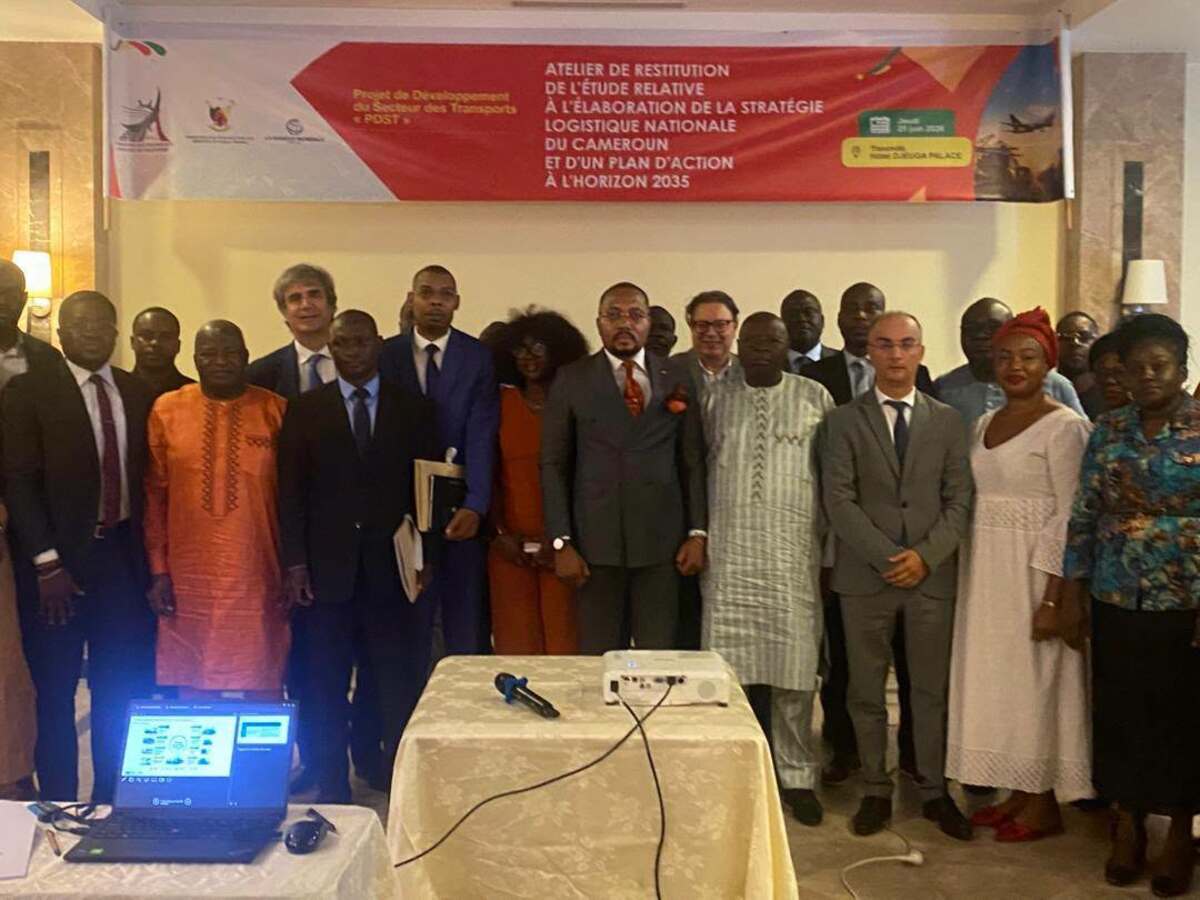
To this end, a workshop was held on 24–25 June 2026 to review the feasibility studies for the creation of a Land Transport Regulatory Agency (ARTT) and the development of a National Logistics Strategy (SLN) with an action plan out to 2035.
The meeting brought together Mbamome Nkendong Divine, Director of Road Transport (DTR), Claude Misse Ntone, Director of Rail Transport (DTF), a team from the consultancy Idea Consult International/TRT Studi Cameroun, as well as representatives from several partner administrations and financial backers including the World Bank and the African Development Bank.
In his opening speech, the DTR urged participants to pay close attention to the conclusions of these preliminary studies, as the findings should effectively guide the next steps of the projects. During the exchanges, the consultants presented comprehensive reports on the outcomes of the work carried out.
The studies indicate that the ARTT should be based in Yaoundé, with an initial scope focused on road transport, gradually expanding its remit. Setting up the agency would require an estimated initial investment of 260 million CFA francs, covering the establishment of the institutional framework, the renovation and equipping of premises, and the acquisition of the necessary computer hardware.
As for the study on Cameroon’s National Logistics Strategy, it analyses the main features of the country’s logistics system, outlines the strategic issues, challenges and objectives, and concludes by proposing an eight‑axis action plan. Rail investments dominate, with costs estimated at 40 billion euros, along with the creation of a National Logistics Council to handle interministerial coordination and arbitration.
At the close of the workshop, the Director of Road Transport praised the quality of the contributions and the richness of the discussions. He invited all stakeholders to maintain their commitment in order to successfully carry out the next phases of these projects, which are crucial for the future of Cameroon’s land transport sector.