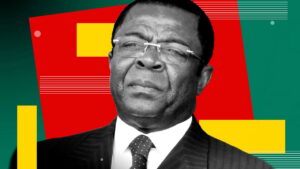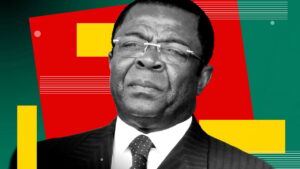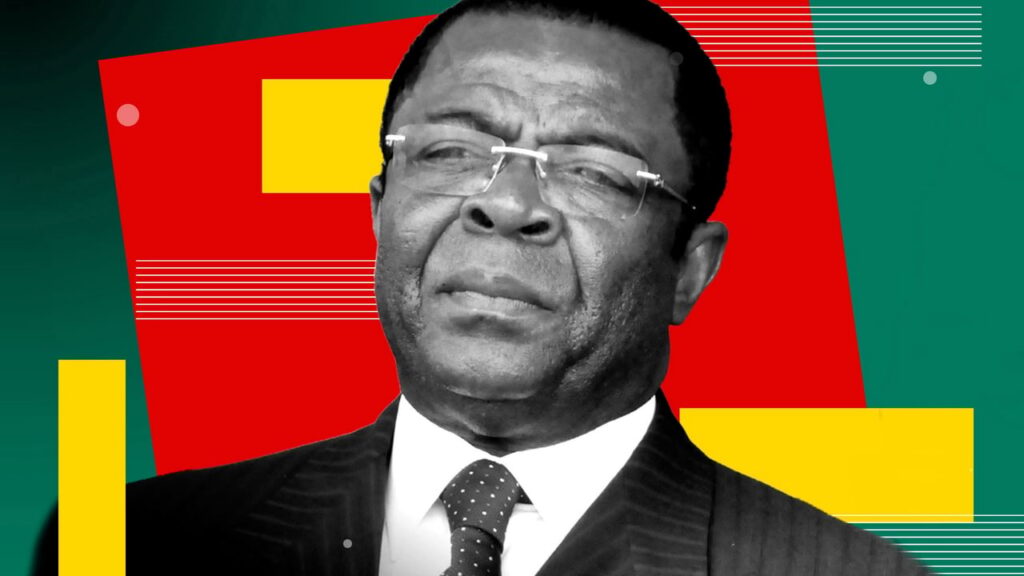
In Cameroon’s political landscape, few figures embody the rise and fall of power as starkly as Edgar Alain Mebe Ngo’o. Once a towering presence in the nation’s security apparatus, his trajectory from prominence to obscurity offers a compelling case study of political fragility at the highest levels.
The Cameroonian security sector, long considered a bastion of stability in a region marked by volatility, has witnessed dramatic shifts in influence. Mebe Ngo’o’s career—once on an upward trajectory—served as a testament to the delicate balance between power and peril in the corridors of Yaoundé. His story is not merely one of individual ambition but a reflection of the broader dynamics shaping Cameroon’s governance and security policies.
The making of a sécurocrate
Mebe Ngo’o’s ascent within the Cameroonian power structure was propelled by his deep involvement in the country’s security framework. As a key figure in the defense and interior ministries, he played a pivotal role in shaping policies that extended far beyond mere administrative oversight. His influence grew alongside Cameroon’s evolving security challenges, positioning him as a central architect of national stability strategies.
His tenure coincided with a period of intense pressure on Cameroon’s security institutions. From combating insurgencies to managing internal political dissent, Mebe Ngo’o’s portfolio expanded to encompass some of the nation’s most pressing concerns. Colleagues and observers alike noted his strategic acumen, which earned him both respect and suspicion in equal measure.
The unraveling of influence
Yet, the same security apparatus that once amplified his voice became the stage for his downfall. Political shifts, both within the ruling elite and in the broader national context, eroded the foundations of his authority. Rumors of internal rivalries and shifting alliances began to surface, casting doubt on his once-unassailable position.
Sources close to the corridors of power suggest that Mebe Ngo’o’s eventual marginalization was not an overnight phenomenon but the culmination of years of strategic missteps and shifting loyalties. His perceived overreach in security matters, particularly in high-stakes operations, may have crossed invisible lines in a system where power is both centralized and fiercely contested.
The fallout was swift. Once a voice in national security deliberations, Mebe Ngo’o found himself sidelined from key decision-making circles. The very institutions he helped build became the instruments of his decline, as new figures stepped into the void he left behind.
Legacy and lessons
Mebe Ngo’o’s story is more than a personal tragedy; it is a narrative that underscores the precarious nature of power in Cameroon’s political ecosystem. His career trajectory mirrors the experiences of other prominent figures who rose to prominence under President Paul Biya’s long tenure, only to be cast aside when their utility waned.
For students of Cameroonian politics, his fall serves as a cautionary tale about the ephemeral nature of influence in a system where loyalty is often measured in shifting sands. It also highlights the intricate interplay between security imperatives and political survival, a dynamic that continues to define governance in Cameroon.
As the nation moves forward, Mebe Ngo’o’s legacy will likely be debated—was he a victim of political maneuvering or a casualty of his own ambitions? One thing remains clear: his story is a vivid reminder that in Cameroon’s corridors of power, today’s indispensable figure can quickly become tomorrow’s forgotten relic.