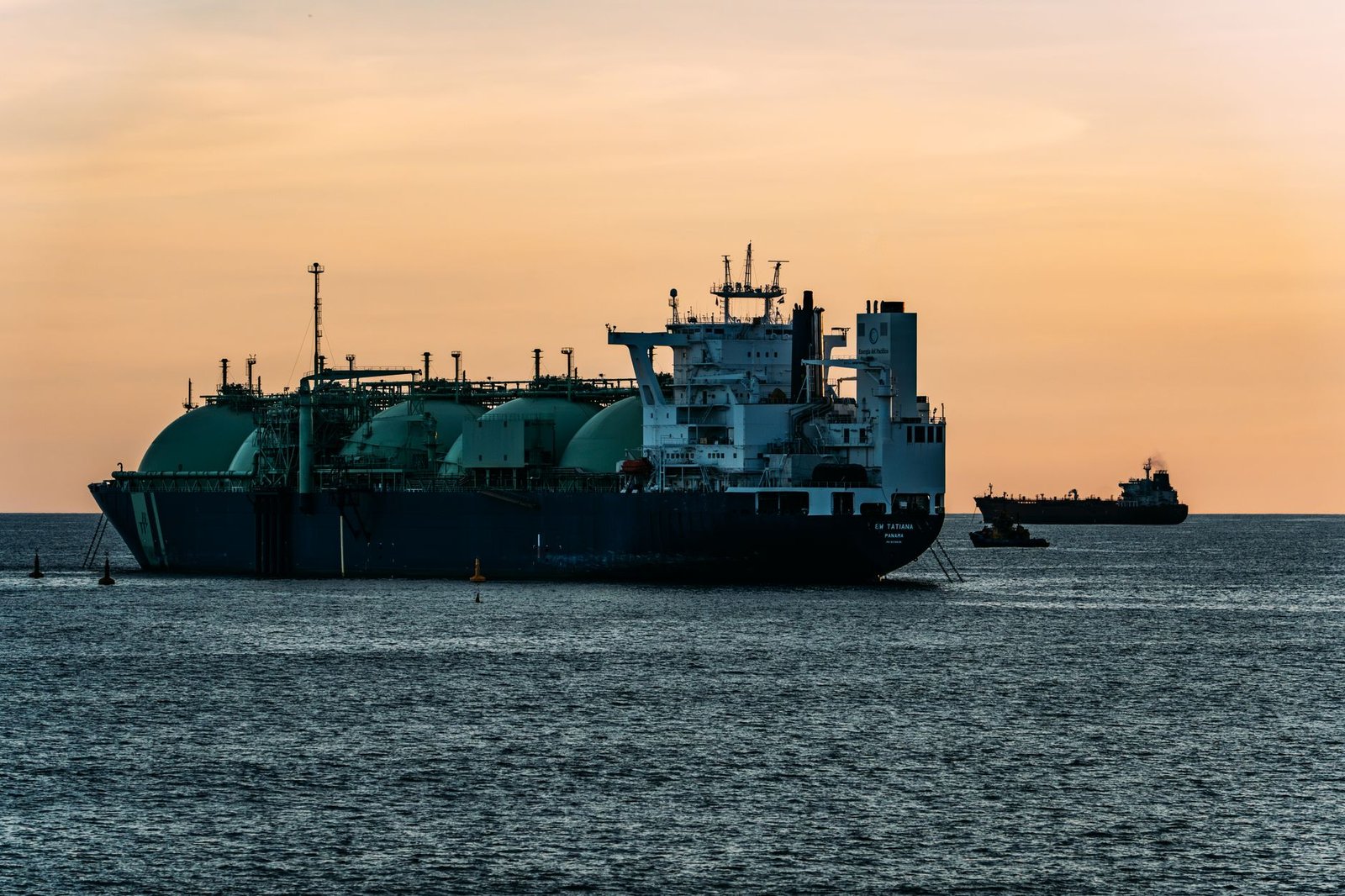
The clock is ticking for Cameroon’s economy. The Hilli Episeyo, a floating liquefied natural gas (LNG) vessel anchored off the coast of Kribi since 2018, is set to leave national waters in July 2026, marking the end of its contract with the national oil company, Société Nationale des Hydrocarbures (SNH). This departure has been flagged by the National Economic and Financial Committee (CNEF) as a pivotal factor in the expected economic slowdown, alongside geopolitical tensions and declining export sectors.
In its first-quarter 2026 economic outlook, the CNEF projects Cameroon’s GDP growth at around 3.2% in 2026, down from 3.5% in 2025, and 3.1% in 2027. An alternative scenario in the same report suggests slightly higher growth rates of 3.3% and 3.2%, respectively. Yet, in both cases, the extractive industry—particularly oil and gas—is expected to drag down growth, subtracting 0.4 percentage points from GDP in both years. The petroleum sector, encompassing all hydrocarbon-related activities, is projected to shrink by 16.1% in 2026 and 18% in 2027.
The LNG sector’s decline predates the floating plant’s exit
The departure of the Hilli Episeyo comes at a time when Cameroon’s LNG export revenues are already in freefall. In 2025, earnings from LNG exports totaled 350.2 billion FCFA, a sharp drop from 381 billion FCFA in 2024, 421 billion in 2023, and a peak of 622 billion in 2022. Year-on-year, this represents an 8.1% decline. The downturn persisted into early 2026, with total exports falling 23.6% to 606.9 billion FCFA in the first quarter. LNG exports plummeted by 28.4%, while crude oil exports declined by 14.4%.
Despite the slump, LNG still accounted for 11.4% of Cameroon’s export earnings in 2025. The loss of the floating liquefaction unit will thus deprive Yaoundé of a key revenue stream just as other sectors struggle. Over the same period, cocoa and cocoa-derived product exports plunged by 37.7%, timber by 11.5%, aluminum by 53.7%, and raw rubber by 16.7%. The compounding declines across multiple sectors amplify the impact of the impending LNG shock.
Current account deficit widens as fiscal pressures mount
The country’s macroeconomic balances will bear the brunt of these challenges. The CNEF forecasts a current account deficit of 5.4% of GDP in 2026, rising to 6.1% in 2027, up from an estimated 3.2% in 2025. The budget deficit is expected to follow a similar trajectory, reaching 1.7% of GDP in 2026 and 2.1% in 2027. These projections account for a global trade slowdown, rising freight costs, and a moderate increase in public revenue.
The surge in global oil prices presents policymakers with a familiar dilemma. Keeping pump prices stable would require boosting fuel subsidies, placing an immediate strain on the budget. Alternatively, raising retail prices could reignite inflation and erode household purchasing power. While the CNEF does not prescribe a course of action, it emphasizes the limited fiscal space available to navigate these challenges.
New projects offer little immediate relief
The SNH is banking on upstream diversification to offset the loss of the Hilli Episeyo. The flagship initiative is the Yoyo-Yolanda transboundary field, shared with Equatorial Guinea, with estimated geological reserves of 2.5 trillion cubic feet and a projected investment of nearly 4 billion USD. However, the project’s timeline hinges on finalizing technical and commercial agreements, securing financing, and building dedicated infrastructure—all of which could delay its contribution to the economy.
In parallel, the SNH is pushing forward with the award of new exploration blocks in the Rio del Rey and Douala-Kribi-Campo basins. While negotiations for production-sharing contracts are underway, there is no guarantee of commercially viable discoveries or rapid production ramp-up. The critical risk lies in the transition period: the longer the gap between the Hilli Episeyo’s departure and the start of new production, the more prolonged the negative impact on Cameroon’s economic growth. At present, none of the announced projects are positioned to immediately compensate for the expected drop in LNG exports.