Why is Gabon reopening fisheries negotiations with the European Union?
Gabon is preparing to return to the negotiating table with the European Union over a new sustainable fisheries partnership, and the talks will go far beyond the simple question of European vessels accessing Gabonese waters. After the previous arrangement lapsed, Libreville is determined to redefine the economic, industrial and operational terms of a cooperation that governs the exploitation of its marine resources.
On 18 September 2026, the Gabonese government approved the opening of negotiations for a new Sustainable Fisheries Partnership Agreement and its implementing protocol. The move comes more than a year after Gabon denounced the previous deal on 4 June 2025. With that protocol expiring on 28 June 2026, the European framework is now considered suspended. EU vessels no longer have a legal basis to fish in Gabonese waters, and the old exclusivity clause blocks any workaround through individual authorisations.
For Libreville, the upcoming talks represent a chance to rebalance a partnership whose local economic returns have looked limited compared with the potential of the resource at stake.
What went wrong with the previous financial model?
Money will be the first item on the agenda. The old protocol was built on a reference capacity of 32,000 tonnes, used to calculate the European contribution, but it never guaranteed that volume of catches. The EU paid €1.6 million per year for access to the resource, plus an annual €1 million envelope for sector development.
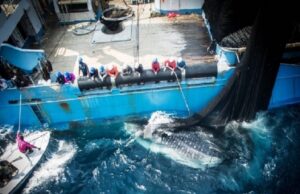
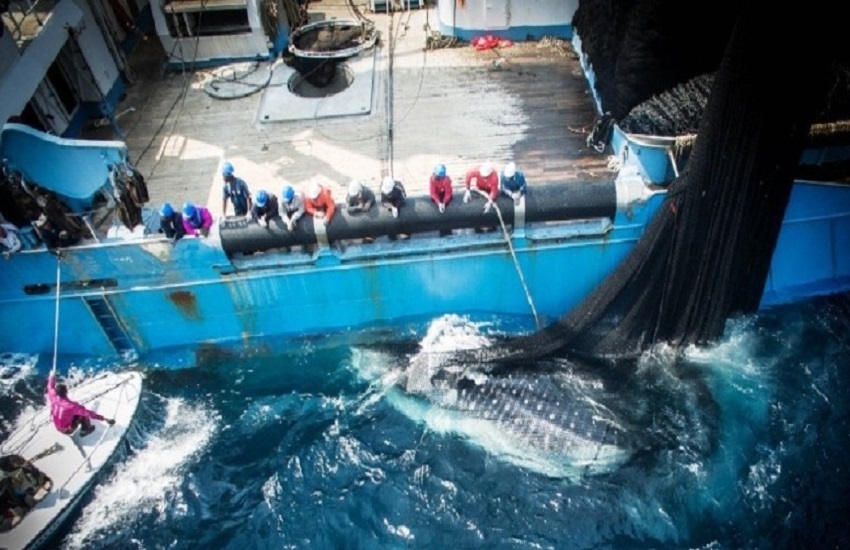
Actual results fell far short of the theoretical capacity. Between 2022 and 2024, European vessels caught an average of 10,604 tonnes per year. Of the 27 authorisations planned for purse seine tuna vessels, only 54% were used on average. The six licences reserved for pole-and-line tuna vessels were never used at all.
This gap between the rights opened and the actual use of the resource should logically shape the next partnership. The number of vessels, the price per tonne and the way the European contribution is calculated are all parameters likely to be renegotiated. But the central issue probably lies elsewhere: in Gabon’s ability to turn fishing activity into genuine local economic value.
From access rights to value creation on Gabonese soil
The previous protocol required that at least 30% of catches could be transhipped in a Gabonese port, subject to acceptable economic and commercial conditions. When a vessel transhipped in Gabon, its by-catches also had to be fully landed there.
In practice, these provisions were rarely used. European vessels seldom visited Gabonese port infrastructure, and their catches were mainly landed and processed in Côte d’Ivoire. The European assessment estimates that Gabon captured only 23% of the added value generated by the scheme, while 47% benefited other actors, notably in Côte d’Ivoire and Senegal, through port activities, onboard jobs and processing.
The next agreement must therefore decide whether Gabon simply continues to monetise access to its resource or seeks to build a value chain anchored more firmly on its territory. The questions of landings, port infrastructure, processing and national employment become as important as the amount of financial compensation.
Sector financing is another potential sticking point. Of the €5 million in sector support planned over five years, only €2 million had been transferred by the time of the evaluation conducted between December 2024 and May 2025. Just over 20% of the multi-year envelope had been used. Some infrastructure remained unfinished, while the indicators chosen measured the delivery of outputs rather than real economic effects.
What must change for the next agreement to be measurable?
The negotiations will also need to fix several technical weaknesses. The previous framework required qualified Gabonese sailors to be taken on board, but no list meeting the required criteria was ever sent to European shipowners. As a result, the compensation due for failure to embark crew was never applied.
Catch monitoring also needs strengthening. The electronic reporting system was not fully operational, and differences in method between the two sides produced gaps in the available data. In these conditions, transparency on actual fishing volumes becomes a decisive factor in assessing the value of the partnership.
The European evaluation recommends reconsidering the six licences never used for pole-and-line tuna vessels and adjusting the number of authorisations for purse seiners.
The next negotiation will not be only about an amount paid by Brussels in exchange for access to Gabonese waters. It must define the terms of a partnership in which every tonne fished can be linked to identifiable benefits for the Gabonese economy — in revenue, jobs, landings, processing and infrastructure development.
For both Libreville and Brussels, the challenge now is to draw the consequences of the previous agreement. The future partnership will be judged less on its theoretical commitments than on its ability to deliver verifiable results. For Gabon, the renegotiation opens an important sequence in which the fisheries resource becomes not only a question of access, but a potential instrument of economic sovereignty and local value creation.