The Republic of Centrafrique has once again been plunged into darkness, this time by the chilling presence of the Wagner Group. The capital and countryside alike now bear the scars of a merciless campaign that has left civilians and armed factions alike trembling in its wake.
On the 8th of July, the world was confronted with one of the most harrowing displays of brutality imaginable. Graphic videos, disseminated widely across social media, captured a scene of unspeakable horror. Men, lured into a deadly ambush by Wagner mercenaries, were executed in cold blood before their heads were severed and arranged in a macabre display on the ground. The perpetrators, emboldened by their impunity, filmed their atrocities with chilling commentary, their leader’s voice echoing through the footage: “You refuse peace? Then this is your fate. Slaughter every last one of them!”

From deception to decapitation: the false promise of disarmament
Victims of this sinister charade included combatants from one of the many armed groups operating within the country. These individuals had arrived under the guise of participating in an official disarmament initiative, only to be met with a horrific fate orchestrated by Wagner forces. Civilians, including a village chief, also fell prey to the deception, their presence at the scene mistaken for an endorsement of the program. The footage, though met with widespread revulsion, serves as a stark reminder of the unchecked violence that has become routine in Centrafrique.
Centrafrique: a state unraveling at the hands of armed factions
For decades, the Centrafrique has been synonymous with instability—a nation teetering on the edge of collapse, its government confined to the capital while armed groups carve out their own domains. The United Nations’ Minusca mission, once a beacon of hope, has struggled to curb the rising tide of extremism, leaving the populace to endure a reality where brutality is the norm. The arrival of Wagner mercenaries, operating under a sanctioned permit to kill, has only exacerbated this descent into lawlessness, their actions amplifying the endemic violence that has long plagued the region.
A shadow government: Wagner’s iron grip on power
The Wagner Group has embedded itself so deeply within the fabric of Centrafrique that it now functions as a parallel authority. From the military and police to the judiciary and intelligence services, no sector remains untouched by their influence. The airport in Bangui, a vital lifeline for the nation, has also fallen under their control, with the flow of passengers dictated by Wagner’s whims. Reports of disappearances, torture, and unchecked harassment paint a picture of a nation where justice is a distant memory and Wagner’s writ runs supreme.
In a bizarre twist of loyalty, the mercenaries have maintained their original branding, even erecting a statue in honor of their late founder, Evgueni Prigojine, whose birth anniversary is commemorated annually by Wagner fighters alongside their Centrafrique counterparts. This unabashed display of colonial-era dominance has left observers stunned, as the country grapples with the surreal reality of a new form of occupation.
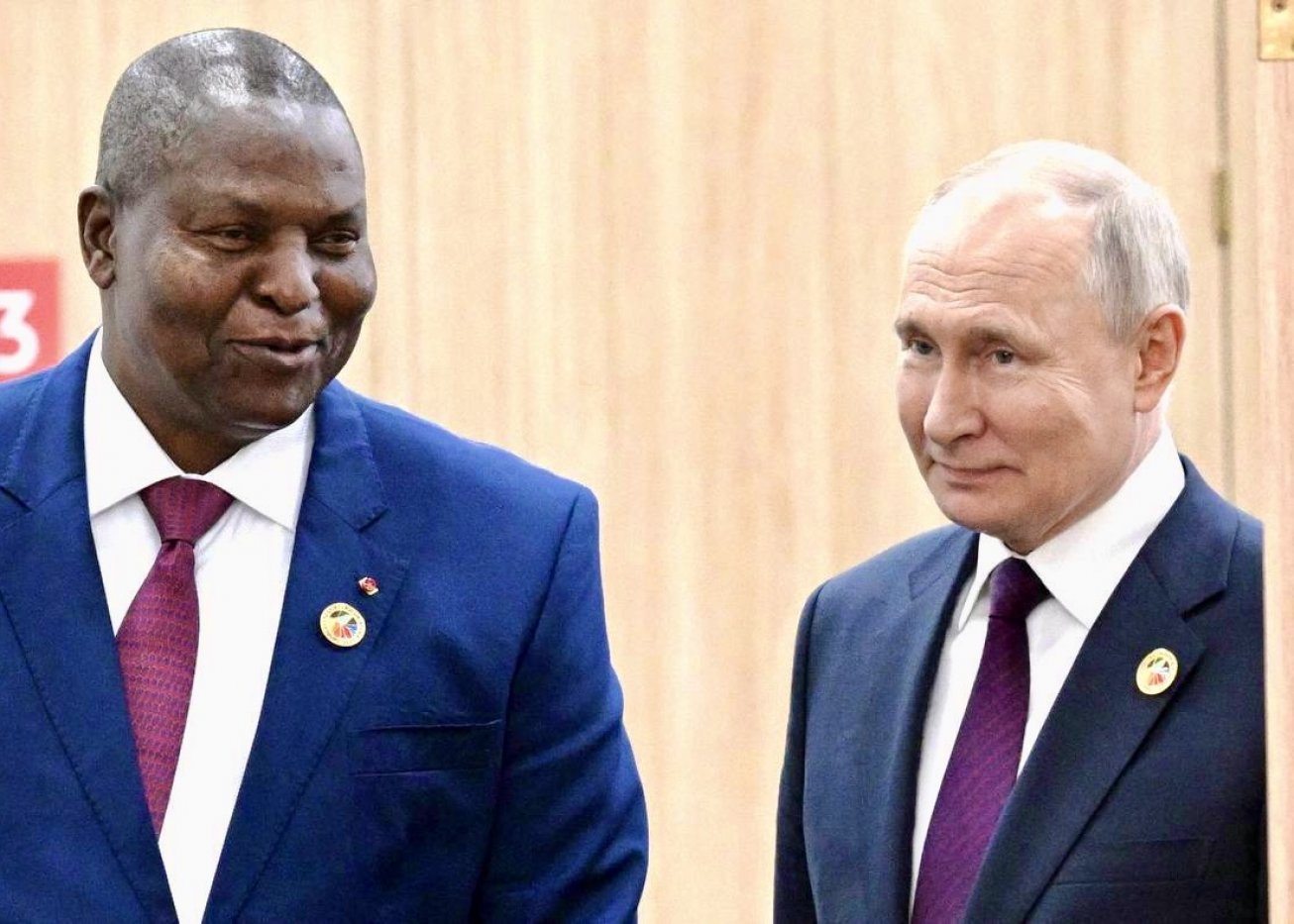
Despite the global outcry following the July 8th revelations, the government has remained silent, its complicity in Wagner’s reign of terror undeniable. Four years prior, during a meeting with his ministers, President Faustin-Archange Touadéra had been warned of the potential fallout from Wagner’s presence. His response was chilling: “We need the Russians. They are the ones keeping us in power.” Power, it seems, is worth any price—even if it means transforming Centrafrique into a capital of extreme terror, a nation adrift in a sea of despair.