DRC highlights ecological impact of Rwandan-backed violence in Eastern Congo
- Politics
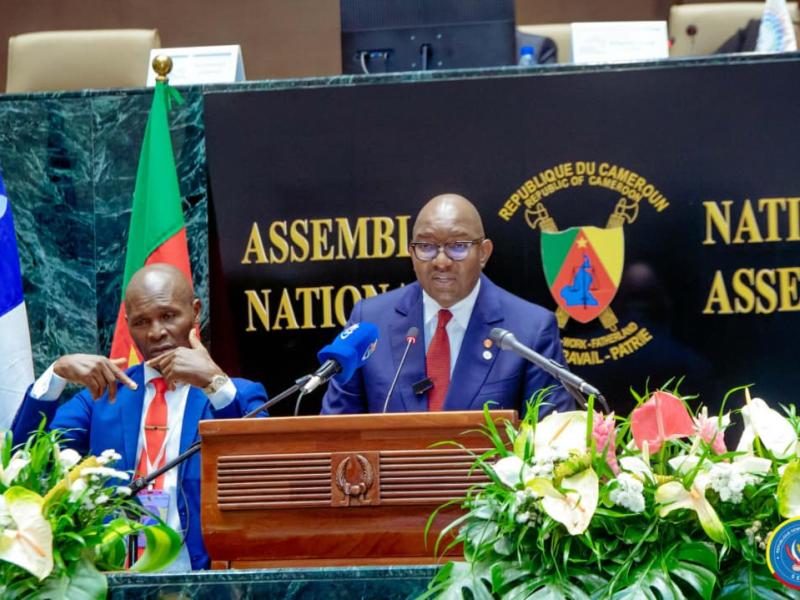
The Francophone parliamentary assembly held its 51st session in Yaoundé from July 6 to 11, 2026. The event brought together over 300 parliamentarians from 42 national, subnational, and interparliamentary sections within the Francophone space. For the Democratic Republic of the Congo (DRC), the session provided a platform to voice concerns about two critical issues: climate change and the security instability in the country’s eastern region.
Jean-Michel Sama Lukonde Kyenge, President of the DRC Senate, led the Congolese delegation. In his address, he emphasized the DRC’s pivotal role in global environmental preservation efforts. He highlighted the country’s natural advantages, positioning it as a “solution country” in the fight against climate change.
The Bassin du Congo, the world’s second-largest tropical rainforest, and its unparalleled biodiversity were central to his argument. He also underscored the significance of the Kivu-Kinshasa Green Corridor, a project spanning over 500,000 km² aimed at bolstering global climate resilience.
However, Sama Lukonde did not shy away from addressing the DRC’s ongoing challenges. He lamented the international community’s insufficient response to the country’s environmental crises, despite its ecological importance.
The Senate President also condemned what he described as an “unjust aggression” by Rwanda, facilitated through its proxy, the M23-AFC. He emphasized the severe human and ecological consequences of this conflict, including the destruction of ecosystems, wildlife, and water resources. The displacement of populations further exacerbates these environmental challenges.
“One cannot claim to achieve climate balance while, through war, we are massively plundering and destroying natural resources,” he declared.
Sama Lukonde called on the Francophonie to take concrete action to support peace efforts and implement the Washington Accords. He advocated for a Francophone climate pact, grounded in solidarity and a deeper commitment to the needs of communities living near forest zones. The DRC also announced its support for Julianna Lumumba’s candidacy for the Francophonie leadership.
The APF session, organized by the Cameroonian section and the Francophonie Parliamentary Assembly, featured discussions on political, democratic, economic, social, cultural, and environmental issues across the Francophone world. The 11th edition of the Francophone Youth Parliament (PFJ) ran concurrently, bringing together 61 young delegates from 29 Francophone sections and partner organizations like the International Organization of La Francophonie (OIF) and the Agence universitaire de la Francophonie (AUF).