Sambisa Forest: A battleground for rival insurgent factions
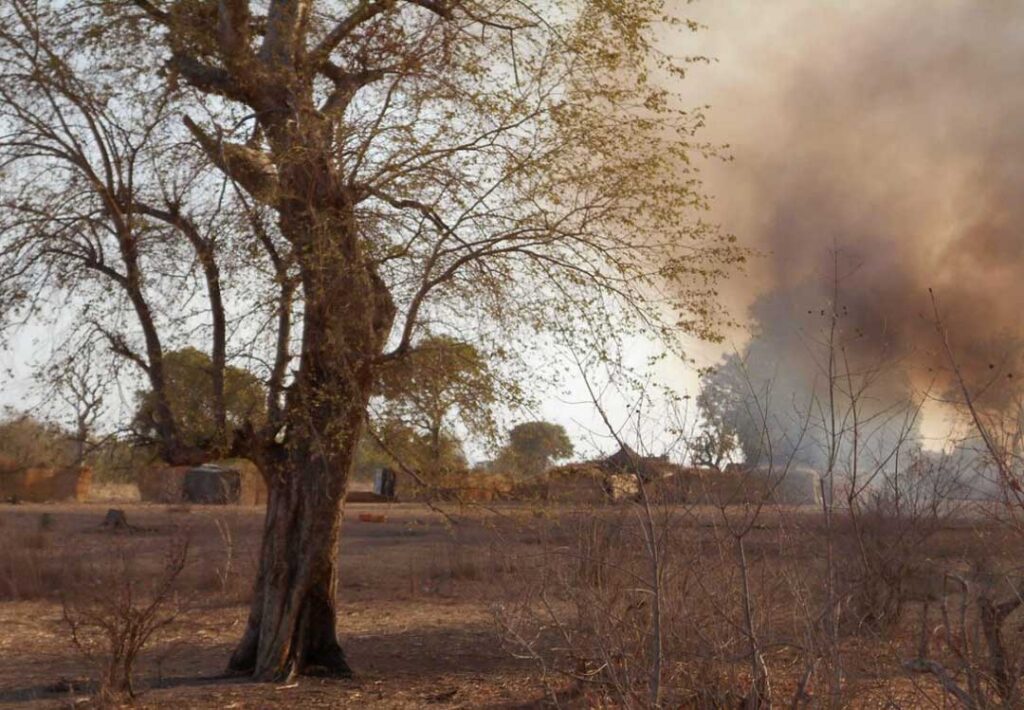
Once a thriving natural reserve spanning 60,000 square kilometers in Nigeria’s Northeast, the Sambisa Forest now stands as a shadow of its former self. Wildlife has vanished, replaced by a deadly rivalry between two militant groups and the relentless pursuit of security forces.
The Islamic State’s West Africa Province (ISWAP) and the Sunni Group for Preaching and Jihad (JAS)—formerly part of Boko Haram—have been locked in a fierce struggle for dominance since 2016. Recent clashes signal an escalation, with both factions vying for strategic control over the dense terrain, which serves as an ideal hideout and launchpad for attacks and illicit trade routes.
Security analysts warn that the forest’s impenetrable canopy and vast expanse provide the perfect conditions for insurgents to regroup and execute operations. Zagazola Makama, a Borno-based security expert, highlights the intensity of the conflict: «The recent surge in battles within and around Sambisa underscores the deepening rift between these factions, each claiming heavy losses.»
The shifting dynamics of Nigeria’s insurgency
Since Boko Haram’s insurgency erupted in 2009, the conflict has spilled into neighboring Cameroon, Niger, and Chad, leaving over 40,000 civilians dead and displacing millions, according to United Nations estimates. While ISWAP focuses on territorial control, taxation, and establishing shadow governance in contested areas, JAS has gained notoriety for abductions, looting, and indiscriminate violence.
Malik Samuel, a senior researcher at Good Governance Africa, notes that despite their rivalry, both factions have adapted remarkably, maintaining operational capacity against Nigerian forces and the Multinational Joint Task Force.
«The conflict between these groups is no longer just a survival struggle for JAS. It has evolved into a parallel war, diverting attention and resources from the broader counterterrorism efforts.» — Malik Samuel
Strategic setbacks and shifting threats
Analysts point out that while ISWAP has expanded its influence with foreign fighters and larger territorial control, JAS remains resilient in its strongholds, such as Barwa. «ISWAP’s inability to penetrate JAS’s core areas complicates its efforts to eliminate the group’s leadership,» Samuel explains. «Yet, beyond the islands of Lake Chad, JAS struggles to match ISWAP’s manpower and operational reach.»
Taiwo Adebayo, a Boko Haram specialist at South Africa’s Institute for Security Studies, argues that security strategies must adapt. «JAS is not merely a weakened rival of ISWAP—it’s an independent and adaptive threat that demands focused attention,» he emphasizes in a 2025 analysis.
Long-term stalemate looms
As the two factions continue to clash, security experts predict a prolonged stalemate. «The proximity of their strongholds in the Lake Chad islands ensures inevitable confrontations, as both groups compete for territory and resources,» Samuel concludes. «However, without a significant shift in strategy, neither side can decisively overpower the other.»
The battle for Sambisa is far from over, with civilians caught in the crossfire of this deadly rivalry.