The controversy surrounding political funds in Senegal has ignited fierce debates across television studios, social media, and political circles. At the heart of the dispute lies a critical question: who, before Ousmane Sonko, truly benefited from these discretionary funds allocated to the Prime Minister’s office, and for what purposes were they used?
This debate has gained momentum amid an extraordinary parliamentary session, convened since August 10 under Sonko’s leadership, where legislators are reviewing bills on asset declarations, labor laws, and the establishment of six parliamentary inquiry commissions—including one focused on political funds.
What sparked the debate?
The spark came from a candid interview with former Interior Minister Aly Ngouille Ndiaye on SenTV. He asserted that Ousmane Sonko was the first Senegalese Prime Minister to receive dedicated political funds: « Sonko was the only one to have access to these funds in his role as Prime Minister. None of my predecessors, including Boun Abdallah Dionne, had such funds. »
Ndiaye also raised doubts about the widely cited figure of 1.7 billion CFA francs, questioning whether it was allocated quarterly or annually. « If it were annual, the amount would reach 8 billion CFA francs. But we know the first tranche of 1.7 billion was depleted within weeks, » he claimed, suggesting Sonko had to request additional funds to cover expenses, leaving little for his successor.
His remarks echoed earlier statements by Energy Minister Abdourahmane Diouf, who confirmed that Sonko’s initial allocation was entirely consumed before any supplementary budget was approved.
Former Prime Ministers push back
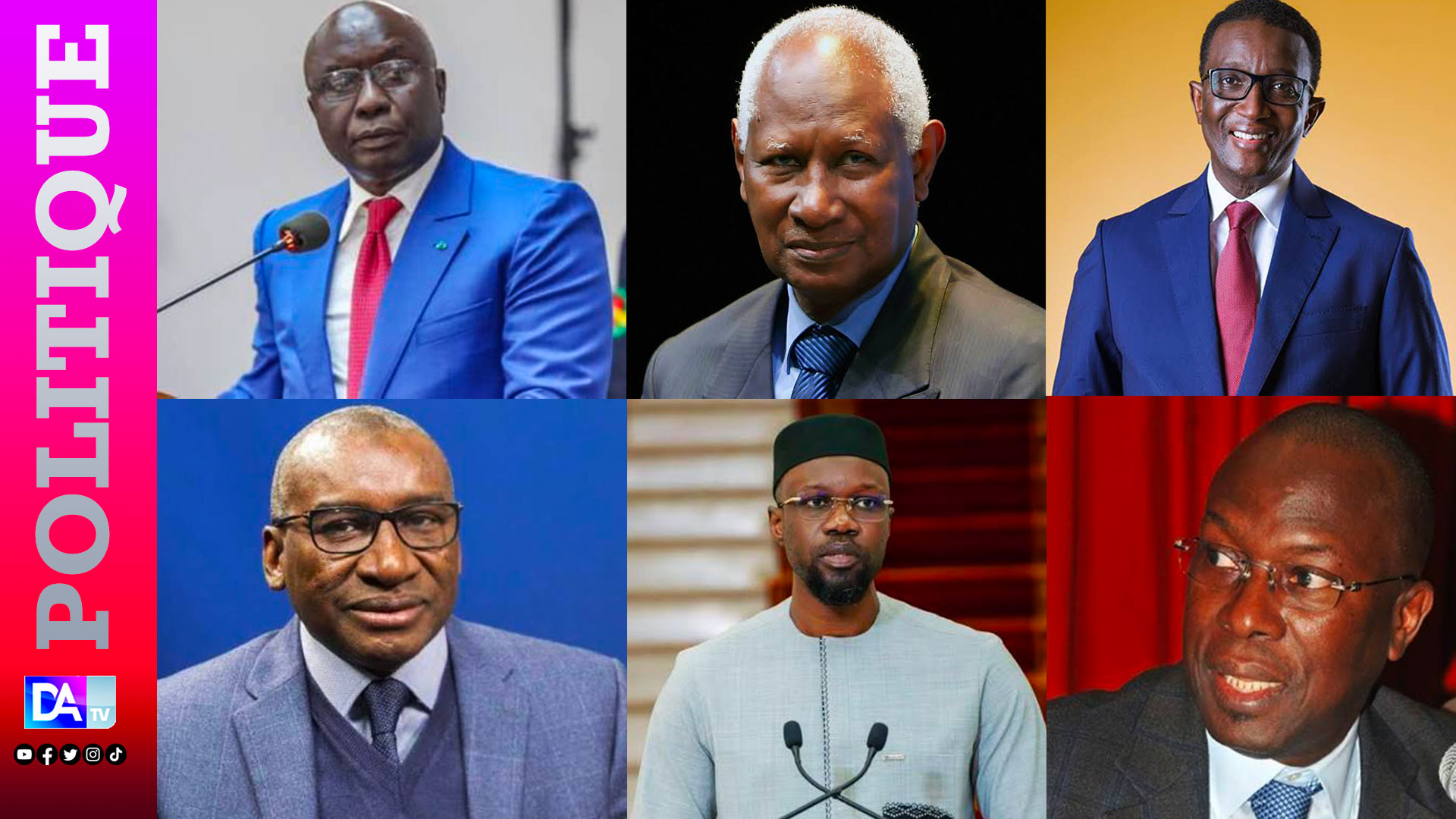
The former minister’s claims were swiftly challenged by archival footage of statements from former officials. Souleymane Ndéné Ndiaye, the last Prime Minister under Abdoulaye Wade, revealed on a 2025 broadcast that he had received political funds even before becoming Prime Minister—specifically while serving as Wade’s Chief of Staff. « Every month, I received these funds, » he stated, directly contradicting Ndiaye’s narrative that Sonko pioneered the system.
Further evidence emerged from former Prime Ministers Macky Sall and Idrissa Seck, both of whom admitted to using such funds during their tenures under Wade. Social media users also recalled a widely reported instance where Wade personally allocated funds from his presidential discretionary budget to support his Prime Minister’s expenses.
Pastef’s response: « baseless allegations »
The government-aligned camp responded through Elimane Pouye, CEO of the Société de Gestion et d’Exploitation du Patrimoine bâti (SOGEPA SN). He dismissed Ndiaye’s claims as « unfounded » and urged a comparison of the Prime Minister’s office budgets from 2023 to 2025, arguing that variations were due to institutional changes rather than new allocations. For Pouye, the real issue lies not in the existence of these funds but in how predecessors used them.
Pastef, the ruling party, countered that it had long advocated for reform, first denouncing the lack of oversight in 2014 and including it in their 2019 electoral manifesto—long before Sonko became Prime Minister in 2024.
A look at the historical reality
To understand the context, one must examine the evolution of these funds. Under Abdou Diouf, allocations hovered around 650 million CFA francs. Under Abdoulaye Wade, they surged to nearly 8 billion CFA francs. A 2008-2012 report by the General Inspectorate of State revealed that 108 billion CFA francs were spent during this period, with 48 billion lacking proper accounting—a figure that remained buried in public records for years.
A notable case involved the National Local Development Program (PNDL), a 100 billion CFA franc fund managed by the Prime Minister’s office. After Idrissa Seck’s departure in 2004, investigations into his management of the program uncovered allegations of illicit enrichment, including two properties in Saly and Atlanta. This episode underscored the long-standing concerns over the lack of transparency in these discretionary funds.
Calls for legal oversight intensify
Legislators are now pushing for stricter controls. Deputy Guy Marius Sagna revealed he submitted a draft law in September 2025 to create a « Commission for Verification of Political Funds, » but Sonko requested delays, preferring a government-led reform. Sagna later amended the proposal to propose a parliamentary commission to audit these funds, criticizing the administration’s reluctance to break from past practices.
Deputy Thierno Alassane Sall, a former Energy Minister known for his 2017 resignation over transparency issues, went further, calling these funds a « form of theft » due to their lack of parliamentary approval. He distinguished them, however, from presidential intelligence funds, which operate under different legal frameworks.
Not all voices align. El Hadj Momar Samb, Secretary-General of the RTA-S, accused the parliamentary majority of « opportunism, » noting that many current members held high-ranking positions without pushing for reform earlier. While supporting transparency, he called for broader parliamentary oversight, including audits of the National Water and Sanitation Office (ONAS), oil revenues, and funds allocated to Matam region and victims of political crises.
Official stance: regulation over abolition
President Bassirou Diomaye Faye has defended the retention of these funds, arguing they serve essential roles in intelligence and social solidarity. « Abolishing them outright would leave critical needs unmet, » he stated in May. Sonko, while rejecting abolition, has advocated for stricter oversight, citing the 1.77 billion CFA francs allocated to the Prime Minister’s office as an example of the need for accountability.
The ongoing extraordinary session, which began August 10, 2026, reflects this tension. Legislators are reviewing a bill to regulate special credits and secret funds, alongside a constitutional amendment on presidential asset declarations. The debate remains unresolved, caught between an institutional practice spanning regimes from Diouf to today and the demands for transparency from the new authorities who took power in 2024.