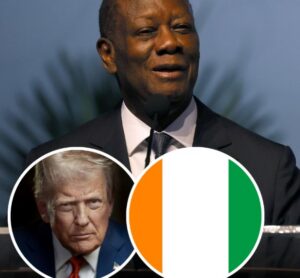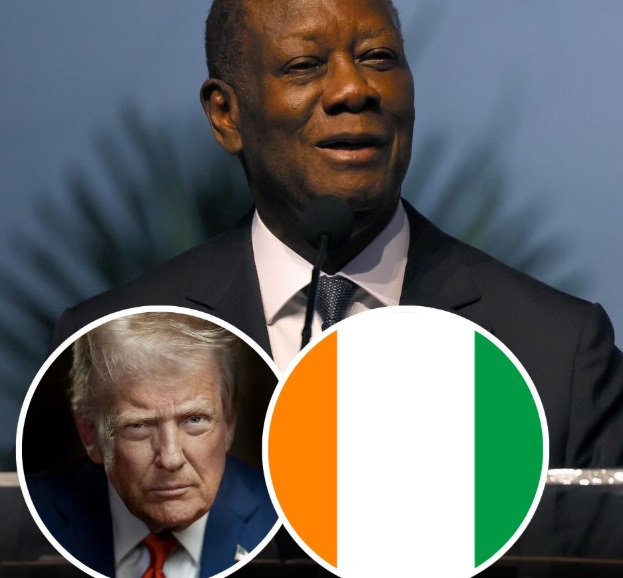
The Ivory Coast has firmly rejected a recent US proposal to accept deportees from the United States, regardless of their nationality. This decision marks a significant turning point in West African responses to Washington’s expanding third-country deportation policies.
In mid-June 2026, Christian Ehrhardt, Director of the US State Department’s Office of Remigration, traveled to Abidjan as part of a broader diplomatic mission across West and Central Africa. His objective was clear: secure agreements with African governments to accept non-citizens expelled from the US.
The talks in Côte d’Ivoire, however, did not yield the desired outcome. According to reports, the Ivorian government categorically refused the American proposal, signaling a bold stance in a high-stakes regional discussion.
Washington’s third-country deportation strategy gains momentum
This refusal comes at a time when the Trump administration has aggressively pursued third-country deportations—a controversial policy allowing the removal of individuals to nations where they have no historical or familial ties. Since 2025, over 25,000 people have been deported to 28 third countries, according to internal State Department records reviewed by leading international media.
The policy hinges on financial incentives, with the US allocating at least $410 million by June 2026 to secure agreements with 31 countries, primarily in Africa and Latin America. Countries accepting deportees often receive direct financial support or other forms of assistance in return.
Why Abidjan said no to Washington’s request
The Ivorian government’s rejection is not an isolated incident but part of a broader pattern of African skepticism toward Washington’s approach. While some nations have acquiesced under financial pressure, Côte d’Ivoire has opted for sovereignty over external funding.
Ehrhardt’s delegation, which includes a team of 15 officials from the Office of Remigration, has faced resistance across multiple capitals. Reports indicate that several countries in the region have raised serious concerns about the legality and ethics of accepting deportees with no legal connection to their territory.
Adding to the controversy, a federal appeals court ruled in September 2026 that the third-country deportation policy lacked sufficient safeguards for affected individuals. The Trump administration filed an appeal with the Supreme Court, but the legal challenges continue to mount.
Human rights watchdogs sound the alarm
Opposition to the US policy is not limited to governments. Human rights organizations and legal advocates have condemned the lack of due process for deportees, many of whom face uncertain futures upon arrival in unfamiliar countries. Critics argue that the policy undermines international refugee protections and sets a dangerous precedent for arbitrary deportations.
The debate has intensified across West Africa, where nations are weighing the risks of participating in Washington’s strategy against the potential rewards of financial compensation. Côte d’Ivoire’s refusal may serve as a catalyst for other governments to prioritize national sovereignty over external pressure.
What’s next for US deportation policies?
The political and legal fallout from Côte d’Ivoire’s decision is still unfolding. With the Supreme Court poised to review the appeals court’s ruling, the future of third-country deportations remains uncertain. However, Abidjan’s firm stance sends a clear message: African nations are not passive recipients of US immigration policy.
As the global migration landscape evolves, the Ivory Coast’s rejection underscores a broader shift—one where African governments are asserting their authority to shape the terms of international cooperation on migration and deportation.