The moment Benin’s exporters have been waiting for
Something shifted decisively for Benin’s export economy when the mutual recognition agreement under the Authorized Economic Operator (AEO) program moved from paper to practice. For certified local companies, this is not a gradual improvement — it is a breakthrough that throws open the doors of the Chinese market with logistics and tariff advantages the country has never enjoyed before.
A trusted passport for Benin’s exporters
The AEO status is a certification granted by Benin’s Customs authority to businesses that meet stringent standards across tax compliance, financial solvency, and supply chain security.
Under the mutual recognition arrangement signed with Chinese customs authorities, goods shipped by Benin’s AEO-certified operators now receive preferential treatment the moment they arrive at Chinese ports:
- Dramatically fewer inspections: Lower rates of physical and documentary checks during customs clearance.
- Priority processing: Faster passage of cargo at borders and priority handling when supply chains are disrupted.
- Lower logistics costs: Substantial savings on storage fees and container detention time.
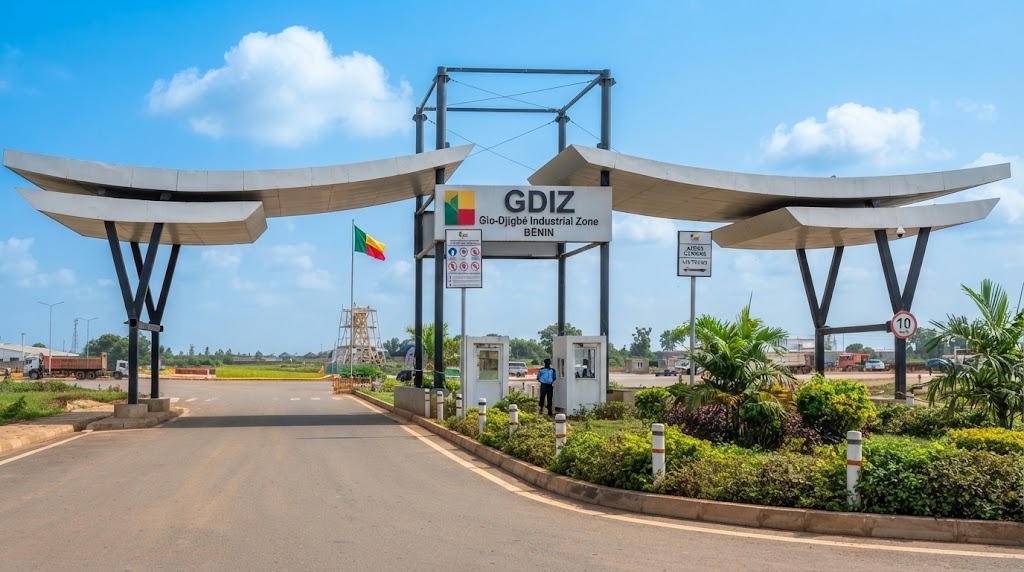
A decisive boost for the Glo-Djigbé Industrial Zone (GDIZ)
This strategic opening arrives exactly as Benin accelerates its policy of processing raw materials locally. Industrial units based in the Glo-Djigbé Industrial Zone (GDIZ) — specializing in the transformation of soybeans, cashews, cotton, and shea — now hold a major comparative advantage in meeting Chinese demand.
By sweeping away administrative bottlenecks at the borders, Benin’s certified SMEs and large enterprises sharpen their competitive edge against international rivals, reinforcing the country’s position as a dynamic logistics and industrial hub in West Africa.