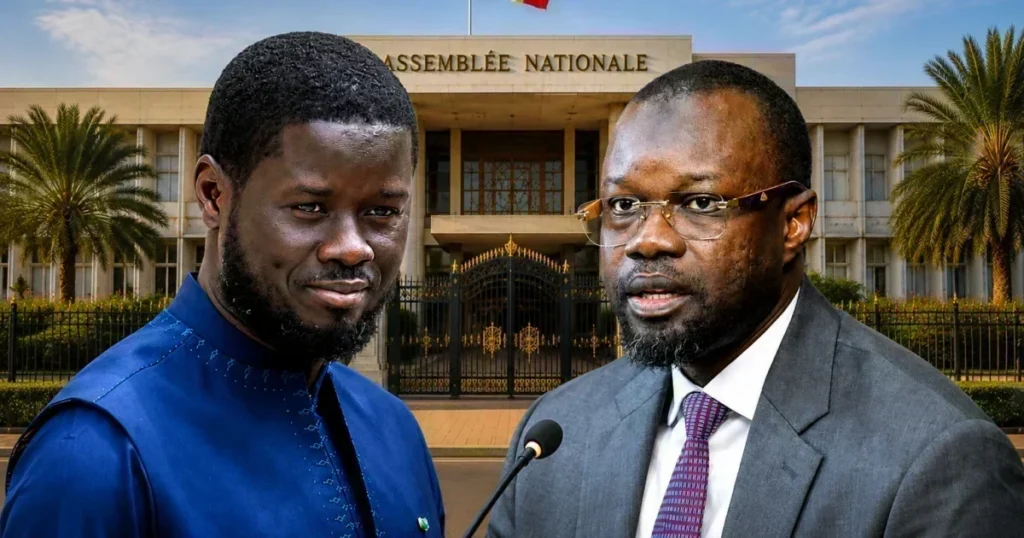
In a dramatic shift of power, Ousmane Sonko now holds the presidency of Senegal’s National Assembly, giving him unprecedented leverage to challenge Bassirou Diomaye Faye’s 2026 budget rectification law—a decision that could redefine the nation’s economic trajectory amid IMF negotiations and public discontent.
From Prime Minister to Parliament Speaker: A Power Shift in Dakar
The political landscape in Dakar has undergone a seismic transformation. Ousmane Sonko, once the Prime Minister under Bassirou Diomaye Faye, now occupies the speaker’s chair in the National Assembly, a role that comes with constitutional tools to either facilitate or obstruct the government’s financial plans. This institutional reshuffle has created a high-stakes standoff, with the 2026 budget rectification law serving as the first major battleground.
The timing couldn’t be more delicate. Following months of negotiations with the International Monetary Fund, the government’s budget proposal must now navigate the legislative maze where Sonko’s 130-seat majority in the 165-member Assembly holds the keys to its fate. While Faye remains confident in his party’s support, the constitutional powers at Sonko’s disposal could rewrite the rules of engagement entirely.
Constitutional Levers: The Tools Sonko Can Use to Block or Reshape the Budget
Senegal’s Constitution provides Ousmane Sonko with several strategic options to influence—or derail—the 2026 budget process. The most direct route would be outright rejection, leveraging his party’s overwhelming majority to vote down the proposal. However, this high-risk move could backfire, placing the burden of economic disruption squarely on Sonko’s shoulders, especially as the country navigates IMF approval processes.
Alternatively, Sonko could employ a more surgical approach through targeted amendments. The Constitution grants the Assembly the power to reduce expenditures or increase revenues, but prohibits the addition of new spending measures. This allows Sonko to force substantial revisions to the budget, particularly on debt management and IMF-related commitments, without triggering a full rejection. The government, however, retains a countermeasure: it can demand a single vote on the entire text, effectively boxing in the Assembly to either accept the proposal as-is or reject it outright.
The Clock is Ticking: A Race Against the 60-Day Deadline
Time is not on Sonko’s side. The Constitution mandates that the Assembly must vote on finance laws within 60 days of their submission. With the budget rectification law registered on September 18, 2026, the clock is set to expire around November 17. If the Assembly fails to pass the law by this deadline, the President gains the authority to enact it by decree—effectively bypassing parliamentary approval. This looming deadline adds pressure to Sonko’s strategy, as prolonged obstruction could hand Faye a powerful political tool: the justification to dissolve the Assembly and call for new elections.
There’s a critical gray area, however. The Constitution explicitly addresses scenarios where a budget isn’t voted on within the deadline but remains silent on the implications of an explicit rejection. This ambiguity could lead to a constitutional showdown, with Sonko potentially challenging the decree’s validity before the Constitutional Council—a move that would require the support of at least one-tenth of the Assembly’s members.
Censure Motion: A Nuclear Option with High Stakes
One of the most potent weapons in Sonko’s arsenal is the threat of a censure motion. The Constitution allows the Prime Minister to engage the government’s responsibility on a finance law, effectively deeming it passed unless the Assembly votes a censure motion within 24 hours. With Sonko’s majority, such a motion could easily secure the 83 votes needed for adoption, not only blocking the budget but also toppling the government. This nuclear option, however, carries severe consequences, potentially triggering a constitutional crisis just weeks before the President regains the power to dissolve the Assembly—a move that would reset the political landscape entirely.
December 2, 2026: The Date That Could Change Everything
The political chessboard is further complicated by a critical date: December 2, 2026. The Constitution prohibits the President from dissolving the Assembly during the first two years of its term, a protection that expires exactly two years after the current Assembly was installed. With the clock ticking, the stakes are higher than ever. A prolonged budget deadlock could provide Faye with the ammunition needed to justify a dissolution, while a smooth adoption would strip the President of this potent political lever.
Ultimately, Ousmane Sonko possesses the constitutional tools to either block, amend, or reshape Bassirou Diomaye Faye’s 2026 budget. Each option, however, comes with significant political risks, as the executive branch retains powerful countermeasures, including decree authority, government responsibility engagements, and the looming threat of dissolution. More than a legal battle, this confrontation represents a defining test of Senegal’s new cohabitation between the presidency and the legislature—one that will shape the nation’s economic future for years to come.