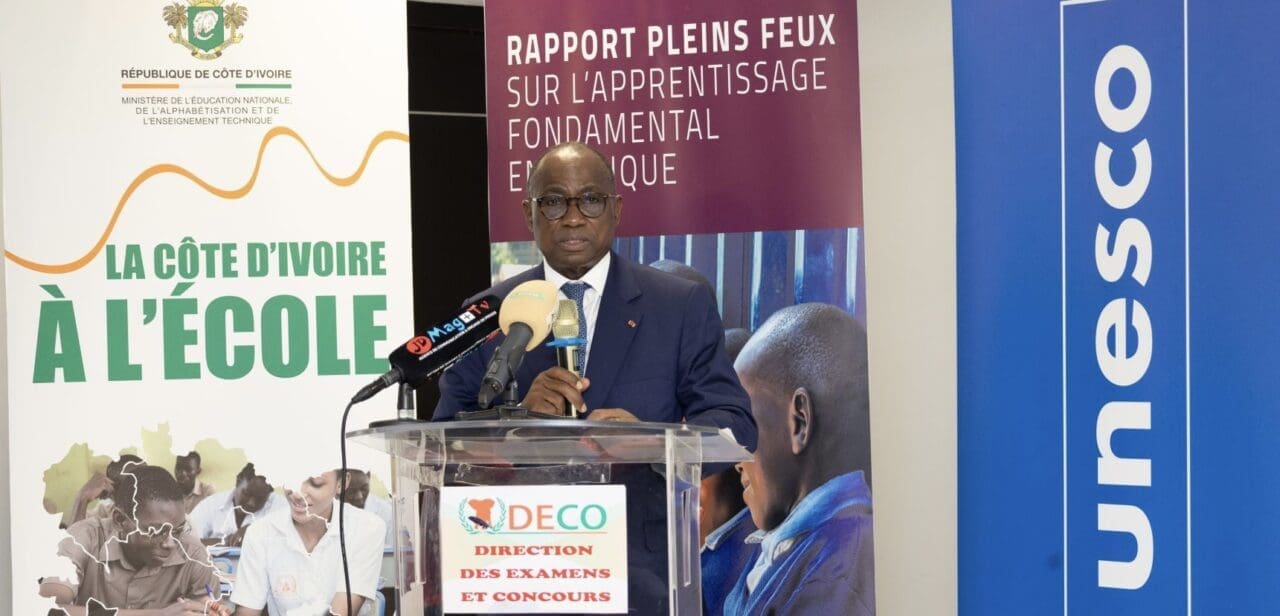
The Pleins Feux initiative, unveiled in April 2026 in Abidjan, represents a major milestone in Côte d’Ivoire’s ongoing journey to modernize its education system. Championed by President Alassane Ouattara and supported by international partners, this project aims to sharpen the governance of the education sector while boosting the impact of public policies to sustainably enhance learning outcomes across the country.

expanding access and upgrading teaching standards in Côte d’Ivoire
With a population exceeding 30 million and a predominantly young demographic, Côte d’Ivoire faces mounting pressure on its education system, particularly in rural regions. Since assuming office, President Alassane Ouattara has prioritized education as a cornerstone of national development, aligning efforts with the United Nations’ Sustainable Development Goal 4 (SDG 4) and the 2030 Agenda. Over the past decade, successive reforms have focused on widening access to schooling while elevating teaching quality.
Teacher recruitment has been a key focus. Between 2011 and 2026, Côte d’Ivoire bolstered its teaching workforce by over 69,000 educators in primary schools and more than 30,000 in secondary schools. Recent years have seen a targeted push to strengthen expertise in STEM fields, with 1,800 additional mathematics and physics teachers deployed to meet workforce demands and support the country’s economic transformation agenda.
Infrastructure development has also accelerated, especially in underserved rural areas. New schools have been built nationwide to shorten travel times for students, reduce dropout rates, and improve overall educational coverage. A notable example is the CAFOP of Boundiali in northern Côte d’Ivoire, which, alongside rising enrollment in teacher training programs—attracting nearly 68,000 applicants for roughly 7,000 spots in 2026—signals a robust commitment to building a sustainable and skilled teaching corps.
investing in school climate and inclusion
Improving the teaching environment has emerged as a pivotal strategy to enhance educational quality. From 2011 to 2025, starting salaries for primary school teachers increased by over 30%, while secondary school educators saw gains of up to 15%. These wage adjustments have bolstered the profession’s appeal and helped stabilize teaching teams, fostering continuity and expertise in classrooms.
The push for inclusivity has gained momentum as well. The integration of tailored learning materials for students with disabilities marks a significant step toward a more accessible education system. Complementary initiatives, such as awareness campaigns to prevent school-related pregnancies, further safeguard student trajectories and encourage persistence in the education pipeline.
project pleins feux: strengthening educational governance
Launched on April 12, 2026, in Abidjan, the Pleins Feux project represents a strategic pivot toward refining the governance of Côte d’Ivoire’s education system. Unlike initiatives focused on infrastructure or staffing, this program zeroes in on optimizing policy implementation and operational efficiency.
Developed in partnership with UNESCO, the African Union, and the Global Education Monitoring Report (GEM), Pleins Feux is the culmination of two years of collaborative work in Côte d’Ivoire, Ghana, and Ethiopia. Its goal is to empower decision-makers and educational leaders with the tools and skills needed to drive tangible improvements in learning outcomes on the ground.
International observers have praised Côte d’Ivoire’s progress in foundational learning, and the Pleins Feux initiative underscores the country’s dedication to sustaining this momentum. By leveraging a diverse ecosystem of support—spanning global, regional, and private-sector partners—the government is advancing a holistic transformation of its education landscape.