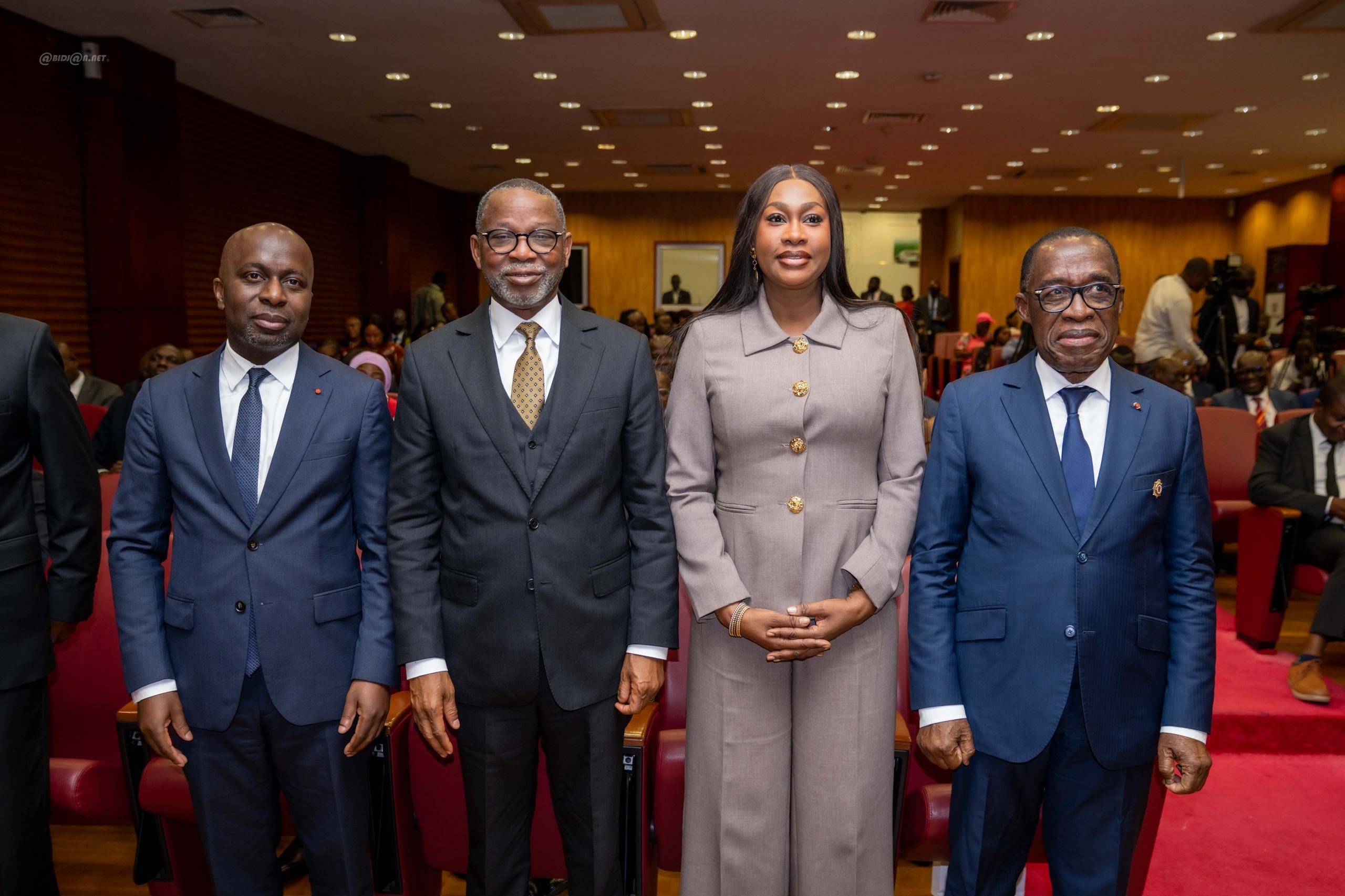
Côte d’Ivoire has taken a bold step to align its youth workforce with the demands of a rapidly evolving economy through the Passeport-Compétences initiative. On June 18, 2026, in Abidjan, the National Agency for Vocational Training (AGEFOP) unveiled a groundbreaking skills-needs assessment report, marking a pivotal moment in the country’s vocational education strategy.
The pilot phase of this study, conducted in the Sud-Comoé region, Yopougon municipality, and the Savanes District, engaged over 800 formal and informal sector entities. This data-driven approach aims to eliminate the persistent mismatch between education and employment—a critical challenge for Côte d’Ivoire’s economic growth.
Strategic insights to reshape vocational training
Dr. Eugène Aka Aouélé, President of the Economic, Social, Environmental, and Cultural Council (CESEC), emphasized the transformative potential of this initiative. Speaking at the launch, he stated, “Skills alignment is not a distant dream but a systematic process rooted in real-world data. This program places human capital at the heart of Côte d’Ivoire’s development, offering a precise roadmap for future policies.”
Highlighting the program’s national scope, Dr. Aka Aouélé added, “The Passeport-Compétences isn’t just about training—it certifies experience. For the CESEC, this is a monumental leap in recognizing human capital. Today’s ceremony signals the nationwide rollout. To our youth, this program is a covenant between the state and your aspirations, ensuring your skills become your greatest asset.”
Minister outlines transformative vision for workforce development
Maître Adama Kamara, Côte d’Ivoire’s Minister of Employment, Social Protection, and Vocational Training, framed the initiative as an amplifier rather than a corrective measure. “This program isn’t about fixing failure—it’s about amplifying success. We aim to identify skills gaps nationwide, train and integrate beneficiaries into the economy, and validate informal sector workers’ experience,” he explained.
The minister outlined key priorities: revising training curricula to match employer needs, redirecting resources to deficit zones and sectors, and strengthening public-private partnerships to ensure a qualified workforce. “Through field feedback, we will refine our approach, ensuring every Ivoirian has access to meaningful employment opportunities,” he stated.
AGEFOP champions a new era of vocational training
Kartia Coulibaly De Medeiros, Director-General of AGEFOP, underscored the program’s strategic importance. “Vocational training is no longer a sectoral policy or social expenditure—it’s a national investment driving competitiveness, job creation, and sustainable prosperity,” she declared.
She described Passeport-Compétences as a territory-economy nexus, grounded in real-time data from businesses and labor market analyses. “Effective training begins with understanding what industries truly need—not just today, but tomorrow. By bridging the gap between training institutions, employers, and local governments, we ensure skills translate into lasting opportunities,” she added.
The program, launched in March 2025 in Grand-Bassam, is central to Côte d’Ivoire’s Human Capital Development Strategy, aiming to transform potential into recognized expertise and economic independence for every citizen.