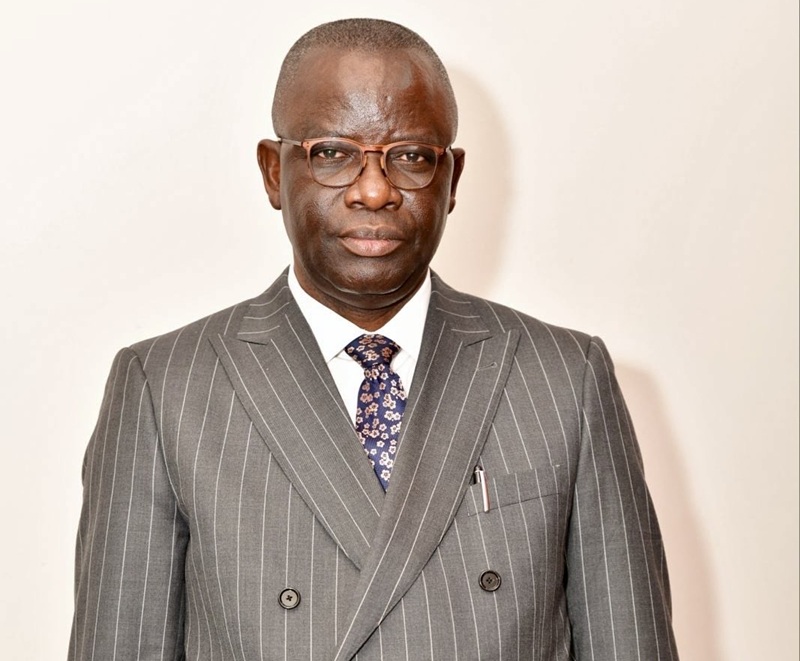
DRC’s constitutional reform: Isidore Kwandja’s bold plan to tame political fragmentation
The debate over whether to revise or replace the Democratic Republic of the Congo’s constitution has reached a critical juncture. A growing consensus is emerging: the country’s current democratic model is failing. To break the deadlock, a radical restructuring is proposed—limiting registered political parties to just three broad ideological blocs: left, right, and center. This constitutional reform aims to dismantle the chaotic “wild multipartism” plaguing the nation, shifting the focus from personality-driven politics to national development and collective progress.
The problem: when too many parties weaken democracy
The DRC now boasts over 500 registered political parties—more than nearly any other country in the world. While some may see this as a sign of vibrant democracy, the reality is far more troubling. This excessive fragmentation doesn’t strengthen governance—it cripples it.
The dispersion of political voices makes it nearly impossible to form clear majorities in the National Assembly. Governments are forced into unstable coalitions of small parties, held together not by shared vision, but by the distribution of ministerial posts. Political parties often operate as vehicles for personal ambition, with their leaders prioritizing access to power over policy. This culture fuels political defection—elected officials switch allegiances based on financial incentives—undermining democratic representation. Worse still, most of these parties rely on ethnic, tribal, or regional loyalties, deepening social divisions and fueling intercommunal tensions.
Institutional inefficiency is another consequence. A bloated parliament with hundreds of parties turns lawmaking into a slow, cumbersome process riddled with backroom deals. Party leaders frequently use their caucuses as leverage, pressuring the executive through protests and disruptions, all while advancing private interests over national debate. Even the Independent National Electoral Commission (CENI) struggles under the weight of organizing elections with ballots listing hundreds of party logos—a logistical and financial nightmare that wastes public resources.
A solution in sight: the power of three
Restricting the political landscape to three cohesive ideological blocs offers a path to stability and efficiency. Here’s why this model could transform governance in the DRC:
- Institutional stability: A three-party system eliminates the fragmentation that fuels chronic parliamentary instability. Clear majorities emerge, enabling durable governments capable of implementing long-term policies.
- Clearer voter choice: Elections gain meaning when voters can easily distinguish between distinct ideological platforms. This restores faith in the electoral process and strengthens civic engagement.
- A moderating third force: The center bloc acts as a constructive mediator, preventing the ideological gridlock that arises in a rigid two-party system. To secure a majority, parties must appeal to moderate voters, which naturally curbs extremism and populist rhetoric.
- Cost efficiency: Fewer parties mean simpler election logistics, reduced public spending on ballots and voting materials, and greater transparency in the allocation of state funding to political organizations.
- Governance by merit: By dismantling the quota system that rewards small parties for coalition-building, technical expertise regains prominence in leadership appointments. This shift reduces clientelism and ensures that decision-makers are chosen for competence, not loyalty.
Far from stifling political freedom, this reform is a public necessity. It’s time to clean up the DRC’s political system—so that governance becomes a tool for economic and social progress, not a battleground for personal advancement.