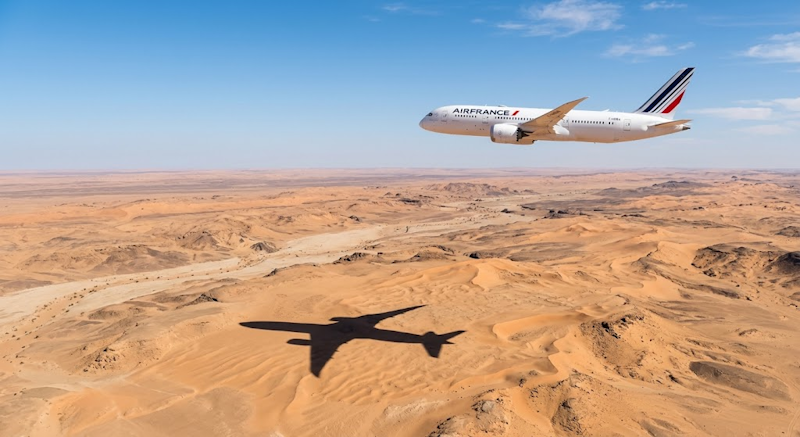

The European Parliament has formally endorsed the revised aviation accord between the European Union and Morocco, yet the agreement deliberately omits the Western Sahara region—despite ongoing flights from EU carriers operating there.
On July 8, 2026, lawmakers in Strasbourg voted overwhelmingly in favor of the protocol: 625 in support, 16 opposed, and 20 abstaining. The adjustment was a technical necessity following Croatia’s accession to the EU, ensuring the existing aviation framework remained compatible with the bloc’s expanded membership.
Critically, the revised accord does not alter the territorial scope of the original agreement. Its sole purpose was to incorporate Croatia’s EU membership, leaving the question of Western Sahara’s inclusion unresolved. This legal nuance has sparked debate over the EU’s stance on disputed territories.
a legal gray area persists
While the protocol itself avoids extending the agreement to Western Sahara, the European Commission has failed to enforce a complete prohibition on EU airlines flying to the occupied territory. Ryanair, for instance, has launched direct routes from EU airports to Dakhla, despite these operations falling outside the EU-Morocco aviation framework.
Other carriers have also exploited this loophole. Transavia (KLM-Air France subsidiary), Air Arabia (UAE), and Binter Airlines (Spain) have all operated flights to Western Sahara in recent years, in addition to Morocco’s state-owned Royal Air Maroc. Western Sahara Resource Watch (WSRW) has raised concerns with KLM-Air France and Air Arabia but received no response.
european court rulings shape the debate
The Court of Justice of the European Union (CJEU) has consistently ruled that EU-Morocco agreements—including the aviation deal—only apply within Morocco’s internationally recognized borders. A landmark 2018 decision confirmed that the aviation accord cannot be interpreted to cover Western Sahara unless its people consent—a condition not met.
The European Commission has reiterated this position, instructing EU airlines that the aviation agreement does not cover routes to Western Sahara. Yet, enforcement remains inconsistent, leaving a persistent gap between legal clarity and practical reality.
With the protocol now approved, the EU faces renewed scrutiny over its approach to territorial disputes and the accountability of its carriers in occupied regions.