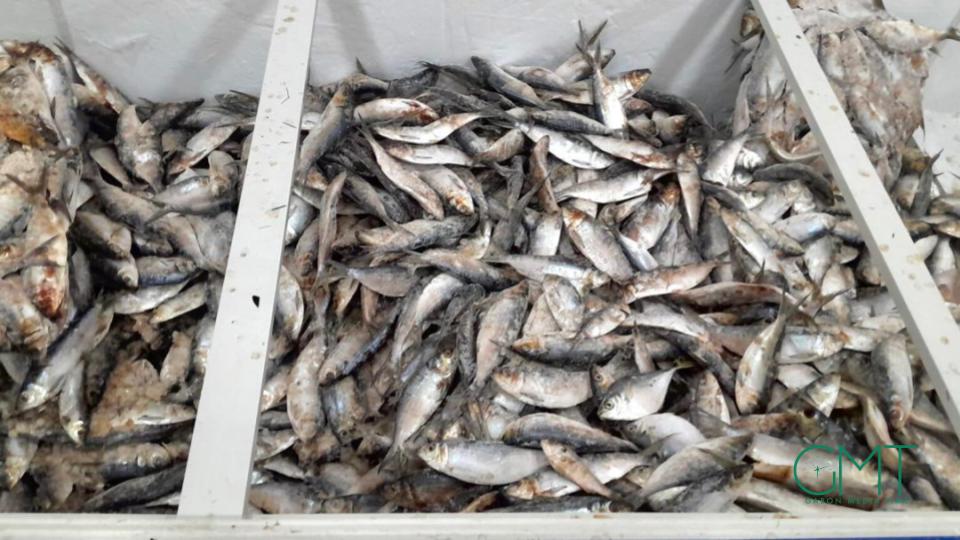
The Gabonese government has taken a firm stance to safeguard the national supply of fish products. Effective March 26, 2026, the temporary export of sardine (Ethmalosa fimbriata) and the fish commonly known as “sans nom” (Heterotis niloticus) is prohibited across the entire territory. This crucial decision, formalized through two decrees from the Ministry of Sea, Fishing, and Blue Economy and published in the Official Journal on April 16, 2026, directly addresses a growing scarcity observed in local markets. While these vital species continue to find their way to neighboring countries, particularly through border regions such as Cocobeach, authorities are now committed to prioritizing domestic consumption and curbing the uncontrolled outflow of these valuable resources.
On May 30, the Governor of Estuaire province, Marie Françoise Dikoumba, visited Cocobeach to remind local fishermen, traders, and transporters of the mandatory nature of this regulation. This awareness campaign comes amidst widespread consumer anxiety regarding the dwindling availability of sardines on market stalls. Officials believe that exports to adjacent nations significantly contribute to an imbalance in national supply, exacerbating price increases and making it harder for households to access an essential component of their daily diet.
Preserving stocks and enhancing food security
The two ministerial decrees specify that this interim prohibition aims to better organize production and distribution channels, stabilize the internal market’s supply, and actively combat price inflation. Authorities are also focused on strengthening the traceability of fishery products, securing future exports, and ensuring compliance with stringent sanitary standards. This policy is an integral part of broader governmental efforts to tackle the high cost of living and fortify food sovereignty, both declared national priorities.
Furthermore, the Ministry of Sea highlights increasing pressure on sardine stocks within Gabonese waters and on “sans nom” populations in riverine and lacustrine basins. By temporarily suspending exports, the State intends to facilitate the replenishment of biological capital in the most heavily exploited areas, thereby ensuring the sustainable utilization of these species. Violators face penalties outlined in the Fisheries Code, which range from the seizure of cargo and the revocation of fishing permits to potential legal prosecution, unless an exceptional authorization is granted by the relevant administrative body.