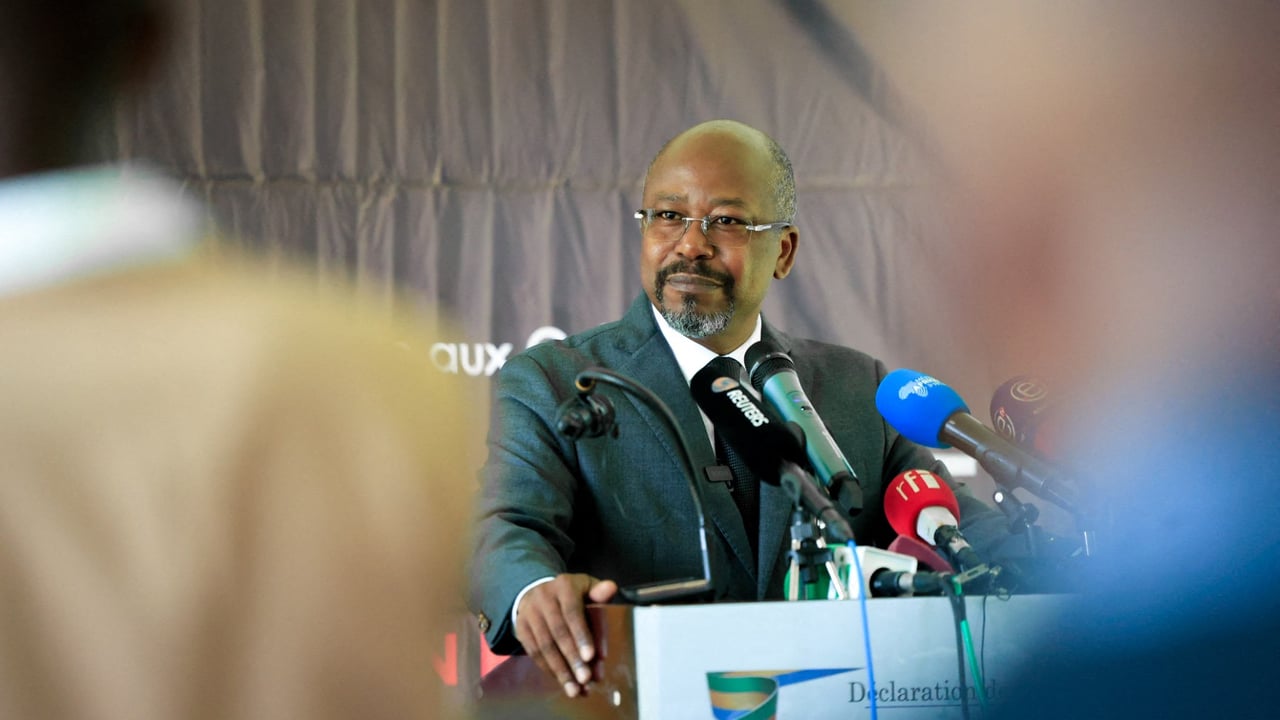
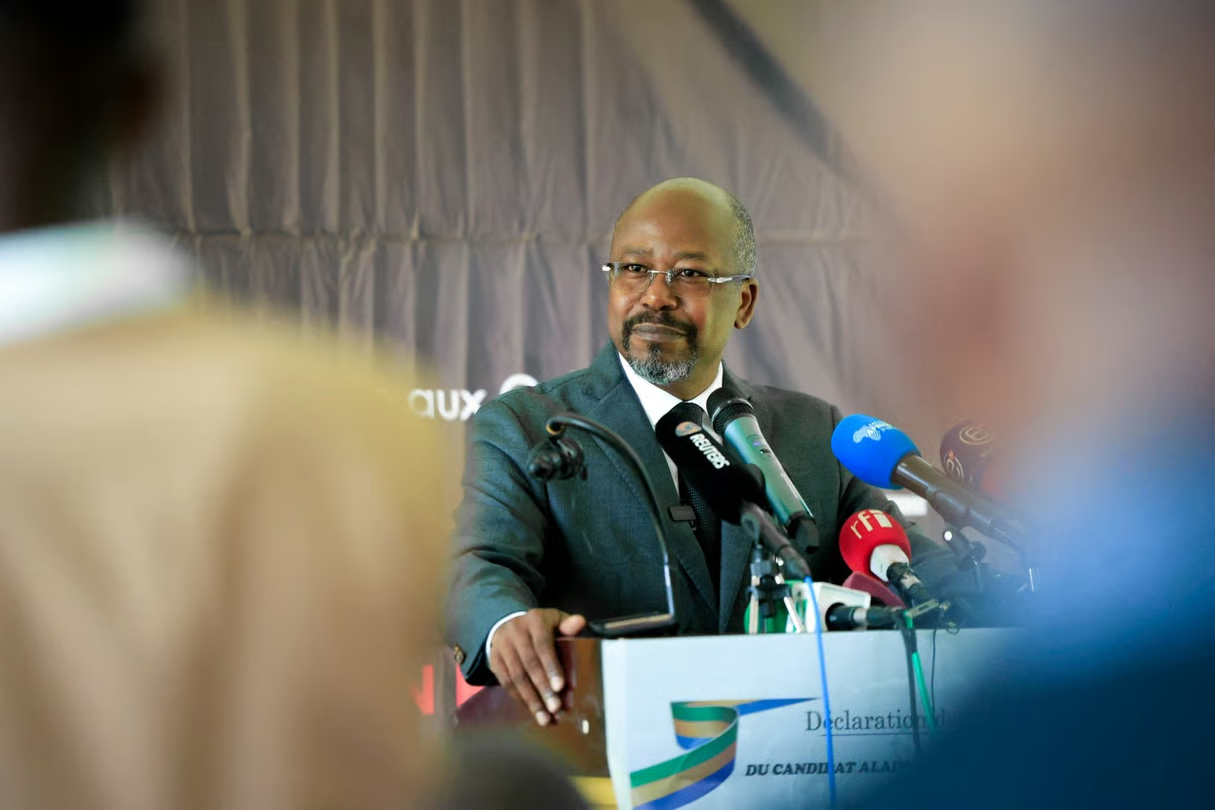
The head of Gabon’s opposition movement, Alain-Claude Bilie By Nze, stepped into the spotlight at Libreville’s Tahiti Hotel on April 14, 2025, just hours after the presidential election. Clad in a dark suit, he addressed reporters with a measured tone, outlining his party’s stance on the vote’s legitimacy and calling for transparency in the electoral process.
The opposition leader’s remarks came as the nation’s political landscape shifted following the high-stakes election. Bilie By Nze, known for his unwavering criticism of the ruling establishment, seized the moment to challenge the official narrative, urging international observers to scrutinize the results closely.
In his speech, he highlighted concerns over irregularities reported in several polling stations, particularly in urban areas. “Democracy thrives on fairness, and Gabon’s future hinges on a process that leaves no room for doubt,” he emphasized, his voice steady but firm.
The election had been closely watched across Central Africa, with regional leaders and global partners keenly monitoring its outcome. Bilie By Nze’s intervention added another layer of tension to an already charged environment, as his coalition vowed to pursue legal avenues if discrepancies were confirmed.
As the dust settled from the vote, the opposition figure’s press conference underscored a pivotal moment for Gabon. With the country at a crossroads, his call for accountability resonated far beyond Libreville’s conference halls, sparking debates about the integrity of the electoral system.
Analysts suggest that Bilie By Nze’s bold stance could galvanize public opinion and pressure the transitional government to address concerns raised by both domestic and international stakeholders.
The opposition leader’s appearance at the Tahiti Hotel was more than a post-election press briefing—it was a declaration of intent. By framing the election as a test of Gabon’s democratic resilience, he positioned himself as a key player in shaping the nation’s political future.