Libreville — In a political landscape where public discourse often wavers between blind support and cautious silence, a recent statement by Gabonese President Brice Clotaire Oligui Nguema has refocused the national conversation on a vital pillar of governance: the bond between leadership and citizen honesty.
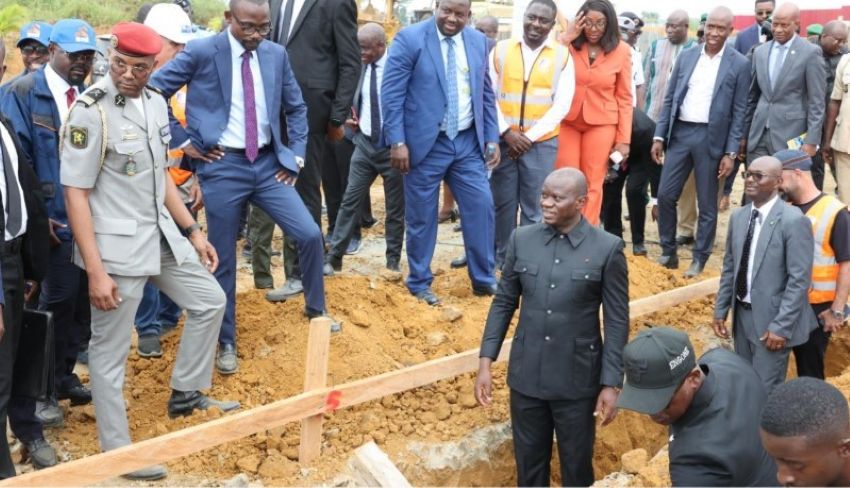
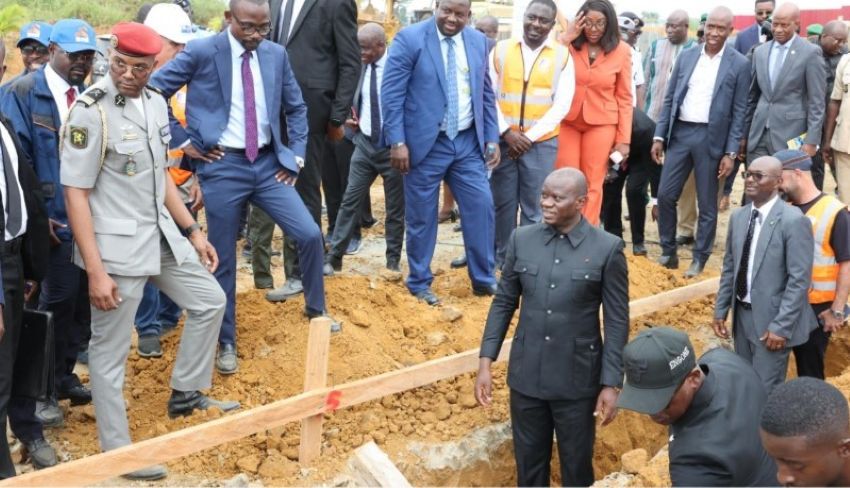
During the inauguration of a project to build 3,100 housing units in Bikélé, the Head of State spoke with journalist Chamberlain Moukouma, asserting that a leader should not merely bask in applause. Instead, Brice Clotaire Oligui Nguema argued that sincere criticism is essential for refining government actions. This perspective moves beyond standard political rhetoric, addressing the core of democratic accountability.
A departure from the culture of systematic approval
By explicitly stating that citizens must tell him when he is wrong so he can adjust his course, President Oligui Nguema is initiating a symbolic break from a political tradition often defined by the automatic validation of those in power. This stance highlights an uncommon requirement in institutional discourse: the use of self-reflection as a primary tool for leadership.
Under this logic, constant cheering is no longer viewed as a sign of political health, but rather as a risk for collective oversight. The President is calling for a fundamental shift in the relationship between the government and the governed, rooted in transparency and shared responsibility.
This approach aligns with a vision where national development is built not on flattery, but on a clear-eyed assessment of public initiatives, recognizing both their triumphs and their shortcomings.
Constructive criticism as a pillar of national progress
The presidential declaration restores an essential concept often sidelined in political practice: the value of constructive feedback. Speaking the truth to those in power is framed not as an act of defiance, but as a civic obligation tied to the common good.
In this view, public debate transforms into a space for continuous improvement rather than a site of unproductive conflict. A mature society is one capable of acknowledging progress while simultaneously identifying failures, thereby enhancing the effectiveness of state policies.
However, this shift requires a significant cultural change. It demands that citizens, social groups, and the press adopt a mindset based on impartiality, accountability, and a commitment to the public interest. Criticism is no longer the end goal; it is a mechanism for perfecting governance.
Establishing a new framework for political dialogue
Beyond the words themselves, a broader philosophy of leadership is emerging. President Oligui Nguema appears to be championing a model of governance focused on active listening, where citizen feedback serves as a compass for political direction.
In this framework, Gabon‘s development does not rely solely on top-down decrees, but on a constant exchange between the administration and the people. This dynamic requires a delicate balance between honoring achievements and maintaining a steady drive for better results.
The dialogue facilitated by Chamberlain Moukouma, shared across social platforms for civic education, contributes to this effort of building a more informed public sphere that is aware of its duties. Ultimately, this presidential message invites a reimagining of Gabon‘s political culture based on three demanding principles: praise when it is earned, criticize when it is vital, and always act for the higher interest of the Nation.
In a political environment frequently marked by posturing, this call for shared truth serves as a benchmark for democratic maturity. It positions the citizen not as a passive observer of authority, but as an active participant in its ongoing refinement.