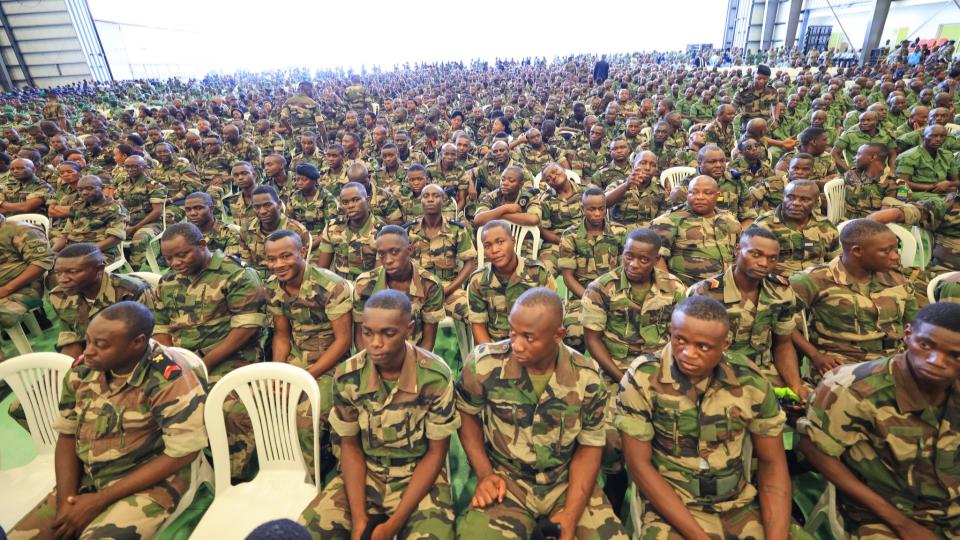
Gabon is taking a decisive step toward strengthening its defense capabilities by establishing a local production facility for military uniforms. The initiative, championed by the Ministry of National Defense, aims to reduce the country’s reliance on imported military attire while boosting national industrial self-sufficiency.
Boosting defense autonomy through local manufacturing
During a parliamentary session, the Minister of National Defense, Brigitte Onkanowa, presented a draft law establishing an Atelier de confection des uniformes des Forces de défense et de sécurité—a workshop dedicated to producing uniforms for the nation’s defense and security forces. The move addresses long-standing concerns about logistical vulnerabilities and financial strain stemming from the heavy dependence on foreign suppliers.
Onkanowa highlighted the growing strain on the national budget and supply chains caused by the increasing number of military personnel. By producing uniforms domestically, Gabon seeks to secure a stable, cost-effective, and uninterrupted supply of essential military gear. The initiative aligns with broader efforts to enhance the operational readiness and economic resilience of the country’s armed forces.
Parliamentary debate focuses on quality and fiscal responsibility
While legislators broadly supported the proposal, key questions arose regarding implementation and oversight. Deputy Jean Gaspard Ntoutoume Ayi emphasized the need for production standards that match or exceed those of imported uniforms, stressing that this project could also create local jobs and foster national craftsmanship. Meanwhile, Deputy Jean François Ndongou raised concerns about financial governance, questioning how the initiative would prevent budgetary overruns.
Addressing these concerns, Onkanowa clarified that the new workshop will operate as a shared support service for all deployed forces across Gabon. She assured that the facility will streamline procurement processes and enforce stricter financial controls over military clothing expenditures. With these assurances, the draft law has been forwarded to a specialized commission for finalization, paving the way for swift adoption.