Gabon’s academic honor: Oligui Nguema’s vision for Africa’s future
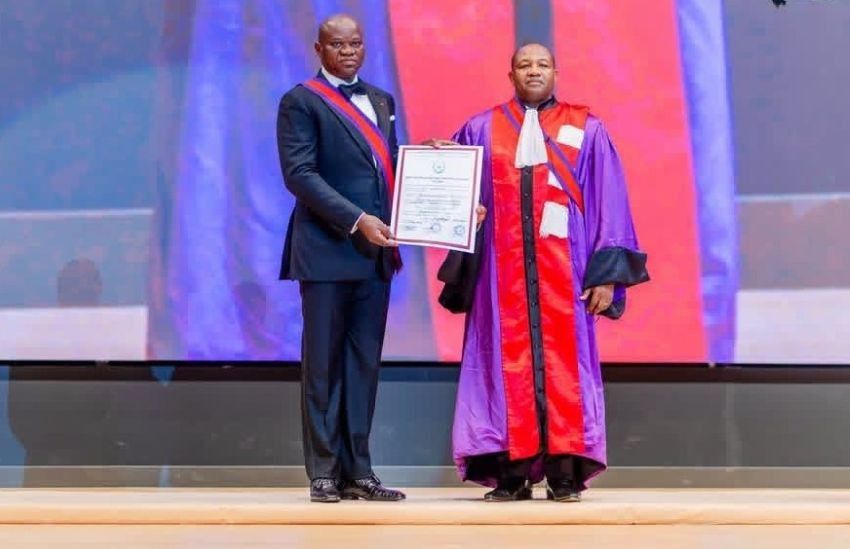
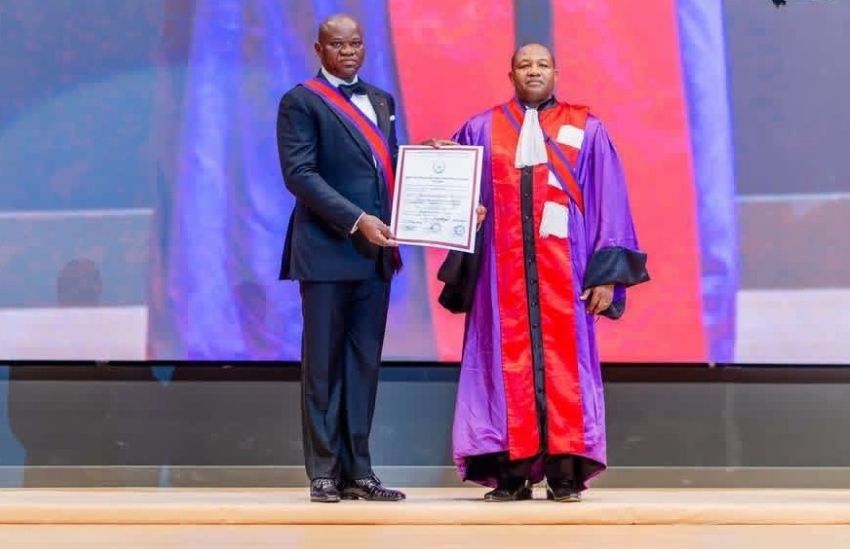
Libreville, June 23, 2026 — The academic honor bestowed upon Brice Clotaire Oligui Nguema transcends mere protocol. By being elevated to the rank of Grand Cross of the International Order of Academic Palms of the African and Malagasy Council for Higher Education (CAMES), the Gabonese leader receives more than just a ceremonial accolade.
Conferred during the 43rd CAMES session in Libreville, this recognition arrives at a pivotal moment when Gabon is actively reshaping its role in African intellectual dynamics and positioning higher education as a strategic lever for sovereignty.
In a continent where economic competition is increasingly decided in laboratories and universities rather than solely in natural resource extraction, this event signals a broader ambition: positioning Gabon as a central player in Africa’s academic transformation.
The heart of national progress
Addressing university leaders, researchers, and delegates from across Africa, the Head of State dedicated this honor to those he calls the true architects of tomorrow. Educators, scholars, and students were placed at the core of his address.
« I recognize these noble professions as vocations, often marked by challenges and hardships. The state and society must do more to acknowledge and support them, » declared Brice Clotaire Oligui Nguema.
This statement follows Gabon’s intensified investments in university infrastructure, higher education, and scientific research. Behind this strategy lies a shared conviction across Africa: the prosperity of nations will depend less on raw materials than on their ability to generate knowledge, innovation, and skilled human capital.
The Gabonese president encapsulated this vision with a statement resonating far beyond national borders: « No nation can fulfill its destiny without strong, responsible higher education and research. »
This declaration marks a departure from development models long centered on resource exploitation, instead placing education and science at the heart of strategic priorities.
CAMES and its enduring challenges
Established in 1968, the African and Malagasy Council for Higher Education is today one of the continent’s most significant university cooperation institutions. With nineteen member states, it plays a crucial role in evaluating academic staff, harmonizing degrees, and promoting scientific research.
According to Professor Charles Edgar Mombo, CAMES’ current Council of Ministers president, the stakes extend far beyond academia.
« Beyond its ceremonial significance, this presidency serves as a strategic tool to steer the institution’s priorities and strengthen the host country’s position within Africa’s academic landscape, » he emphasized.
Under Gabon’s leadership, several key priorities are taking shape. These include enhanced student and faculty mobility, mutual recognition of diplomas, curriculum modernization, adaptation to technological shifts, and improved graduate employability. The institution also faces an imperative: boosting the international visibility of African research in a global academic environment dominated by American, European, and Asian hubs.
Libreville’s ambition: becoming Africa’s knowledge capital
Gabon’s ambitions extend beyond administrative management of CAMES. Libreville now seeks to host the organization’s next Heads of State summit—a move that would send a powerful political signal.
Such an event would affirm Gabon’s return as an influential player in continental debates while providing a platform to promote its human capital-driven development strategy.
This aspiration comes at a time when Africa is experiencing the world’s fastest-growing student population. By 2050, hundreds of millions of young Africans will enter higher education, making their training directly tied to the continent’s economic competitiveness.
It is within this knowledge-driven race that Gabon is staking its claim. The honor awarded to Brice Clotaire Oligui Nguema thus represents more than personal recognition—it validates a political orientation that places universities, research, and innovation at the forefront of development.
Far from being a mere accolade, this Grand Cross of CAMES embodies a central idea in Africa’s new strategies: the 21st century will not solely belong to infrastructure or raw materials, but to knowledge. Gabon is determined to claim its rightful place in this historic transformation.