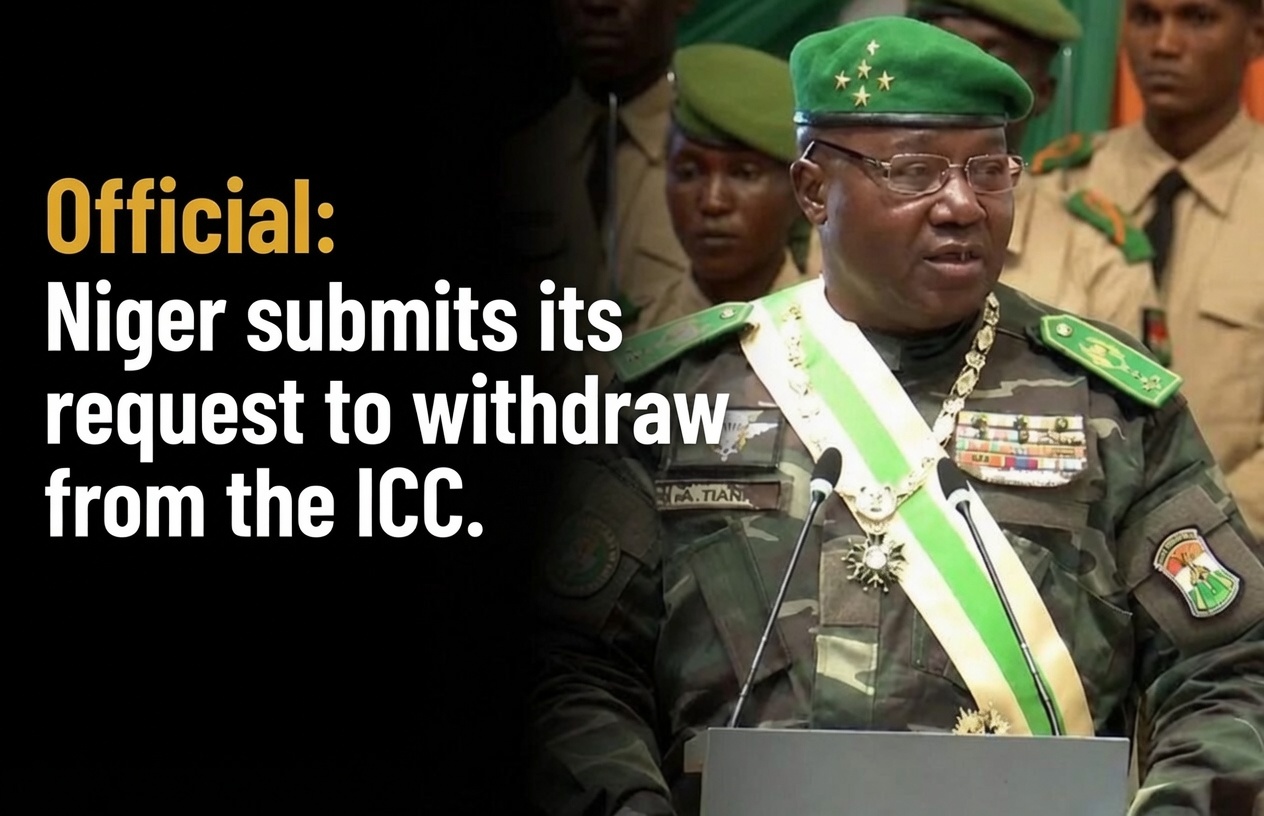
The Republic of Niger has officially initiated the process of withdrawing from the International Criminal Court (ICC), a move aligned with the policy of disengagement pursued by the military-led administration since it assumed power in July 2023. This decision underscores Niamey’s resolve to uphold national sovereignty and challenge the operations of an institution that has faced persistent criticism across the African continent.
a contested institution
The Nigerien authorities have long contended that the ICC disproportionately targets African nations. Since its establishment in 2002, the vast majority of investigations and prosecutions conducted by the Hague-based court have involved African states. This perceived imbalance has fueled recurring accusations of “selective justice,” a grievance repeatedly voiced by numerous African leaders.
geopolitical realignment
The decision to withdraw coincides with a broader geopolitical recalibration in Niger. Following a rupture with several Western partners, the current administration has pivoted toward deeper collaboration with the Alliance of Sahel States (AES), comprising Mali, Burkina Faso, and Niger. The three countries have implemented joint measures aimed at enhancing their political and security autonomy.
The withdrawal from the ICC represents another step in a series of actions demonstrating the government’s intent to diminish the influence of international institutions deemed incompatible with national interests. While supporters of the regime view this stance as a reaffirmation of sovereignty, critics warn that distancing from global justice mechanisms could undermine efforts to combat impunity and deprive victims of grave crimes of a vital legal recourse.
legal timelines and ongoing cases
Under the Rome Statute, the founding treaty of the ICC, the withdrawal process only takes effect one year after official notification to the United Nations. Furthermore, any investigations launched prior to the withdrawal date will remain within the Court’s jurisdiction.
By opting to leave the ICC, Niger contributes to a broader discourse on Africa’s role within international institutions and the delicate balance between national sovereignty and global criminal justice.