Gabon’s financial transparency takes center stage ahead of FMI talks
Libreville, June 4, 2026 — For months, economic circles buzzed with anticipation: an imminent agreement between Gabon and the International Monetary Fund (IMF) seemed just around the corner. Yet despite repeated announcements, the deal never materialized.
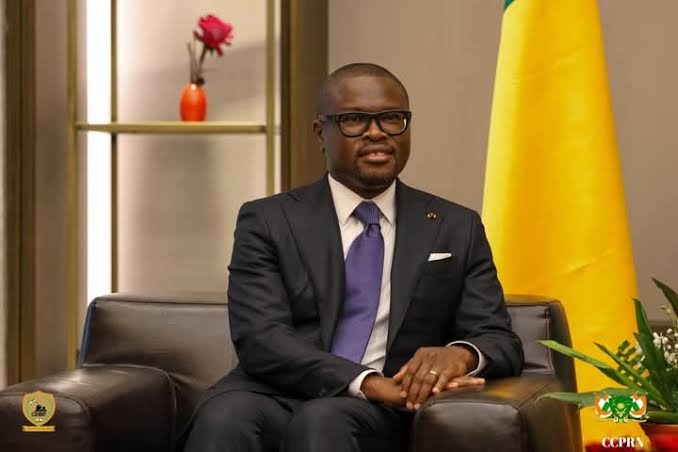
In a rare interview, President Brice Clotaire Oligui Nguema finally shed light on the reasons behind this prolonged delay. Beneath the surface of technical negotiations with the Washington-based institution lies a fundamental question that transcends mere financial considerations: does Gabon truly grasp the full extent of its public debt?
This issue carries enormous stakes. For international investors, credit rating agencies, development partners, and financial markets, an IMF agreement represents far more than a financing mechanism—it serves as a credibility signal, a testament to the country’s economic stability and trajectory. By confirming that a deal is now expected by the end of 2026, the head of state acknowledged progress while exposing long-standing governance gaps inherited from decades of opaque financial management.
Transparent auditing: the prerequisite for trust
The president’s most striking revelation concerned the actual state of Gabon’s debt levels. Initial assessments during the transition period showed glaring discrepancies: one estimate placed the debt at 7.5 trillion CFA francs, while another suggested nearly 8 trillion. Such a variance raised serious concerns at the highest levels of government.
In response, President Oligui Nguema mandated a comprehensive audit before any engagement with the IMF. His clear objective: obtain an accurate picture of the country’s financial reality before committing the Gabonese state to a program that would bind it for years to come. This insistence on transparency marks a rare departure from typical African financial negotiations, but it raises a critical question: how can a petroleum-producing nation struggle to establish a definitive assessment of its public debt?
The answer lies in the financial management practices that prevailed in previous years. For decades, Gabon’s public finances suffered from chronic opacity, off-budget commitments, and weak oversight mechanisms. In this context, the audit is not merely an option—it has become an absolute necessity.
A shared challenge for Gabon and the IMF
The IMF has shown willingness to accommodate Gabon’s demand for clarity. According to the president, the institution agreed to postpone finalizing their program to allow the audit to proceed—a pragmatic decision driven by the IMF’s own need for precise data before deploying its resources.
This verification phase carries heightened significance given Gabon’s strategic role within the CEMAC region. As one of the zone’s most influential economies—thanks to its oil and mineral wealth and its pivotal position in regional financial stability—Libreville’s economic health directly impacts subregional equilibrium.
Current discussions now focus as much on budgetary transparency as on future reforms. An IMF program extends beyond simple financing; it typically demands commitments in governance, budgetary discipline, revenue mobilization, and public expenditure control.
An agreement in sight, but structural reforms loom
The announcement of a potential deal by year-end represents a pivotal milestone, though it does not signal the end of the journey. Observers recognize that IMF programs often trigger structural reforms with tangible consequences for citizens. Measures such as public expenditure rationalization, tax reform, improved revenue collection, subsidy policy restructuring, and modernization of financial administration are frequently on the table.
The president provided no specifics regarding the agreement’s terms or potential funding amounts—a cautious approach justified by ongoing negotiations and pending decisions. Yet the deeper challenge now facing Gabon extends beyond financing alone. The Central African nation is seeking to rebuild its financial credibility after years of uncertainty. For international partners, the requested audit could mark the first step toward a new economic governance culture grounded in transparency and accountability.
From this perspective, the delayed agreement no longer appears as a setback. Instead, it may represent the necessary price for forging a durable relationship of trust between the Gabonese state, global markets, and international institutions—a relationship where trust is not declared but earned through verifiable financial truths.