Gabon’s president outlines economic sovereignty vision
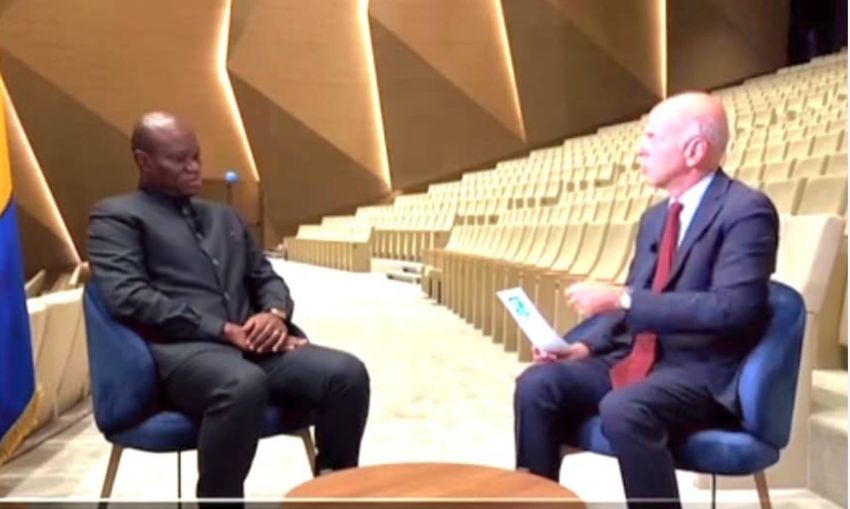
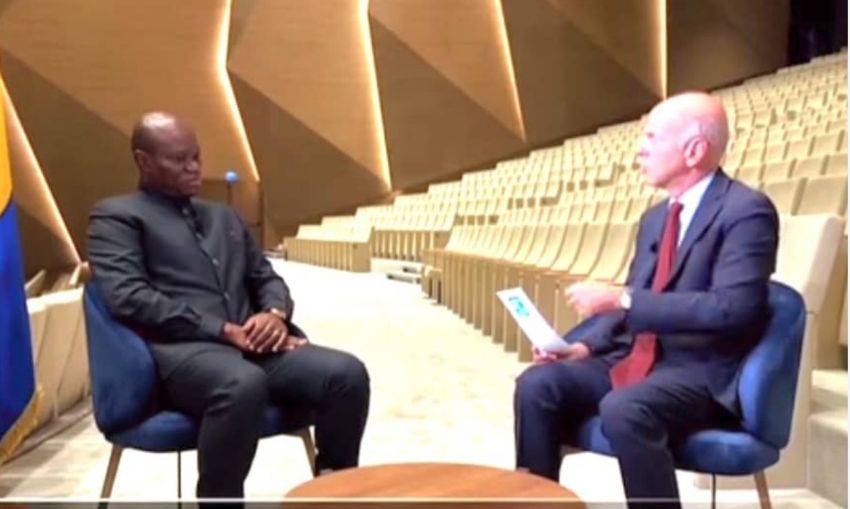
Libreville, June 3, 2026 — In a rare international interview, Gabonese President Brice Clotaire Oligui Nguema outlined his administration’s roadmap for economic sovereignty, defended policy choices, and reaffirmed his commitment to preventing dynastic rule.
Three years into his presidency and one year after winning re-election with over 94% of the vote, Oligui Nguema used his first major global platform to present a carefully crafted vision. Speaking from the Congress Hall of the Cité de la Démocratie in Libreville, the head of state addressed pressing national and international concerns with clarity and resolve.
The president’s remarks revealed a coherent political strategy: one that prioritizes long-term reforms, asserts economic independence from foreign conglomerates, and seeks to redefine Gabon’s relationships with traditional partners without rupturing ties.
Progressive reforms take center stage
Critics have questioned delays in delivering essential services like clean water and electricity. In response, Oligui Nguema emphasized that his seven-year mandate is a marathon, not a sprint. He acknowledged public frustration but highlighted investments exceeding 800 billion CFA francs in energy infrastructure, signaling tangible progress beneath the surface.
The president framed national transformation as a gradual process, warning against judging results prematurely. This message has become a defining feature of his political communication, positioning governance as a sustained effort rather than a sequence of quick wins.
Economic sovereignty as national doctrine
The most decisive statements came in the economic sphere. Oligui Nguema confirmed plans to engage with the International Monetary Fund—but only after a comprehensive audit of Gabon’s public finances. This stance reflects a broader determination to regain control over the country’s financial commitments before entering new international agreements.
The president’s mining policy delivered another major announcement: a 2029 ban on exporting raw manganese. As one of the world’s top producers, Gabon now aims to process more of its natural resources locally. This move directly challenges the French group Eramet, demanding that processing facilities be operational by the deadline—or face export restrictions. The policy underscores a broader effort to shift value creation within Gabon’s borders and rebalance power between the state and multinational corporations.
Balanced diplomacy without isolation
On the diplomatic front, Oligui Nguema stressed that asserting Gabonese sovereignty does not imply isolation. He confirmed a state visit to France on July 20, emphasizing strong ties between Libreville and Paris. The handover of Camp de Gaulle to Gabonese authorities was framed as a cooperative process, distinct from confrontational approaches seen elsewhere in the region. This partnership-first strategy appears central to Gabon’s current foreign policy.
Similarly, the president dismissed a U.S. proposal to host deported migrants, stating it did not align with Gabon’s national interests—without compromising relations with Washington.
Rejecting dynastic rule
Oligui Nguema also addressed the legacy of former President Ali Bongo Ondimba, noting his predecessor’s health without assigning blame for past governance issues. His most consequential statement, however, concerned the future of power: he pledged Gabon will not become a political dynasty under his leadership.
He reaffirmed the principle of a single seven-year term, renewable once—a commitment positioned as the cornerstone of a new institutional architecture rooted in democratic alternation. In a region where extended mandates and family-led successions remain common, this declaration marks a deliberate break from the past.
The test of implementation
Beyond rhetoric and policy announcements, this interview reveals the philosophical foundation of Gabon’s current leadership: economic sovereignty, local resource processing, rebalanced international partnerships, gradual infrastructure reform, and an explicit commitment to democratic alternation.
The true measure of success, however, lies in execution. While Oligui Nguema retains significant political capital, public expectations are high. Gabonese citizens will ultimately judge not by intentions, but by tangible outcomes. One year into his second term, the president has laid out a clear vision: a state reclaiming control of its economic and political destiny. The challenge now is turning ambition into lasting reality.
Related posts
Algeria’s parliament session sparks debate over Sahel military shift and regional fallout
The urgent summoning of Algeria’s parliament on 25 October has reignited discussions about the nation’s evolving...
Gabon’s decentralisation: uncovering the hidden barriers to local empowerment
Libreville — President Brice Clotaire Oligui Nguema’s recent meeting with Senate President Huguette Nyana Ekoume Awori...
Bénin’s Démocrates party: fallout grows as appeal verdict looms and Atchadé tightens grip
The protracted leadership battle within Bénin’s main opposition party, Les Démocrates, has entered a new phase...