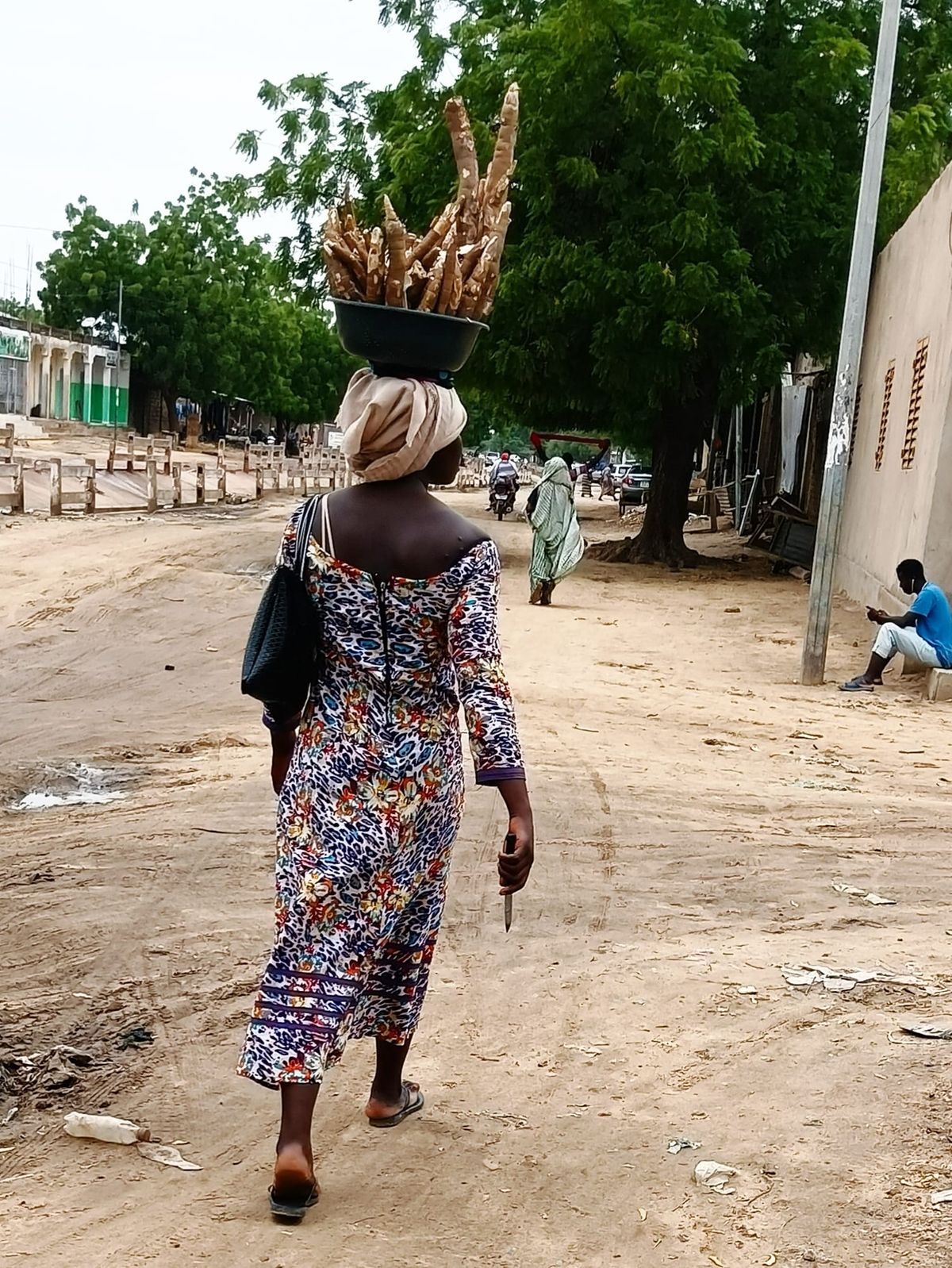
For many students, the school break is not a time for complete rest. Instead, it becomes an opportunity to learn real-life lessons firsthand. In N’Djamena, Léa, a tenth-grade student living in the Kilwiti neighbourhood, has chosen to sell cassava. Carrying a basin on her head, she walks the capital’s streets daily in search of customers.
“I live with my mother in Kilwiti. I use the holidays to sell cassava, which will help me prepare for the next school term,” she explains.
According to Léa, the price of cassava ranges from 50 FCFA to 500 FCFA. Like her, many other young girls have taken up this trade. However, the activity comes with its own set of challenges.
“Cassava has become expensive. Some customers, when we offer portions for 100 or 200 FCFA, think we are overpricing. They do not realise that we ourselves buy the goods at a high price; we cannot sell at a loss,” she says. Fortunately, she notes that some customers are understanding and often encourage them in their efforts. The country is facing palpable poverty.
According to the World Bank, 44.8 % of Chad’s population lives below the national poverty line. Beyond this overall poverty, several indicators of extreme vulnerability characterise the country’s situation: extreme poverty—about 36.5 % of the population lives on less than $2.15 per day. Chad ranks among countries with one of the lowest human capital indices, limiting opportunities for youth development.
A shift in mindset about the future
Beyond the immediate financial need, this initiative reflects a change in attitude among Chadian youth. Faced with an uncertain job market and the difficulty of relying solely on school for a stable professional future, these students have understood the importance of diversifying their skills and gaining financial independence from an early age. Alongside their studies, they learn discipline and the realities of the business world.