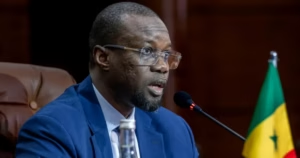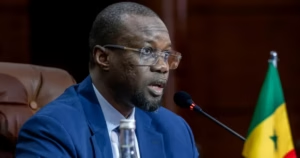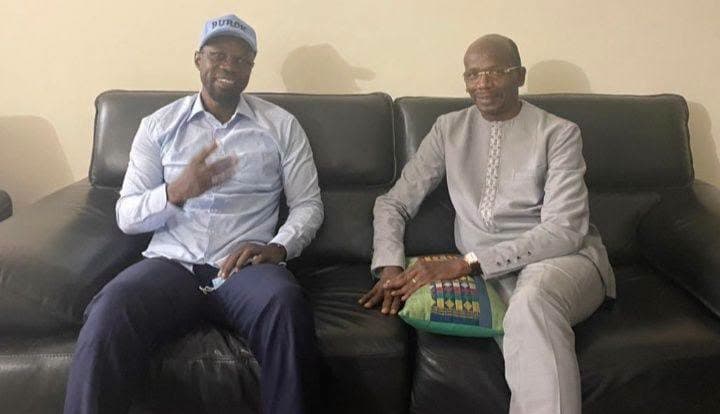
In a candid interview on national radio, Lansana Gagny Sakho, Chairman of the Board of the Senegal Investment Promotion Agency (APIX), shared his perspective on the rift between him and Ousmane Sonko, leader of the Pastef movement. His remarks underscore a deep commitment to institutional stability in Senegal, contrasting sharply with what he describes as Sonko’s disregard for republican principles.
Why institutions matter more than political alliances
Sakho admitted that he initially supported Pastef’s political vision, drawn by the integrity of its early leadership. However, after the historic transition in Senegal, he declined an offer to lead the Water and Sanitation Ministry, prioritizing his principles over a position of power. “I refused to compromise my values for any role. That decision ultimately allowed me to walk away with my integrity intact,” he stated. “From the very beginning, I chose the Republic over personal ambition.”
Ousmane Sonko’s stance on republicanism, under scrutiny
While Sakho champions the preservation of state institutions, he questions Sonko’s alignment with these ideals. He criticized Sonko for publicly undermining state authority during President Faye’s official visits to the United States and China, arguing that such statements weakened the government’s standing. “Public criticism during a head of state’s absence sends the wrong signal,” he remarked, suggesting that Sonko’s actions reflected a fundamental misalignment with republican governance.
Justice reforms: a test of institutional resilience
Addressing recent changes in the Ministry of Justice, Sakho defended the appointment of a new minister, refuting claims that the move aimed to control the judiciary. He cited Ousmane Diagne’s testimony before parliament, where the former Justice Minister declared his independence from external influence. “Those who assume the judiciary can be manipulated underestimate the resilience of Senegalese magistrates,” he asserted. “The realities of power are not as simple as opposition rhetoric suggests.”
Sakho’s comments come amid a wave of defections within Pastef, with several party officials shifting allegiance to President Faye’s camp ahead of the launch of the new Kiiraay party. His unwavering support for the administration’s policies highlights a broader debate within Senegal’s political landscape: the enduring tension between revolutionary rhetoric and the demands of institutional continuity.