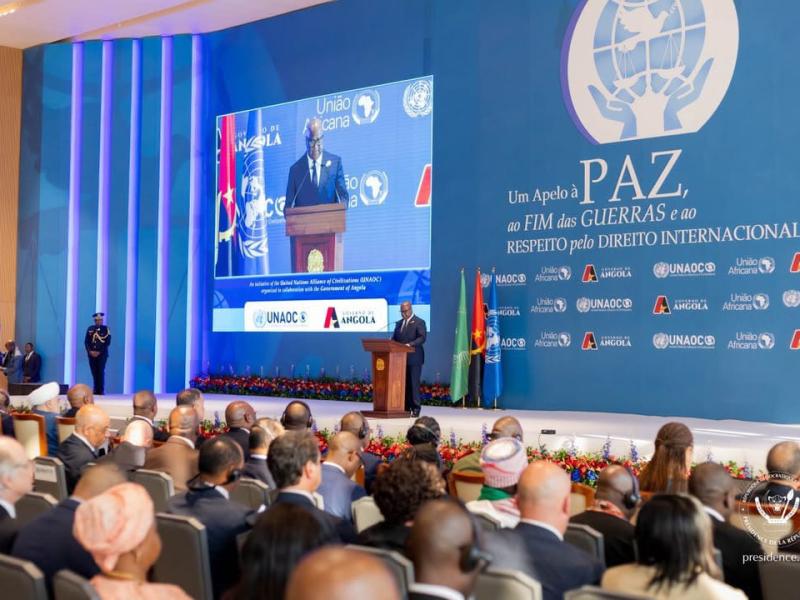
During a high-level international forum in Luanda, Angolan President Félix Tshisekedi of the Democratic Republic of the Congo (DRC) delivered a powerful address, framing the ongoing crisis in eastern DRC as a pivotal moment for Africa and the global community. Addressing delegates at the third edition of the Call for Peace, End of Wars, and Respect for International Law initiative, Tshisekedi emphasized that the conflict’s resolution would serve as a litmus test for the international community’s commitment to upholding justice and human dignity.
DRC’s suffering: a stark reminder of war’s human cost
The Congolese leader did not shy away from recounting the harrowing toll of the conflict on his nation. He painted a vivid picture of the devastation wrought by years of violence, highlighting the plight of displaced families, the systematic violations of women’s rights, and the tragic loss of innocent lives. The economic exploitation of the DRC’s natural resources, he noted, has only fueled the cycle of violence, diverting wealth meant for development into sustaining armed groups.
« My country knows the price of war. It knows the pain of families torn apart, the despair of communities trapped in violence, and the suffering of women whose dignity has been shattered. It knows the grief of massacres and the trauma of children robbed of education, security, and hope. It also knows how the illicit exploitation of our resources turns the very wealth meant for progress into the fuel of war. »
Eastern DRC crisis: a test for Africa and the world
Tshisekedi described the situation in eastern DRC as more than a national crisis—it is a continental and global challenge. The persistence of armed groups, mass civilian displacements, and foreign interference, he argued, threatens not only the DRC’s sovereignty but also the stability of the entire Great Lakes region. The international community’s response, he stressed, must be decisive and consistent.
The Congolese president acknowledged ongoing diplomatic efforts, including the Washington and Doha processes, supported by the African Union and regional partners. While he reaffirmed the DRC’s commitment to dialogue, he cautioned that peace cannot remain a distant promise. It must be tangible, verifiable, and rooted in action.
« Peace is not a suspended promise. It must be forged in concrete actions—actions that restore state authority, protect civilians, enable the dignified return of displaced persons, and pave the way for justice, reparations, and reconciliation. The Luanda Call must not be another declaration. It must be a binding commitment to defend international law wherever it is under threat. »
A call for renewed global responsibility
In a poignant appeal to world leaders, Tshisekedi urged a return to the foundational principles of the United Nations Charter, marking its 80th anniversary. He challenged the international community to prioritize responsibility over indifference, truth over propaganda, and justice over impunity. The DRC’s crisis, he argued, is a test of whether the world is willing to act with courage and integrity.
« At a time when we commemorate the 80th anniversary of the UN Charter, our duty is not merely to celebrate its legacy but to ensure its promise endures. This promise is simple yet profound: to shield future generations from the scourge of war. It has not lost its relevance. It compels us to act now—with boldness and conviction. Only then can we dismantle the rule of might and build a more just, secure, and peaceful international order for generations to come. »
Diplomatic stalemates and the path forward
Despite the Washington Agreement and the Doha Process, the security situation in eastern DRC remains dire. Negotiations between Kinshasa and the armed group M23 have stalled, and commitments made under these frameworks have largely gone unfulfilled. Tshisekedi’s address underscored the urgent need for tangible progress, warning that prolonged inaction would only deepen the crisis.
The Luanda summit, co-organized by the UN Alliance of Civilizations (UNAOC) and the Angolan government, brought together global leaders to address pressing conflicts worldwide. Tshisekedi’s intervention served as a stark reminder that the DRC’s crisis is not an isolated tragedy but a litmus test for the world’s collective resolve to uphold peace, justice, and human rights.
Félix Tshisekedi addressing world leaders at the Luanda peace summit, emphasizing the need for verifiable and actionable peace in eastern DRC.