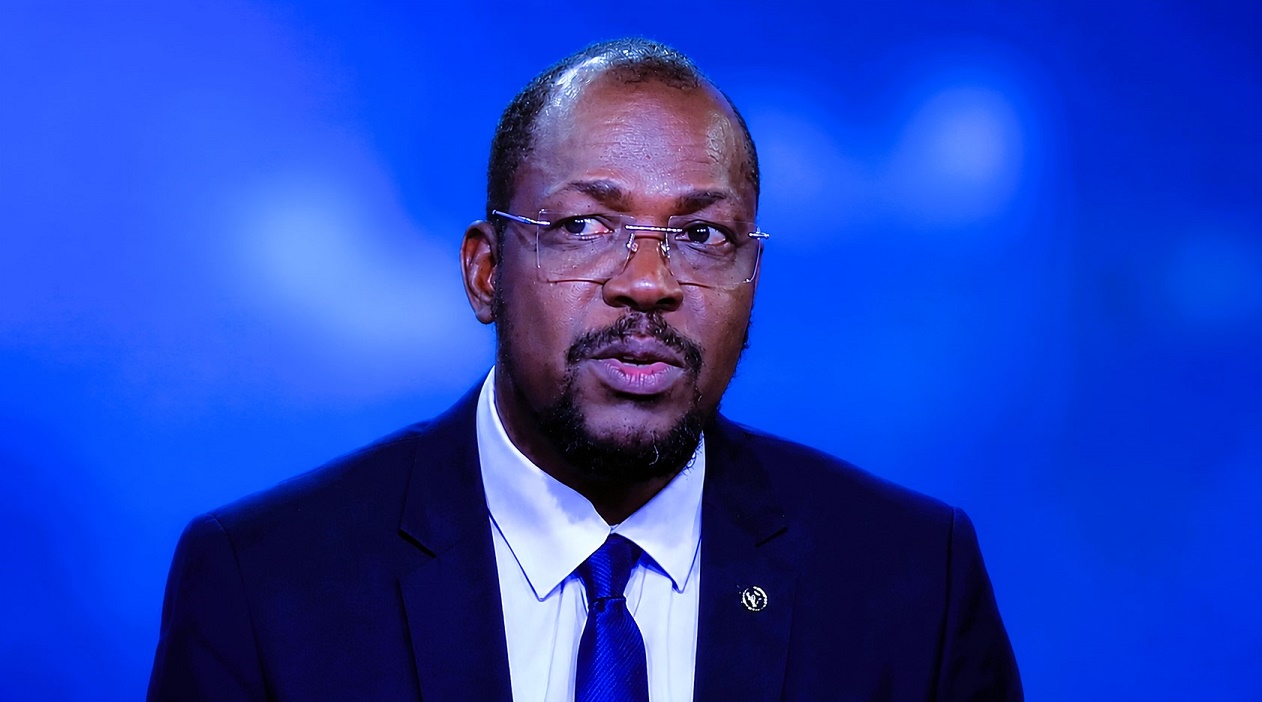
The debate over whether Mali should engage in talks with armed groups like the Group to Support Islam and Muslims (JNIM) is intensifying. Étienne Fakaba Sissoko, spokesperson for the Coalition of Forces for the Republic (CFR), firmly rejects the notion that dialogue equates to alliance. In a candid discussion, he outlines his movement’s vision for resolving the crisis, emphasizing that peace cannot be achieved at the expense of Mali’s territorial integrity or republican values.
Sissoko highlights the human toll of the ongoing blockade, which has crippled Bamako’s supply chains and deepened economic hardship. “To call this strategy a success would be to reward suffering,” he asserts. The CFR refuses to endorse measures that disproportionately punish civilians, viewing them as counterproductive to national reconciliation. Instead, he advocates for a political solution that prioritizes security, humanitarian access, and the restoration of state authority—especially in regions where governance has collapsed.
Mali’s yearning for peace and stability
Since its formation in late 2025, the CFR has positioned itself not as a traditional political party but as a civic platform for national salvation. Sissoko notes a palpable hunger among Malians for alternatives to the current crisis, whether it stems from prolonged military rule or the escalation of armed conflict. “The people want peace, and they deserve a credible path to it,” he states.
The movement’s legitimacy, he argues, is rooted in its refusal to be co-opted by either militant factions or entrenched power structures. While the CFR engages in dialogue with actors across the spectrum, it draws a clear line: “Dialogue does not mean alliance.” Sissoko dismisses comparisons between his group and the National Liberation Front of Azawad (FLA), stressing that the CFR operates entirely within the civilian sphere, devoid of any military agenda.
No automatic legitimacy for armed groups
The recent surge in JNIM’s offensive operations has raised urgent questions about Mali’s political future. If the group’s campaign had succeeded in toppling the government, would the CFR have been prepared to assume leadership? Sissoko responds with caution: “A responsible movement must prepare for all scenarios, but not at the cost of Mali’s collapse.”
He outlines a civil transition plan centered on restoring public freedoms, securing populations, and initiating a structured national dialogue. The goal? A new constitution followed by elections—not as the starting point, but as the culmination of a process built on consensus and security. “Without these foundations, history will only repeat itself,” he warns.
On the role of religious figures like Imam Mahmoud Dicko, Sissoko cautions against reducing him to a political savior. Instead, he envisions Dicko as a moral authority capable of fostering trust and mediating between societal divides. However, he insists that executive power must remain with democratically elected institutions, not unelected figures.
Dialogue yes, but with uncompromising principles
The CFR’s willingness to engage with JNIM is often misinterpreted. Sissoko clarifies: “Our dialogue is not surrender, nor is it reward. It is a tool to end war and protect lives.” The movement’s red lines are non-negotiable: Mali’s unity, the preservation of a republican state, fundamental freedoms, and the rejection of transnational jihadist agendas. “Affiliation to Al-Qaeda makes true peace impossible,” he states.
Regarding Iyad Ag Ghali, Sissoko refuses to speculate on his intentions. “Actions speak louder than words,” he argues. For dialogue to yield results, armed groups must demonstrate a commitment to peace through verifiable steps: halting attacks on civilians, allowing humanitarian access, severing ties with Al-Qaeda, and recognizing Mali’s territorial integrity. “We do not negotiate the existence of the Malian state. We discuss the conditions to end the war without abandoning the Republic.”
Beyond caricatures: the case for decentralization
Critics often frame Mali’s crisis as a struggle over the imposition of sharia law, but Sissoko dismisses this as a dangerous oversimplification. The real issue, he argues, is the failure of the state at the local level. In many regions, the absence of administration, justice, and public services has forced communities to rely on traditional or religious leaders for dispute resolution.
The CFR does not advocate for sharia. Instead, it proposes a decentralized republic where local governance and mediation operate within a strictly constitutional framework. Key principles include respect for the Constitution, equal citizenship, protection of women and children, and access to national justice. “The debate should focus on governance, not on distortions.”
On federalism, Sissoko explains that the issue is not about dividing the country but about redistributing power and resources more equitably. The CFR supports a sovereign, indivisible Mali, but one where regions have greater autonomy to manage their affairs. “Concentrating everything in Bamako is inefficient. The state must guarantee national unity while empowering local territories.”
A roadmap for rebuilding Mali
The CFR has developed a comprehensive transition program aimed at restoring what Sissoko calls “a functional state.” Priorities include reopening schools, strengthening the judiciary, protecting civilians, and reviving the economy. “The crisis is also humanitarian. Restoring access to education, justice, security, energy, and food is the first step toward reconstruction.”
On regional coordination, Sissoko clarifies that the Alliance of Democrats of the Sahel (ADS) is not a military or political command structure. Rather, it is a civic convergence between Malian, Burkinabè, and Nigerien democrats who share a common diagnosis: the Sahel’s crisis is as much institutional as it is security-driven. The ADS focuses on advocacy, defending public freedoms, and solidarity among democratic forces facing shrinking political spaces.
The CFR’s vision rejects the pitfalls of strongmen, partition, or theocratic rule. Instead, it champions a civilian-led transition, a national dialogue under strict republican oversight, and a refoundation of Mali’s territorial governance. “Mali will not be saved by a single man. It will be saved by a strong national pact.”