In a bold diplomatic move, Nigeria has once again publicly endorsed the right of the Sahrawi people to self-determination, reinforcing its recognition of the Sahrawi Arab Democratic Republic (SADR). This decision goes beyond mere diplomatic courtesy, signaling a clear stance against Morocco’s attempts to close the Western Sahara dossier permanently.
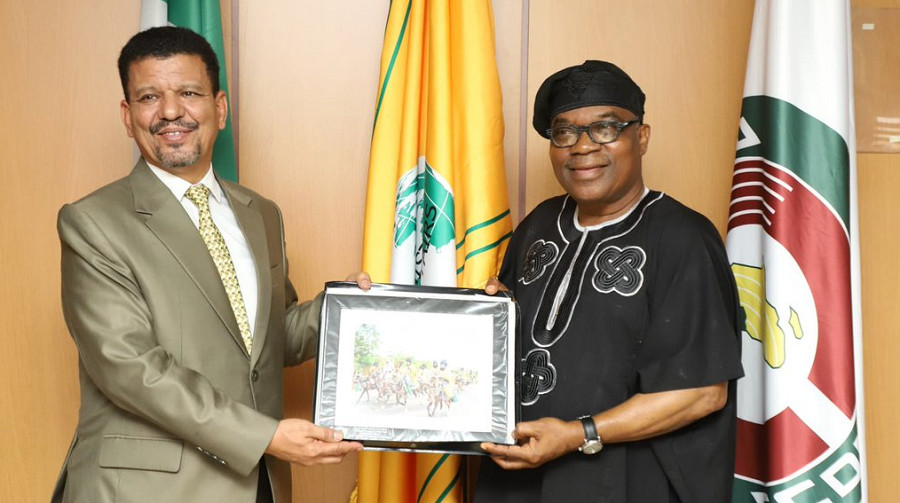
The recent visit of Mohamed Yeslem Beissat, special envoy of Sahrawi President Brahim Ghali, to Nigeria’s capital Abuja underscored the depth of relations between the two nations. High-level discussions with Nigerian authorities not only reaffirmed their shared commitment to cooperation but also highlighted their alignment with the African Union’s core principles, which uphold self-determination as a cornerstone of continental unity.
This uncompromising position takes on added significance as Morocco continues to champion the Nigeria-Morocco gas pipeline project, positioning it as a transformative energy initiative for West Africa. Yet, Nigeria’s unwavering support for the SADR shatters the illusion of a political realignment with Rabat. The gas pipeline, despite its frequent promotion in official statements, faces daunting challenges—skyrocketing costs, security threats, financing hurdles, and an impractically long route—raising serious doubts about its feasibility. In this context, Abuja’s resolute stance serves as a definitive rebuttal to claims of a diplomatic shift favoring Morocco.
While the Nigeria-Morocco gas pipeline remains a topic of discussion, its aspirations clash with the realities of regional diplomacy. The Sahrawi leadership, a founding member of the African Union, continues to engage intensively with African states to preserve the continent’s consensus on Western Sahara’s decolonization. Recent diplomatic outreach to key capitals reinforces the SADR’s determination to uphold international law and ensure that the Sahrawi question remains an unfinished chapter of decolonization, not a closed case.