Mali’s deepening militarization under transition rule
The Malian government claims to have regained full military sovereignty after the withdrawal of French forces and the gradual dismantling of Western security arrangements. Official narratives frame this shift as a historic triumph—an African nation reclaiming control over its territory and rejecting foreign oversight.
Yet beneath the rhetoric lies a far more complex transformation of Mali’s political system. While Bamako celebrates its newfound autonomy, the reality reveals a deepening militarization of governance. The state’s security apparatus no longer answers to external actors but has instead entrenched itself as the dominant force in national decision-making, economic networks, and political legitimacy.
From foreign intervention to domestic militarization
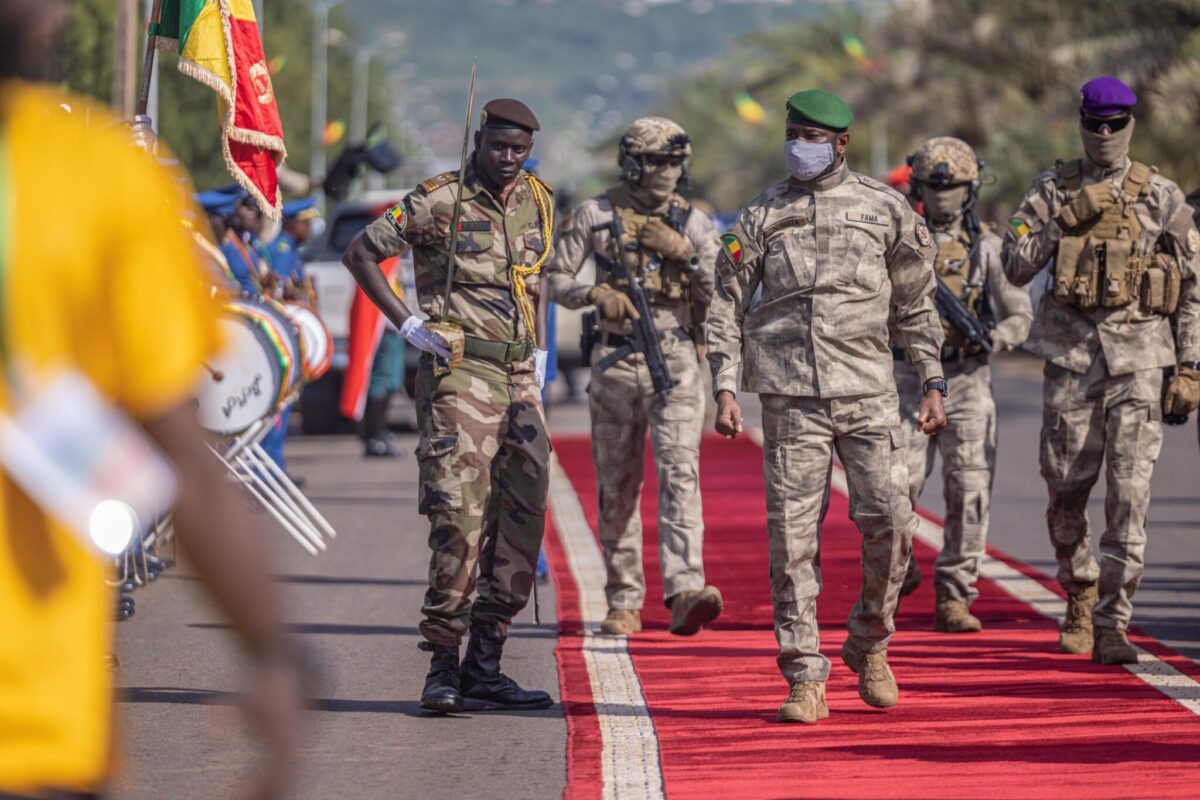
The departure of French troops in 2022 marked a turning point, not just in military strategy but in the very architecture of Malian power. The transitional authorities, now fully under military leadership, have systematically sidelined civilian institutions while elevating the role of armed forces in governance. The Africa Corps, a coalition of mercenary groups, has emerged as a key pillar of this new order—tasked with combating terrorism and, crucially, safeguarding the regime’s stability.
The conflict in Mali is no longer a temporary crisis to be resolved; it has become the foundation of the state’s political and economic functioning. Military institutions now control key ministries, budget allocations, and public discourse, using the perpetual security threat as justification for delaying democratic transitions and suppressing dissent. The war economy has taken root, with defense spending soaring and military elites consolidating both financial and institutional power.
The rise of new security partnerships
The vacuum left by Western forces has been filled by alternative alliances, most notably with Russian-backed entities. While international observers often frame this shift as a geopolitical rivalry between Paris and Moscow, Mali’s trajectory is driven by a more pragmatic calculation: seeking partners who offer military support without imposing political conditions. The Kremlin’s Wagner Group, for instance, has become deeply embedded in Mali’s security apparatus, providing combat training, logistical support, and a veneer of plausible deniability for the regime’s most controversial actions.
This realignment has reshaped Mali’s regional posture alongside Burkina Faso and Niger in the Alliance of Sahel States (AES). Together, these nations are constructing a political bloc built on anti-colonial rhetoric, sovereign security, and military-led governance. Yet this alliance remains fragile, propped up by economies in decline, simmering social unrest, and an unstable regional environment. The trio’s push for strategic autonomy is undermined by financial dependence on volatile commodity markets and the very insurgencies they claim to defeat.
Can sovereignty exist without stability?
The irony of Mali’s current trajectory is stark: a government that celebrates its liberation from foreign interference is now trapped in a cycle of its own making. The military’s grip on power has not translated into territorial control. Insurgent groups continue to operate across vast swathes of the country, while state institutions remain weak, corrupt, and geographically concentrated. The persistent violence has become less a problem to solve and more an instrument of governance—a constant reminder of the regime’s indispensability.
For Bamako, the challenge extends beyond military survival. The deeper crisis lies in the structural militarization of the state, where war funding diverts resources from education, healthcare, and infrastructure. The longer the conflict persists, the harder it becomes to envision a return to civilian rule. Peace, in this context, could destabilize the very system that sustains the current leadership.
Mali’s dilemma reflects a broader paradox in the Sahel: the rejection of Western security models has not delivered independence but has instead entrenched new dependencies—this time on mercenaries, regional strongmen, and the war economy itself. Sovereignty, in this framework, is measured not by the absence of foreign troops but by the unchecked expansion of military power at home.
The real question facing Mali is not how to defeat insurgents, but how to break free from the logic that has turned war into the primary language of governance. Until then, the country risks trading one form of domination for another—this time, self-inflicted.