The high-stakes gamble of Mali’s withdrawal from ECOWAS
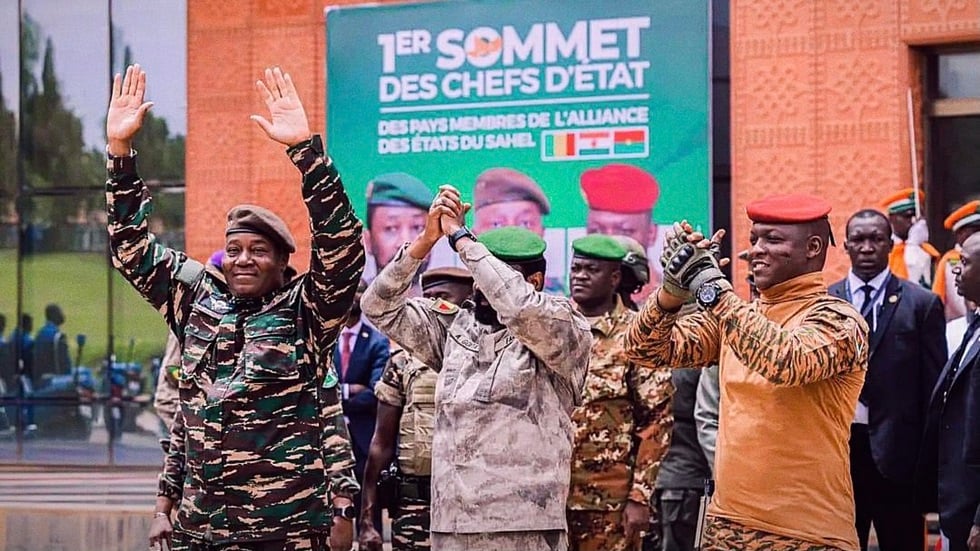
In the delicate balance of geopolitical strategy, timing can mean the difference between triumph and disaster. The decision by the Alliance of Sahel States (AES)—comprising Mali, Burkina Faso, and Niger—to sever ties with the Economic Community of West African States (ECOWAS) is increasingly resembling a high-risk move with diminishing rewards. As extremist threats like Boko Haram and ISWAP intensify across the region, unity should be the cornerstone of security—not fragmentation. And in matters of defence, fragmentation is not just ineffective—it is perilous.
The flawed narrative behind the withdrawal
The AES bloc justified its exit by accusing ECOWAS of serving as a tool of neo-colonial influence, particularly under France. While historical grievances are valid, the decision to abandon a regional security framework without a viable alternative exposes a dangerous flaw in logic. True sovereignty is not found in isolation—it is built on internal strength and strategic partnerships. Turning to Russia as a security ally may appear as a bold recalibration, but the reality is far more precarious. Moscow’s engagements are inherently transactional; support is contingent on alignment with its national interests. When those interests shift, so does the commitment—a lesson already demonstrated in other global conflicts.
Recent insurgent attacks across key Mali cities—Bamako, Sevare, Mopti, Tessalit, Gao, Kati, and Kidal—have laid bare the vulnerabilities of this approach. The much-anticipated protection from external allies proved fragile, and the muted response from fellow AES members only underscored deeper questions about the bloc’s operational credibility.
ECOMOG’s legacy: the power of collective action
ECOWAS has a proven track record of decisive intervention. Under Nigeria’s leadership, the ECOWAS Monitoring Group (ECOMOG) played a pivotal role in stabilising Liberia and Sierra Leone during their darkest hours. While not flawless, this collective action demonstrated the strength of shared destiny and regional solidarity. It also extended to The Gambia, where Nigerian troops intervened to uphold democratic transition, compelling the then-president Yahaya Jammeh to step down.
The core issue facing the Sahel is this: geography does not negotiate. West Africa’s nations are bound by more than treaties—they share borders, cultures, and the inevitable spillover of instability. When Mali faces turmoil, Niger feels the heat. When Burkina Faso struggles, Ghana bears the consequences. Security in this region is indivisible; no nation can afford to stand alone.
The Iranian model: self-reliance as the ultimate defence
The Alliance of Sahel States often cites Iran as an example of indigenous resilience. Yet, the lesson from Tehran is not merely about defiance—it is about capacity. Iran’s strength lies in its investment in domestic military infrastructure, intelligence systems, and technological innovation. External partnerships can offer support, but they can never replace internal fortitude. Despite being besieged and isolated, Iran withstood intense aerial confrontations with some of the world’s most formidable militaries for six weeks. The message for the Sahel is clear: sovereignty is best guaranteed through self-reliance, not strategic dependency on distant powers.
For the AES nations, this means prioritising home-grown intelligence networks, rapid-response units, and cross-border early warning systems—collaborating closely with neighbouring West African states. Terrorist groups like Boko Haram, ISWAP, and Lakurawa do not respect artificial borders. They exploit the gaps between nations, making regional cooperation not just beneficial but essential.
A path forward: sovereignty through solidarity
The AES must recalibrate both its strategy and mindset. First, it should aggressively invest in indigenous security architecture: localised intelligence networks, community-based defence systems, and regional rapid-response capabilities. Second, it must re-engage with ECOWAS—not as a subordinate, but as a strategic partner. True sovereignty is not diminished by collaboration; it is reinforced by survival.
ECOWAS also bears a responsibility to address internal perceptions of external influence, improve governance, and reaffirm its role as an institution genuinely serving African interests.
This is not a call to revert to the past. It is a call for a smarter equilibrium—one that harmonises sovereignty with solidarity, and independence with interdependence.
The Sahel does not need isolation; it needs alignment. Not with distant powers, but with its immediate neighbours—those who share its risks, realities, and ultimately, its future.
The case for a prodigal return
The parable of the prodigal son illustrates a timeless truth: pride can lead to ruin, but humility offers redemption. The AES must reconsider its withdrawal from ECOWAS. There is no dishonour in acknowledging a miscalculation; there is only folly in persisting with a failing strategy while cities burn. ECOWAS, for its part, must be prepared to welcome its members back without punitive measures driven by ego. A united West Africa has navigated civil wars and coups before. Divided, it will fall to a common enemy that fears neither French nor Russian flags.
The Sahel stands at a crossroads. To secure its future, it must retrace its steps, place its faith in home-grown solutions, and rebuild the collaborative framework that only neighbours can provide. There is no alternative path to survival.