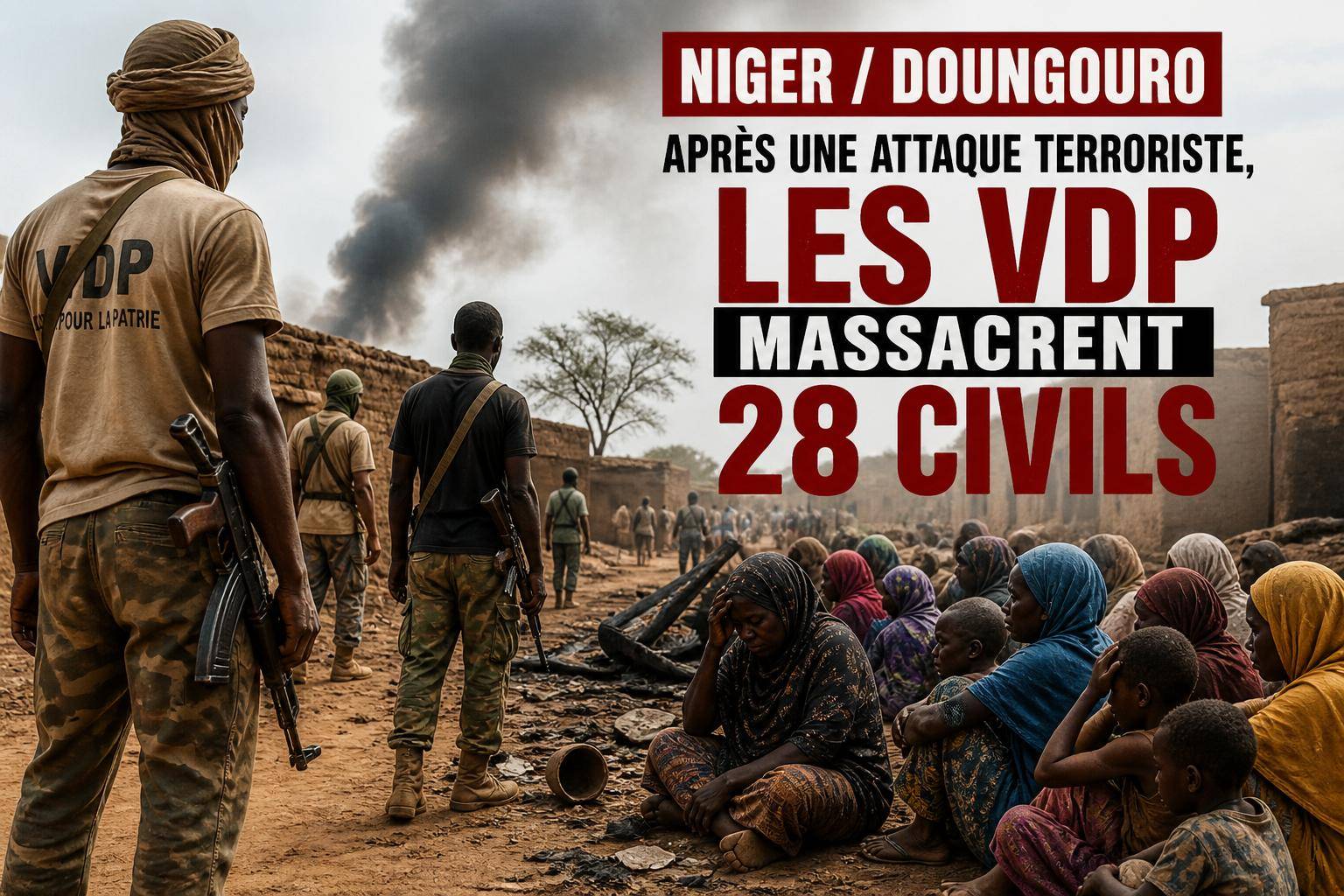
On Monday, May 4, 2026, the village of Doungouro, located in the Tillabéri region, became the site of a horrifying double tragedy. Following a lethal incursion by the Islamic State in the Greater Sahara (ISGS) that claimed the lives of four civilians, an intervention by the Volunteers for the Defense of the Homeland (VDP) from the Kokorou commune escalated into a massacre. Under the guise of hunting terrorists, these military auxiliaries targeted individuals indiscriminately based on their attire. The final toll reached 32 fatalities, with 28 of those deaths attributed to the very militia members tasked with protecting the population. This latest slaughter raises urgent questions about the Niger junta’s oversight of these DomolLeydi groups.
Market day bloodshed and the ISGS raid
The sun had barely risen over Doungouro this Monday when the roar of motorcycle engines disrupted the usual bustle of the weekly market. Heavily armed militants from the Islamic State in the Greater Sahara stormed the area with a clear mission: to intimidate the locals and seize supplies. Within minutes, four civilians were executed in cold blood in front of terrified traders. The attackers then rounded up all the livestock present at the market before retreating westward toward the border with Mali. This swift operation highlights the persistent security vulnerabilities in the tri-border area, despite the confident rhetoric coming from authorities in Niamey.
VDP intervention: a deadly case of mistaken identity
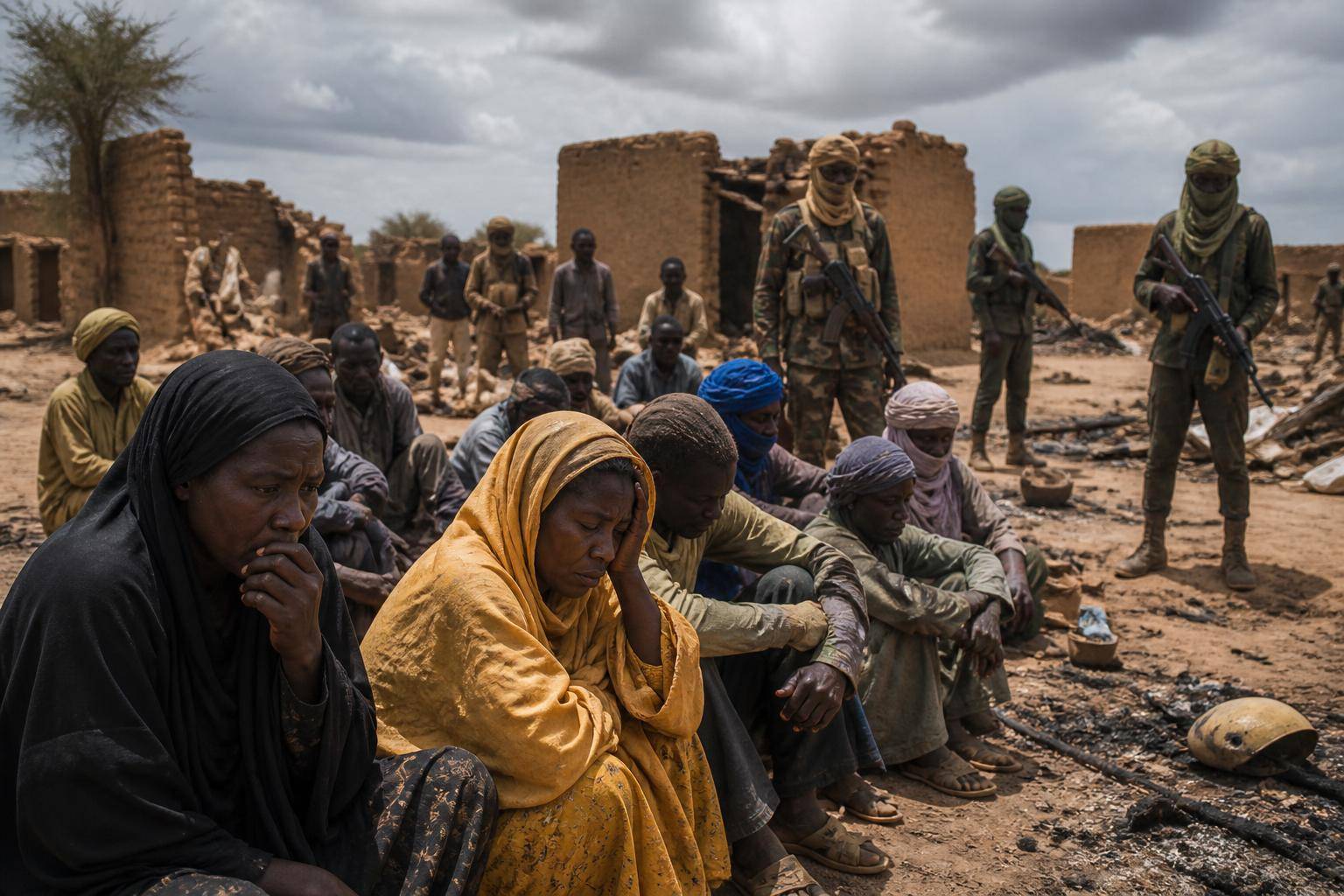
The true nightmare for the survivors began only after the terrorists had departed. Alerted to the initial raid, VDP units from the neighboring Kokorou commune arrived in Doungouro. However, instead of providing the expected security, the militia unleashed a wave of blind violence upon the villagers. Upon their arrival, the DomolLeydi began a purge based on a dangerous and arbitrary criterion: the wearing of a turban. For these poorly trained and loosely supervised armed men, anyone wearing the traditional headgear of local traders and herders was viewed as a collaborator or a hidden insurgent.
The resulting carnage was devastating. Among the 28 people killed by the VDP were several merchants who had traveled from Téra. These were well-known figures and regular market-goers whose only mistake was being in the wrong place while dressed in regional attire. One survivor recounted that the militia opened fire on anyone moving who wore a turban, without any form of questioning or evidence. It was described as a mass summary execution.
The DomolLeydi system: a growing security risk
The events in Doungouro expose significant flaws in the current security strategy. By relying heavily on civilian militias to compensate for the regular army’s limitations, the government in Niamey has empowered a force that now appears to be out of control. Although the VDP are officially recognized, they frequently operate in a legal and operational vacuum. Without a strict chain of command or the constant presence of professional military officers to guide them, these groups often fall into patterns of communal or ethnic profiling. In Doungouro, the shift toward targeting individuals based on their appearance was unmistakable.
Since the coup, official messaging has encouraged citizens to take up arms for self-defense. However, arming civilians without instilling a deep respect for the laws of war and human rights is a recipe for catastrophe. While the junta is quick to criticize foreign interference, it has remained remarkably quiet regarding the abuses committed by its own auxiliary forces. The Doungouro massacre is not an isolated event; it is part of a series of blunders that are destroying the trust between the civilian population and the defense forces.
The need for a radical strategic shift
By targeting traders and civilians, the VDP are inadvertently fueling insecurity. Such actions risk driving marginalized communities toward terrorist groups, which then present themselves as alternative protectors. Niger cannot win this conflict by turning its weapons against its own citizens. The transitional government must launch an independent investigation into the Doungouro killings and ensure those responsible for the summary executions face justice.
It is now critical to reform how these volunteers operate, ensuring they never conduct missions without the direct supervision of regular forces. Furthermore, the systematic profiling based on ethnicity or clothing must end to preserve national unity. Without these changes, Doungouro will stand as a grim symbol of a security strategy gone wrong, where state-sponsored militias cause more harm to the people than the terrorists they were meant to fight. The families of the 32 victims deserve accountability for this dark Monday.