The end of a political symbiosis
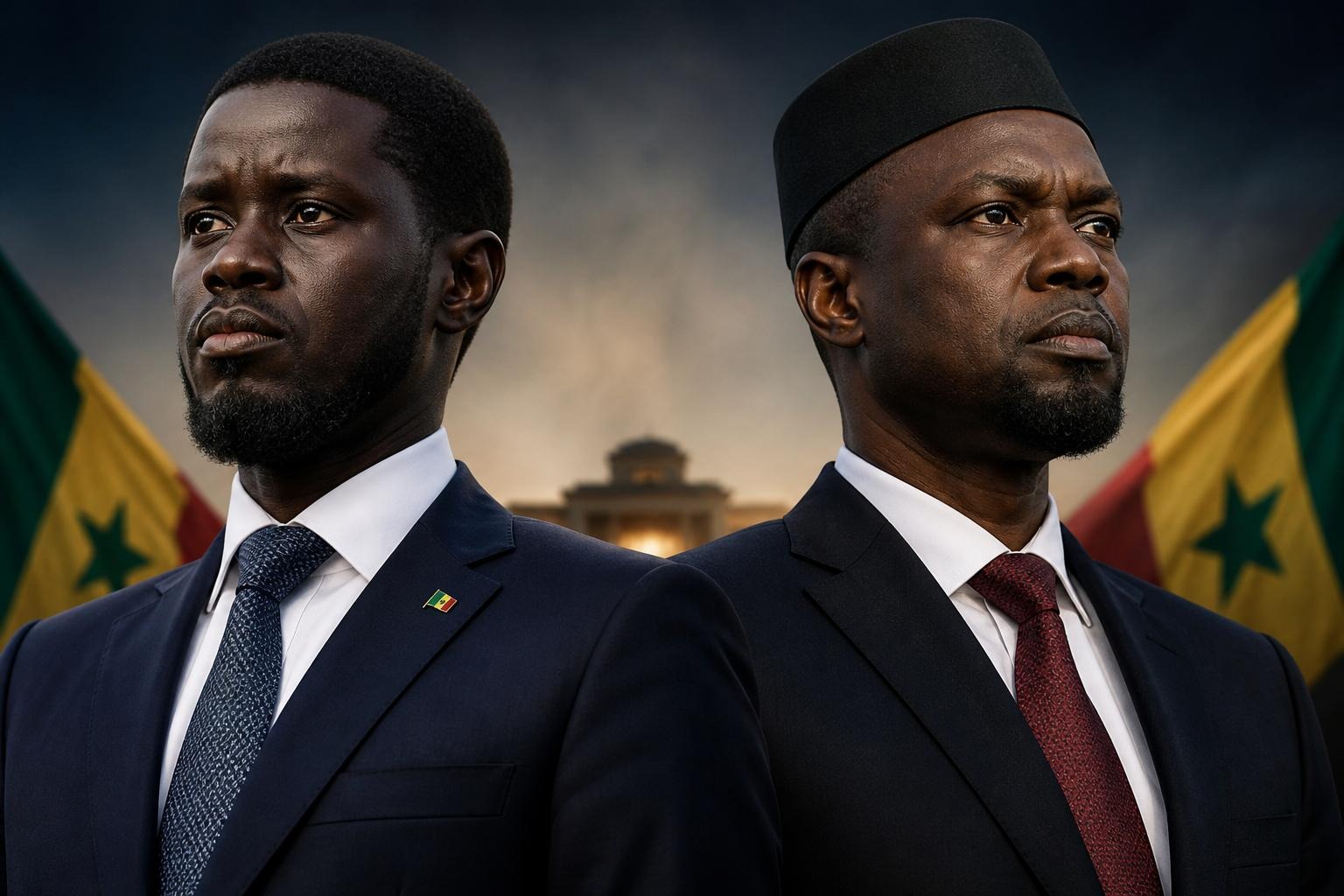
Senegal’s political landscape is undergoing a seismic shift as President Bassirou Diomaye Faye signals a decisive break from the once-untouchable alliance with Prime Minister Ousmane Sonko. This weekend—May 2 and 3, 2026—marked a turning point, revealing fractures in what was once touted as an unshakable partnership within the ruling coalition. The president’s bold assertion that he is prepared to sever ties if national interests demand it has shattered the illusion of a unified leadership, leaving analysts and citizens alike grappling with the implications of an unfolding political reconfiguration.
A weekend of stark revelations
The catalyst for this upheaval was a single, carefully chosen statement during a nationally televised interview. For months, the narrative had centered on a seamless collaboration between the two leaders, with Sonko’s charisma and Faye’s mandate seemingly in perfect sync. Yet the president’s words exposed a reality far less harmonious. Addressing rising tensions between government policy and the outspoken rhetoric of Pastef party officials, Faye delivered a clear message: his allegiance lies with the nation, not any political faction.
By emphasizing his constitutional duty to prioritize the collective good over partisan loyalty, Faye drew a line in the sand. His warning that he would not hesitate to distance himself from the party if its demands clashed with his vision for Senegal sent shockwaves through Dakar’s political circles. The declaration underscored a fundamental truth: the presidency, in his view, cannot be subservient to any single movement, no matter how influential.
The specter of Ousmane Sonko: A prime minister overshadowing the presidency
The roots of this tension trace back to the very formation of the administration. Elected on a platform that equated voting for Faye with endorsing Sonko, the president has spent his tenure navigating the shadow of a prime minister whose media presence often eclipsed his own. Sonko, despite holding no formal party role, continued to act as the de facto leader of Pastef, frequently taking the stage at rallies and issuing statements that occasionally overshadowed official government communications.
Behind the scenes, disagreements have festered over critical issues. Sonko’s calls for a radical break with international creditors contrasted sharply with Faye’s more measured, diplomatic approach. Similarly, the appointment of technocrats to key positions clashed with the party’s insistence on rewarding loyalists from the movement’s early days. The contrast in leadership styles—Sonko’s fiery rhetoric versus Faye’s measured authority—has only deepened the divide, turning what was once a strategic alliance into a source of friction.
Is a separation inevitable?
While an immediate split remains unlikely, Faye’s remarks suggest that the possibility is no longer off the table. The president appears determined to carve out an independent path, signaling to both supporters and skeptics that his presidency will not be beholden to any single political force. Within the Prime Minister’s office, attempts to downplay the remarks as a mere division of labor ring hollow in the face of such a definitive statement. Faye’s message is clear: the presidency must transcend factional interests to serve the nation.
This standoff places Senegal at a crossroads, with fears of institutional paralysis looming large. Historical precedents of fractured executive power in the country have often led to gridlock, raising concerns about the potential fallout of a formal rupture. Should such a split occur, Faye would face the daunting task of governing without the grassroots machinery of Pastef, forcing him to seek new alliances or rely more heavily on executive decrees to push through his agenda.
The high stakes of presidential autonomy
For Faye, the challenge is twofold: reassure international partners of Senegal’s stability while proving to citizens that he is firmly in control. Public opinion is deeply divided. A segment of the youth, drawn to Sonko’s dynamic leadership, may view this shift as a betrayal of the movement’s ideals. Conversely, those who prioritize institutional stability see Faye’s stance as a long-overdue assertion of presidential authority.
The president’s balancing act is fraught with risk. He must consolidate his power without provoking a backlash that could be exploited by opposition forces. The question is no longer about personal rapport between the two leaders but whether Senegal’s governance structure can sustain two competing centers of power indefinitely.
What we are witnessing is the end of a political romance. Governance is not about camaraderie but about the responsible exercise of power. Faye’s recent statements affirm a critical principle: the Constitution grants him the mandate to lead, and he intends to wield it unfettered. The partnership that propelled him to victory may now be the very obstacle to effective leadership. Senegal stands at a pivotal moment where the interests of the state must take precedence over those of the party—and the president has just drawn the battle lines.