How long can Bamako keep paying for Russian firepower while its own citizens wait for electricity, medicine and classrooms? That is the question now weighing on Mali’s transition government, and the arithmetic behind it is difficult to defend. Once cash transfers, equipment purchases and mining concessions are added together, the cumulative bill for Russian paramilitary forces — the Wagner Group and its successor Africa Corps, now placed under the direct supervision of the Kremlin’s defence ministry — has climbed past 514 billion FCFA, or roughly 850 million dollars.
Against a national budget already compressed by sanctions and a slowing economy, that sum has opened a rare public argument in Bamako’s financial and military circles. The central issue is no longer simply the size of the payment, but what Mali is giving up in exchange.
What the monthly invoice actually covers
The spending curve has been climbing since the first deployment in late 2021. The original contract provided for an average monthly transfer of about 6 billion FCFA, close to 10 million dollars. That baseline was swiftly overtaken.
Widening the contingent beyond 2,000 men, buying specialised equipment and sustaining a support logistics chain pushed the monthly outlay far higher than anything initially budgeted.
A fighter who costs around $10,000 a month
On average, every Russian fighter or instructor on Malian soil represents an outlay of roughly 10,000 dollars per month for the state:
- Direct pay for the fighter: set at about $3,000 a month.
- Command, equipment and combat bonuses: close to $7,000 more, collected by the Russian command structures.
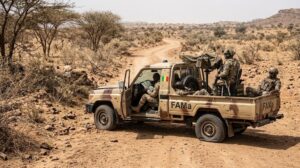
The contrast with Mali’s own troops is stark. The full upkeep of a soldier of the Malian Armed Forces (FAMA) in the field amounts to a tiny fraction of that figure — a gap that feeds quiet resentment inside local barracks.
When the treasury runs dry, Mali pays in gold
Faced with an overwhelming financial burden and a strained budget, the transitional authorities have had to multiply payment channels. Alongside direct bank settlements routed through secured circuits, a substantial share of the cost is absorbed through the granting of mining titles, particularly in the gold deposits of the country’s south and west.
The recent restructuring of the organisation, brought under the direct control of the Russian defence ministry under the Africa Corps label, has done nothing to reduce the bill. A planned expansion of the force to 3,500 men could add more than 210 billion FCFA a year.
Kidal, ambushes and a security balance sheet that does not add up
Russian involvement has delivered headline operations, including the symbolic recapture of Kidal in late 2023. Yet the persistent deterioration of the security environment keeps raising the same uncomfortable question: what exactly did Mali buy?
Vital road corridors are regularly blockaded, the centre of the country remains under intense pressure from groups affiliated with JNIM, and the Malian army continues to suffer losses in complex ambushes. Each costly operation is measured against a battlefield that shows little sign of stabilising.
The real stakes for ordinary Malians
For many economic observers in Bamako, the verdict is already clear. Directing more than 514 billion FCFA towards foreign mercenaries and praetorian guards drains essential public services — electricity, health, education — of resources they cannot spare.
It also locks the transition government into a financial and security dependence on Moscow that becomes harder to reverse with every payment. The question is no longer whether Mali can afford its Russian force. It is what the country will sacrifice if it keeps trying.