In Mali, the recent decision by the Minister of Territorial Administration to disband a student association marks the latest move in a series of government actions designed to curtail freedom of association.
The minister asserted that the Association des Élèves et Étudiants du Mali (AEEM) was responsible for “violence and confrontations” within academic environments. Furthermore, the minister stated that in 2017 and 2018, security forces apprehended some of its members who were allegedly found with weapons, narcotics, and significant unjustified sums of money.
The AEEM’s dissolution is the fourth such action against an organization in fewer than four months. On March 6th, authorities disbanded the Coordination des Mouvements, Associations et Sympathisants de l’Imam Mahmoud Dicko (CMAS). This group had advocated for presidential elections to facilitate a return to democratic civilian rule, leading to accusations of being a “destabilizing” entity and a “threat to public security.” Earlier, on February 28th, the political organization Kaoural Renouveau was dissolved by the authorities, who cited “defamatory and subversive remarks” directed at the military junta. Prior to this, on December 20th, the Observatoire pour les élections et la bonne gouvernance, a civil society group that monitored electoral processes, was shut down. Its president was accused of making “statements likely to disturb public order.”
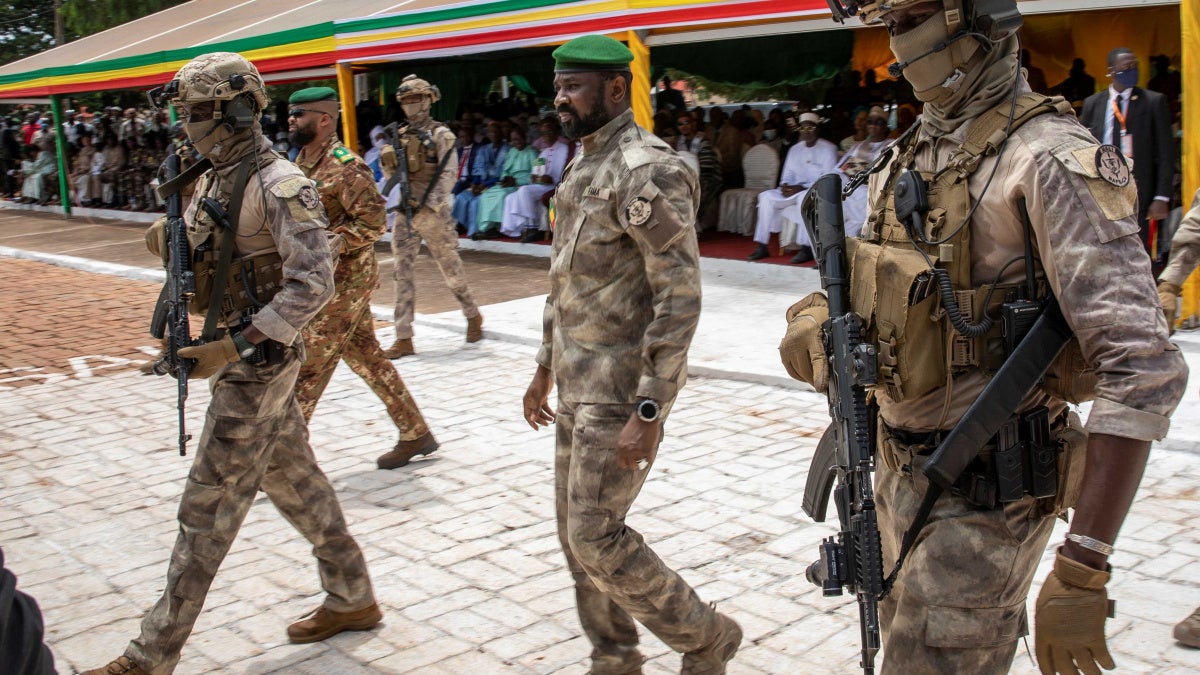
Since the military coup in 2021, the Malian junta has increasingly cracked down on peaceful dissent, political opposition, and the media, thereby shrinking the country’s civic space. On March 4th, authorities were also implicated in the forced disappearance of gendarmerie colonel Alpha Yaya Sangaré, who had recently published a book detailing abuses committed by the Malian armed forces.
The National Commission for Human Rights of Mali recently issued a statement expressing profound concerns regarding “serious threats to the exercise of certain civic and political rights, notably freedom of association. It condemns the systemic trend of dissolving and/or suspending political parties and/or associations.” Similarly, the spokesperson for the United Nations High Commissioner for Human Rights, Seif Magango, echoed these concerns this week.
As Mali approaches three years under an unelected government, the need for a free and secure civic and political environment—where individuals can organize, express their views, and protest—is more critical than ever. The authorities should promptly reinstate the dissolved organizations and commit to upholding fundamental freedoms and rights.