Mali’s strategic misstep with foreign mercenaries fuels insurgency and economic strain
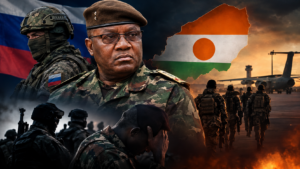
The Malian junta’s 2021 decision to enlist Russian mercenaries to counter Tuareg rebels in the North has backfired spectacularly, analysts warn. Rather than quelling unrest, the move allowed jihadist factions like the Support Group for Islam and Muslims (GSIM) and the Islamic State in the Greater Sahara (ISGS) to expand their reach, imposing crippling blockades that cripple the nation’s economy.
From counterterrorism to civilian massacres
The Russian-backed Africa Corps adopted a heavy-handed approach, targeting ethnic groups suspected of rebel ties. Field reports indicate thousands of civilians—many summarily executed—have perished in these operations, inadvertently swelling the ranks of militant groups. As one regional analyst noted, “While the junta fixated on reclaiming remote desert outposts, GSIM’s influence surged closer to Bamako. Their strategy backfired spectacularly.”
Breaking peace pacts and escalating conflict
In January 2024, Mali’s military abandoned the Algiers Accords, a peace pact brokered with Tuareg factions under the former democratic government. This pivot coincided with the November 2023 recapture of Kidal—a Tuareg stronghold—with Wagner Group support. Yet, as the junta doubled down on the North, GSIM and ISGS militants advanced in central Mali, surrounding the capital and choking supply routes from Senegal and Côte d’Ivoire.
The junta’s shift followed the abrupt termination of French-led counterterrorism missions (Barkhane and Serval) after a decade of partnership. The void left by departing UN peacekeepers (MINUSMA) in late 2023 was filled by the Africa Corps and Malian forces, whose brutal campaigns—most infamously the Moura massacre—executed hundreds of Fulani civilians. These atrocities, analysts argue, alienated local populations, driving recruits into the arms of militant groups.
Wagner’s retreat and the Africa Corps’ struggle
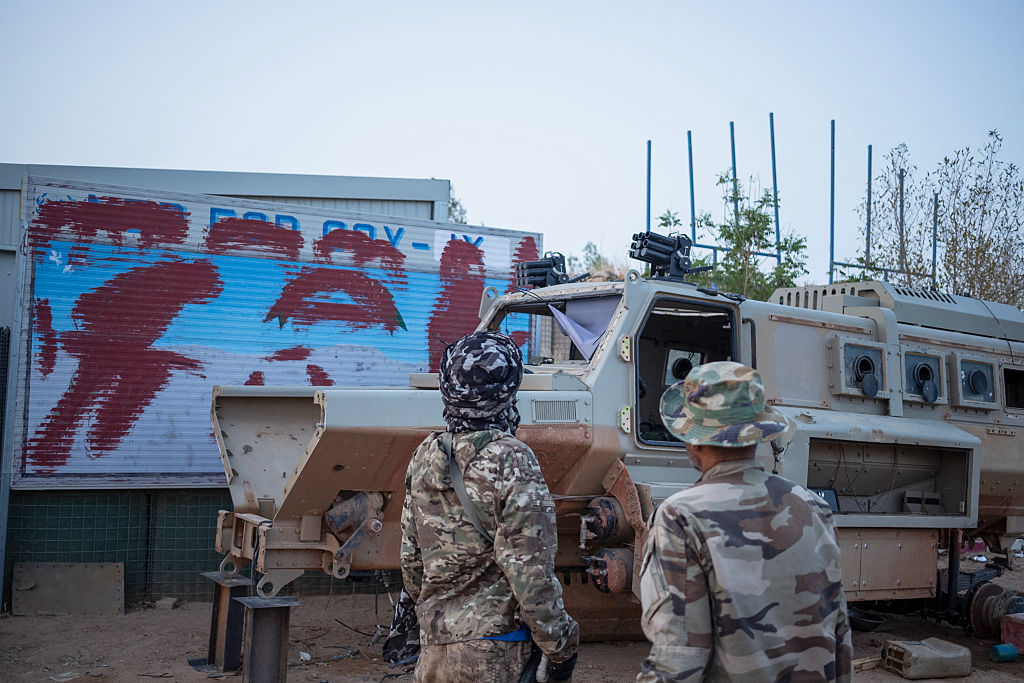
July 2024 marked a turning point when Tuareg fighters ambushed a Mali-Africa Corps convoy near Tin Zaouatine, killing nearly 50 soldiers and over 80 mercenaries. The Africa Corps, now rebranded with Wagner veterans, has since scaled back operations, retreating to bases and relying on drone surveillance. As the analyst observed, “They still deploy, but with far less confidence.”
The mercenaries’ diminished role became glaring in April 2025, when an Africa Corps detachment fled during a joint GSIM-FLA assault on Kidal, enabling the rebels to seize the city. That same day, Mali’s Defense Minister was killed in a separate attack. Facing battlefield losses, the Africa Corps now prioritizes protecting the junta’s hold on key infrastructure—including Bamako’s international airport and fuel supplies amid GSIM blockades—rather than combating insurgents.
The junta, isolated internationally and domestically, clings to the Africa Corps as its last lifeline. “They have no choice,” the analyst concluded. “Despised by friend and foe alike, they’re trapped. Paying $10 million monthly for mercenary support is their only lifeline.”