Since the military takeovers in 2020 and 2021, Mali has undergone a significant political and strategic shift under the leadership of colonel assimi goïta. the regime has embraced a sovereigntist discourse, distancing itself from traditional western allies and forging new partnerships, particularly with Russia and the united arab emirates. yet, despite these efforts to assert national autonomy, the country continues to grapple with persistent insecurity, economic stagnation, and democratic backsliding.
the rise of transactional sovereigntism
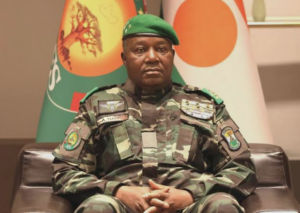
colonel assimi goïta’s ascent to power through successive coups was framed as a response to widespread dissatisfaction with governance failures and perceived foreign interference, especially from France. the military leadership has since promoted a narrative of sovereignty, emphasizing the need for malian control over domestic and foreign policy decisions.
while asserting a commitment to national independence, the goïta regime has pursued a transactional sovereigntist post-alignment strategy. this approach involves selectively engaging with external actors—state and non-state—to secure immediate regime benefits, extract material resources, and bolster domestic legitimacy. rather than committing to a fixed alliance structure, Bamako has leveraged competing external partners, including Russia’s africa corps and the united arab emirates, to navigate a complex geopolitical landscape.
this strategy has enabled the regime to maintain short-term resilience by diversifying security and economic ties. however, it has also deepened malian vulnerability to shifting external priorities and increased the country’s exposure to global rivalries, from the war in Ukraine to tensions in the middle east.
security challenges and external entanglements
despite pledges to eradicate terrorism, malian security remains fragile. armed groups such as jama’at nusrat al-islam wal-muslimin (jnim) and isis-Sahel continue to exploit local grievances and expand their influence. the withdrawal of french and un forces in 2023 was followed by the deployment of Russia’s africa corps, which achieved some tactical successes—such as the recapture of Kidal in 2023—but also faced allegations of human rights abuses. in june 2025, the africa corps formally replaced the Wagner group, signaling a shift toward a more formalized and less visible russian presence in Mali.
the regime’s pragmatic flexibility is further evident in its indirect engagement with other global actors. reports suggest that the united states may soon resume intelligence-gathering flights over malian territory, while Ukraine reportedly provided intelligence support and drone technology to rebels in northern Mali in 2024. these developments highlight how Mali has become a secondary theater in broader geopolitical rivalries. similarly, the united arab emirates, despite publicly condemning coups in the Sahel, has quietly expanded its influence in Mali and Niger, reflecting a gap between rhetoric and strategic interests.
these shifting external dynamics underscore the limitations of transactional partnerships. while they may offer short-term gains, they do not address Mali’s underlying governance and economic challenges, nor do they provide a sustainable path to long-term stability.
economic stagnation and democratic erosion
goïta’s regime has struggled to deliver on key promises of economic growth and institutional reform. despite populist appeals to combat corruption and improve living standards, economic conditions remain dire, particularly in rural areas. Mali ranks 188th out of 193 countries on the united nations human development index, reflecting persistent challenges in health, education, and income distribution. the urban-rural income disparity stands at approximately 5.5%, highlighting the neglect of vast segments of the population.
corruption continues to undermine governance. while the regime has acknowledged systemic corruption, tangible reforms have been limited, and signs of elite enrichment have become more visible. these failures have eroded public trust and contributed to democratic backsliding. since 2022, elections have been repeatedly postponed, with the transitional government proposing to extend goïta’s presidency until 2030. in may 2025, the regime took further steps to consolidate power by dissolving all political parties and banning their meetings, citing concerns for “public order.”
a precarious path forward
Mali’s post-alignment strategy offers the regime short-term flexibility and resilience. however, it does little to address the country’s deep-rooted challenges. persistent insecurity, economic stagnation, and democratic erosion continue to fuel instability, with risks of further spillover into neighboring countries along the gulf of Guinea.
to achieve durable stability, Mali must embark on a comprehensive transformation—political, social, and economic—that rebuilds trust between the state and its citizens. while transactional partnerships may provide temporary leverage, they cannot substitute for the structural reforms needed to restore governance, promote inclusive development, and mitigate the country’s exposure to external shocks.
in an era of shifting global alliances, Mali’s future will depend not only on its ability to navigate external entanglements but on its willingness to address the root causes of its crisis from within.