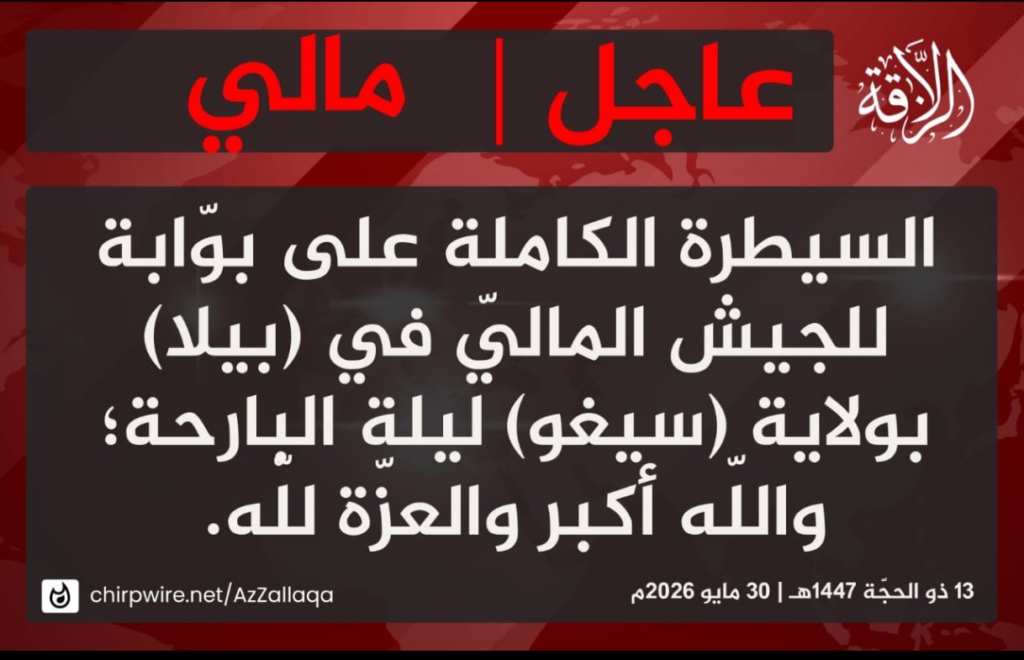
The Mali military’s post in the Ségou region fell to an overnight assault by the Group for the Support of Islam and Muslims (JNIM), an al-Qaeda-linked jihadist coalition. The attack, which unfolded between May 29 and 30, left heavy material losses in its wake and forced local forces into a humiliating retreat.
Night of terror in central Mali
The jihadist group’s propaganda channels confirmed the raid, claiming control of a strategically vital military outpost. According to their account, fighters seized a significant quantity of weapons, ammunition, and communications equipment before retreating under cover of darkness. While official Bamako sources have not yet issued a detailed response, local witnesses described intense gunfire and explosions throughout the night.
This latest strike underscores the persistent threat posed by armed factions in central Mali, where security operations have struggled to gain the upper hand. Despite the region’s reputation as a militarized zone, the attack exposed critical vulnerabilities in the army’s defensive posture.
Failed security strategy and the Russian partnership illusion
Since the military junta took power, the promise of full territorial recovery has dominated official rhetoric. The abrupt shift from Western partners to Russian military support—through the deployment of instructors and Wagner-linked mercenaries—was supposed to turn the tide. Yet, the raid in Ségou serves as a stark reminder of the strategy’s shortcomings.
The Russian-backed approach, centered on aerial demonstrations and large-scale sweep operations, has proven ineffective against the JNIM’s mobile, guerrilla-style tactics. Rather than weakening the insurgency, the offensive has fueled further instability, proving that the government’s grasp on security is slipping. The inability to anticipate or counter these hit-and-run strikes has left civilians and soldiers alike exposed.
From insecurity to famine: the deepening crisis
The surge in militant activity has triggered a cascading humanitarian emergency. Mali’s once-fertile Ségou region, a key agricultural hub along the Niger River, now faces severe food shortages. Terrorists have systematically disrupted farming, looted livestock markets, and planted improvised explosive devices (IEDs) along critical trade routes.
Farmers dare not till their fields, markets lie abandoned, and supply chains have collapsed. The JNIM’s deliberate blockade has weaponized hunger, leaving entire communities at risk. With no immediate relief in sight, malnutrition rates are climbing, and families are paying the ultimate price for a conflict they did not choose.
Civilians flee as violence spreads
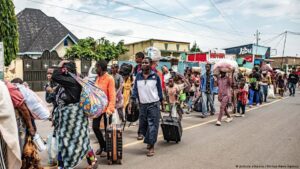
The unraveling security situation has triggered mass displacement. Entire villages in and around Ségou have emptied, as residents flee toward larger towns or the capital, Bamako, in search of safety. These displaced populations are now crammed into overcrowded, makeshift camps lacking basic sanitation and medical care.
Women and children bear the brunt of this crisis, with state services stretched thin by an unwinnable war. Local aid organizations, overwhelmed and underfunded, struggle to provide even the most basic support. The collapse of public infrastructure has left these refugees in a state of utter vulnerability.
The JNIM’s brazen raid in Ségou shatters the junta’s narrative of military progress. By prioritizing brute-force tactics and an unreliable foreign partnership, the government has neglected the needs of its people. A sustainable solution requires more than guns and mercenaries—it demands the restoration of civilian protection, the revival of public services, and an urgent end to the famine gripping the nation.