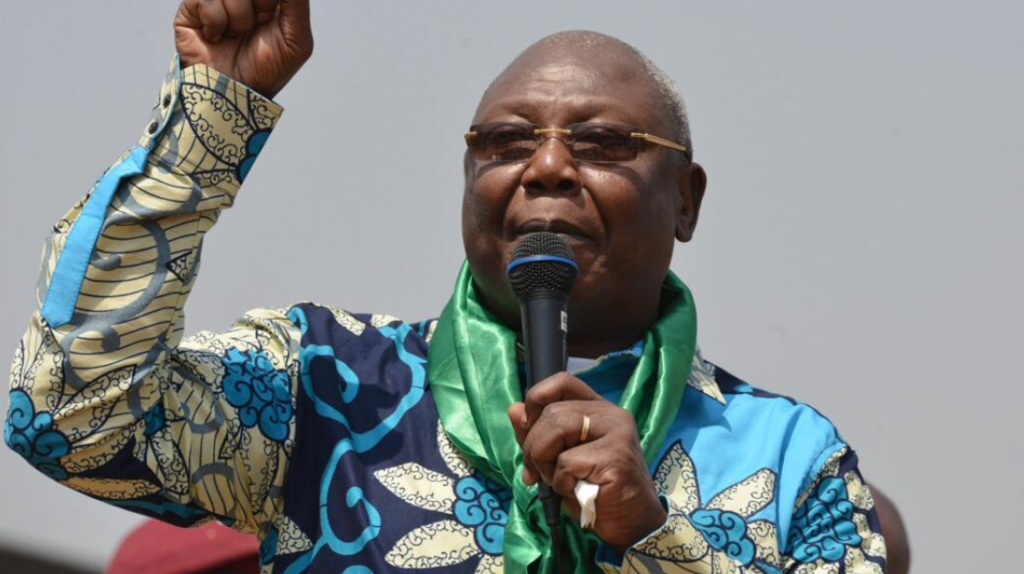
Just over two weeks after the investiture of Faustin Archange Touadéra, marking the dawn of the Seventh Republic, Martin Ziguélé, a former head of government and leader of the MLPC party, has once again voiced his concerns. His intervention comes amidst a noticeably strained political atmosphere, where persistent friction between the ruling power and the opposition continues to be a defining characteristic.
deep-seated challenges plague the central african republic
Speaking from Bangui, Ziguélé presented a sobering assessment of the nation’s state. He contends that despite a decade under the current administration, the daily lives of Central Africans have shown no discernible improvement. Ziguélé underscored the urgent necessity for meaningful dialogue between political leaders and civil society stakeholders to reverse this troubling trend.
To substantiate his claims, the opposition figure cited alarming statistics concerning poverty levels in the Central African Republic. Referencing a 2016 benchmark, he noted that more than half of the population lived below the poverty threshold, surviving on less than 1,000 CFA francs daily. Projections suggest this proportion could escalate to approximately two-thirds of residents by 2026. These figures are compounded by pervasive structural issues, including inadequate access to essential services like water and electricity, severely degraded transportation networks, and a proliferation of unauthorized checkpoints along key routes.
The significant downturn in agricultural sectors serves as a stark illustration of the nation’s economic regression, according to Ziguélé. Once robust, flagship productions have collapsed; cotton cultivation, which previously neared 100,000 tonnes, now reportedly hovers around 2,000 tonnes. Historically vital crops like coffee no longer generate reliable statistical data. Under these challenging circumstances, Ziguélé argues that a comprehensive political and economic overhaul is indispensable for national recovery.
dialogue: a cornerstone for national renewal
For Ziguélé, genuine discourse among political factions is not merely desirable but absolutely essential. He emphasized that in any democratic framework, dialogue must be regarded as a critical instrument for overcoming impasses and fostering progress. He highlighted that the vast majority of the population resides in rural areas, directly bearing the brunt of geographical isolation and the disintegration of production chains.
Following his investiture on March 30, 2026, President Faustin Touadéra offered a positive review of his two previous terms, while simultaneously acknowledging the substantial challenges that lie ahead. However, Martin Ziguélé maintains that without broad, sincere consultation involving all vital forces within the nation, it will prove exceedingly difficult to implement the necessary reforms for a true national resurgence.