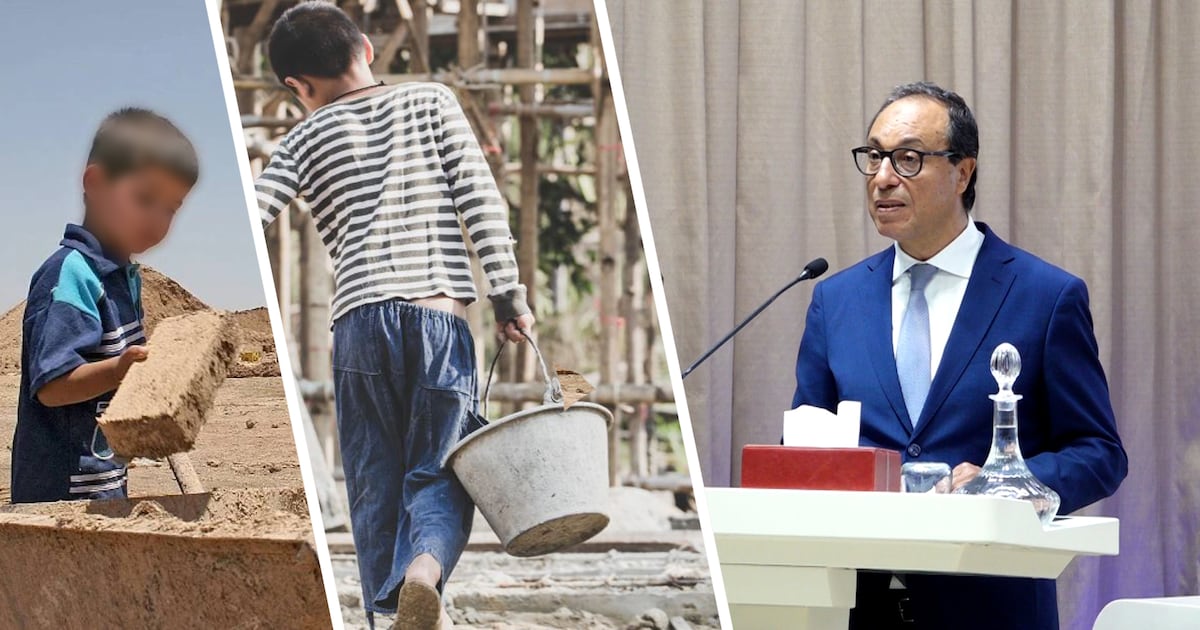
While Morocco has achieved significant milestones over the last two decades, the persistence of child labor remains a pressing concern for the nation. Although the number of minors involved in economic activities has plummeted by more than 80% since 1999, the phenomenon continues to thrive within informal sectors and hazardous environments. In response, the Economic, Social and Environmental Council (CESE) presented a comprehensive set of recommendations in Rabat this Tuesday, July 1st, aimed at the definitive eradication of the practice.
During the presentation of the report, titled “For an effective public policy to eradicate child labor in Morocco,” CESE President Abdelkader Amara revealed that 78% of the 1,540 citizens surveyed believe that child labor is still widely practiced across the Kingdom. This widespread perception led the institution to scrutinize current public policies and identify new avenues for intervention.
Abdelkader Amara highlighted the legislative progress made by the Kingdom, specifically the prohibition of employment for children under the age of 15 and the systematic reduction of dangerous tasks for minors between 16 and 18. Official data confirms the impact of these measures, showing that the population of working children aged 7 to 17 fell from 517,000 in 1999 to roughly 101,000 in 2024.
“In 1999, more than half a million children were working. By 2024, that figure has dropped to approximately 100,000. This represents a massive effort that deserves recognition,” stated the CESE President. However, the Council noted in its report that while the progress is undeniable, it is not yet sufficient to achieve the ultimate goal of total eradication.
The CESE identifies several structural drivers behind this issue, including the informal economy, widespread poverty, and the socio-economic fragility of many households. Abdelkader Amara insisted that a child’s natural environment, outside of the family, must be the school system and dedicated spaces for education and socialization.
Furthermore, the Council emphasized that child labor severely compromises physical, psychological, and educational growth. “Child labor must be eliminated because it robs children of a balanced development and the education they deserve,” Amara asserted, noting that the phenomenon also exacerbates social inequality and hinders the overall development of society.
The consultation also shed light on how the public views the problem. Approximately 27% of respondents reported seeing children working in public spaces, primarily in street vending, car washing, or carrying heavy loads. Even more concerning, 22% pointed to grave issues such as organized begging, sexual exploitation, and involvement in the drug trade.
Data from the CESE further reveals that nearly six out of ten working children are engaged in hazardous activities, highlighting an urgent need to bolster prevention, monitoring, and protection systems.
Among its primary recommendations, the Council suggests a thorough revision of the Labor Code and an update to the 2010 decree regarding prohibited dangerous work for minors. A central proposal is to raise the minimum working age to 16, thereby aligning it with the end of compulsory education and ensuring better synergy between social and educational policies.
Finally, Abdelkader Amara noted the recent signing of a framework agreement between the CESE and the National Observatory for the Rights of the Child (ONDE), which is chaired by Princess Lalla Meryem. This partnership is designed to improve coordination between the two bodies to intensify efforts in prevention and protection. The CESE President concluded that child labor is a phenomenon that does not reflect the modern face of Morocco, especially given the Kingdom’s advancements in various other sectors.