Just before dawn broke over the quiet coastal town of Aourir, north of Agadir, armored vehicles and elite units rolled through its streets under the cover of darkness. Their mission: neutralize a high-risk target—a radicalized extremist who had pledged allegiance to the Islamic State (ISIS).
Acting on precise intelligence from Morocco’s General Directorate for Territorial Surveillance (DGST), the Special Forces moved swiftly. The suspect was apprehended within seconds of breaching the door. Meanwhile, in Aourir, residents awoke to a heavy security presence, the reality of a thwarted terror plot sinking in.
At the suspect’s residence, officials from the Central Bureau of Judicial Investigations (BCIJ)—a DGST-affiliated unit—conducted a thorough search. The evidence was damning. The man was no longer just an ideologue; he possessed combat gear, bladed weapons, and tactical equipment. His arrest had prevented a potential catastrophe.
Hidden bomb factory uncovered in industrial zone
A short drive south, in Inezgane’s industrial district, investigators uncovered a far deadlier secret. In a concealed warehouse in the Traast El Jorf area, a clandestine bomb-making facility lay in wait.
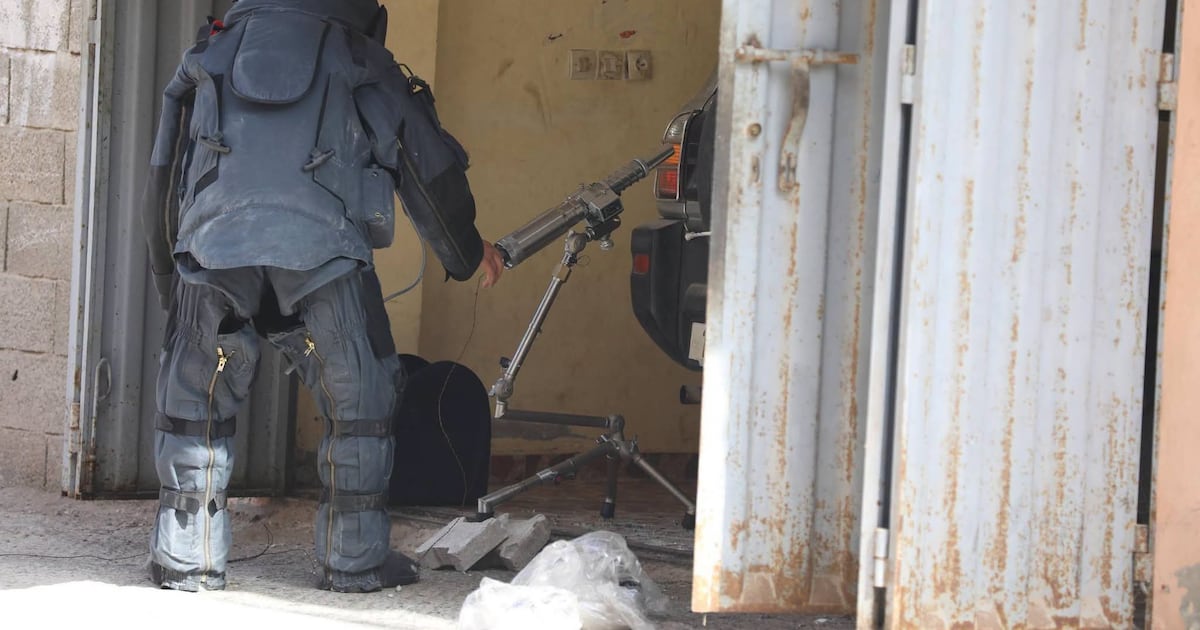
The centerpiece was a modified 4×4 vehicle, its fuel tank altered to run on butane gas. The modification was no accident—it was designed to maximize thermal impact and blast radius in a potential suicide attack or vehicle-ramming assault on critical national infrastructure. Authorities immediately evacuated nearby residents and deployed bomb disposal units equipped with robotic systems and advanced sensors to safely dismantle the device.
The search revealed a chilling arsenal: butane canisters, pressure cookers rigged with nails to serve as shrapnel, electrical wiring, detonators, welding equipment, and a stockpile of solid and liquid chemicals. The precision of the setup left no doubt—the cell was fully operational and dangerously close to execution.
Nationwide crackdown dismantles multi-city terror network
The DGST’s Special Forces executed simultaneous raids in seven cities across Morocco—Agadir, Taroudant, Casablanca, El Hajeb, Tétouan, Fquih Ben Salah, and Safi—to prevent the Aourir arrest from tipping off the broader network. Ten individuals were taken into custody, including a 17-year-old, highlighting the group’s aggressive recruitment of minors.
Among the detainees was a former convict previously jailed under anti-terrorism laws, underscoring the persistent challenge of recidivism in extremist circles. House searches, supported by bomb-sniffing dogs, uncovered a trove of incriminating materials: military uniforms, handwritten guides for assembling improvised explosives, and digital files containing two damning videos—one showing the suspects pledging allegiance to the ISIS “Caliph,” and another outlining plans for large-scale sabotage within Morocco.
Sahel-based ISIS operatives directed Morocco attacks from afar
Preliminary investigations revealed a disturbing regional dimension. Cell members received direct orders and logistical support from ISIS operatives in the Sahel. Their instructions were explicit: avoid joining insurgent groups in sub-Saharan Africa and instead carry out attacks inside Morocco itself.
The cell operated with a highly compartmentalized military structure. A reconnaissance team scouted potential targets, a logistics unit procured chemicals, welding tools, and vehicles discreetly, while a technical team in Inezgane focused on mechanical modifications and explosive assembly.
Thanks to the DGST and BCIJ’s rapid response, a ticking time bomb was defused before it could cause harm. Nine adult suspects were remanded in custody, while the minor was placed under specialized supervision under the terrorism prosecutor’s office. Authorities are now analyzing seized phones and hard drives to trace encrypted communications with Sahel-based operatives and ensure no dormant threats remain.