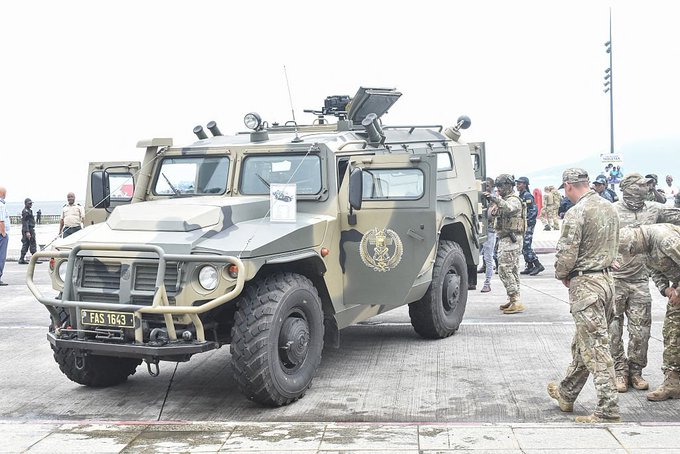
Beyond the extensively publicized deployment of Africa Corps paramilitaries across the Sahel region, a far more discreet and intricate logistical apparatus is actively operating in the shadows. While global attention remains fixed on uniformed personnel, Moscow is systematically establishing a strategic aerial infrastructure that extends well beyond mere security assistance. Central to this sophisticated arrangement is a secretive fleet of Russian cargo aircraft, swiftly dubbed « Air Wagner » by expert intelligence analysts.
Operating under the guise of defense agreements with nations forming the Alliance of Sahel States (Mali, Burkina Faso, Niger), this logistical network is rapidly evolving into one of Moscow’s most advanced instruments for espionage and broader interference across the African continent.
167 flights under the radar: the hidden dimension of Russian logistics
To circumvent the constraints imposed by international sanctions, the Kremlin relies on a covert aerial ecosystem. A recent aeronautical investigation has unveiled the extensive scale of this aerial activity, formally identifying at least 167 cargo flights within a concentrated period of just 14 months.
Delving deeper into these operations, investigators have traced thousands of rotations executed by approximately a dozen interconnected airline companies, all exhibiting ties to Russian state or quasi-state entities. The methods employed to mask this elaborate deployment are characteristic of hybrid warfare strategies:
- Deliberate deactivation of transponders, which are essential aircraft location beacons.
- Falsification or obfuscation of flight plans and aircraft registration data.
- Utilization of secondary airports for the distribution and reception of cargo.
Expert findings reveal: This fleet transports more than just personnel and munitions. It actively conveys sophisticated listening devices, electronic warfare modules, and specialized technicians from Russian military intelligence (GRU). Each rotation is thus transformed into an opportunity to meticulously map and surveil the Sahelian airspace and ground.
From security assistance to strategic dependence
For the regimes within the AES, the partnership with Africa Corps is frequently presented as a swift and unconditional alternative for combating terrorism. However, the technical realities indicate a concerted effort by Moscow to consolidate control over these states’ vital infrastructures.
Russian support now transcends mere field operations; it encompasses strategic transport, the exclusive maintenance of local military aircraft, comprehensive personnel training, and critical logistical provisioning. By establishing a presence at the core of airbases in Bamako, Ouagadougou, and Niamey, Russian intelligence services gain unfettered access to the sovereign military data of the host nations. Under the pretext of regime security, Moscow is actively monitoring, observing, and gathering intelligence on local resources, troop movements, and governmental communications, a critical element of West Africa news.
A long-term political cost
« Air Wagner » and Africa Corps are not philanthropic endeavors but rather instruments of overt influence. Through the provision of this logistical lifeline, the Kremlin achieves a dual strategic objective: it mitigates its diplomatic isolation by securing a strategic foothold in Africa, and it ensures a permanent oversight of the internal political dynamics within the AES countries, impacting African politics.
For the Sahelian states, the short-term calculation of immediate security benefits could swiftly confront a harsh reality. The political cost, marked by a progressive erosion of sovereignty under Moscow’s pervasive scrutiny, already appears to outweigh the promised security advantages. By opening their airfields to Russia Sahel air ops, the AES nations may have inadvertently welcomed a primary intelligence gatherer into their own territories.