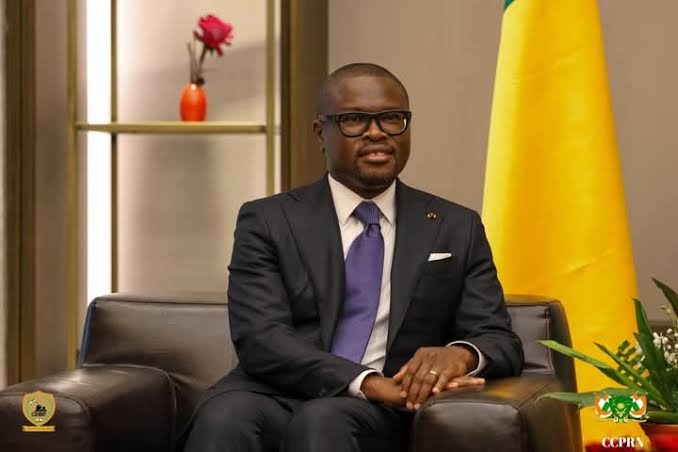

The new administration under Prime Minister Al Aminou Lô has initiated a comprehensive restructuring of state services, with key transfers of authority and cabinet enhancements outlined in decree n° 2025-1431.
Administrative overhaul following leadership transition
Since Ousmane Sonko’s departure from the Primature on May 22, 2026, the organization of services under the head of government has undergone a significant transformation.
His successor, Al Aminou Lô, inherited an administration reshaped by decree n° 2025-1431, which reallocates state services, public establishments, national companies, and state-owned enterprises among the Presidency, the Primature, and ministries. This decree, issued after the latest government reshuffle, formalizes a redistribution of responsibilities that fundamentally alters the structure of the Prime Minister’s office.
Key reforms initiated during Sonko’s tenure
The foundations for this restructuring were laid during Ousmane Sonko’s time as Prime Minister. Decree n° 2025-1929, issued on November 27, 2025, significantly expanded the Prime Minister’s cabinet by establishing several new entities. Among these were the Reform Monitoring and Orientation Unit, the Service Inspection body, and the Committee for Monitoring Local Content Valorization and Asset Recycling Initiatives—created by decree n° 2025-1605 on October 2, 2025. Additionally, the Government Purchasing Commission was set up, and the Government Secretariat was reinforced with the creation of a Ministerial Council Preparation Unit and a tracking mechanism for institutional dossiers. A National Access to Information Commission was also established.
New adjustments under Al Aminou Lô
The arrival of Al Aminou Lô introduced further changes. His cabinet was bolstered by the transfer of the National Local Content Monitoring Committee’s Technical Secretariat from the Ministry of Petroleum and Mines. Meanwhile, the Government Secretariat relinquished several functions to other ministries. The National Civil Service and Volunteerism Directorate now reports to the Ministry of Youth and Sports, while the Government Information and Communication Bureau (BIC-Gouv)—previously led by journalist Mame Gor Ngom—has been placed under the Ministry of Communication and Institutional Relations. The National Observatory of Detention Facilities now falls under the Ministry of Justice.
Streamlining government communication
The role of Secretary of State attached to the Prime Minister, responsible for Institutional Relations and Government Spokesperson, has been eliminated. These responsibilities have been transferred to a full-fledged minister overseeing Communication and Institutional Relations, who now serves as the official Government Spokesperson. This reform reflects a broader strategy to redistribute competencies between the Primature and ministries while adapting the government’s organizational framework to the executive’s evolving priorities.