Niamey, July 15, 2026 — Economic sovereignty isn’t just about rhetoric anymore. In Niger, it’s now measured by the pulse of production lines. Minister of Trade and Industry Abdoulaye Seydou continues his ground-level assessment of local factories, turning the nation’s production goals into tangible action.
On July 14, the government delegation visited three key industrial sites: Sahel Agro Ingénierie, a leader in groundnut, sesame and tiger nut oil processing, followed by the mineral water plants of Benie and Belvie. This wasn’t a ceremonial walk-through. It was an operational deep-dive to gauge the real challenges stifling Niger’s industrial growth.
From groundnut oil to bottled water: mapping Niger’s industrial heartbeat
At Sahel Agro Ingénierie, discussions centered on output capabilities and scaling potential. The company currently produces around 1,000 liters of oil daily—a figure authorities aim to boost to curb reliance on imported cooking oils. The visit also shed light on infrastructure gaps and energy supply issues that hamper seamless production.
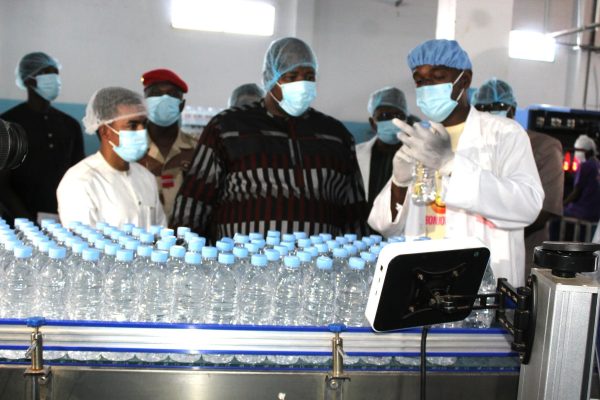
The minister then evaluated Benie and Belvie’s mineral water facilities, scrutinizing bottling lines, quality control systems and adherence to sanitary standards. Every stage—from water treatment to final packaging—was inspected to ensure compliance with both regional and international benchmarks.
Energy gaps, logistics hurdles and investment shortfalls
The field tour sparked frank exchanges with plant managers. Repeatedly, constraints emerged: unreliable power grids, cumbersome logistics and limited capital for scaling operations. These systemic issues, executives stressed, throttle competitiveness and delay expansion plans.
Minister Seydou responded with a clear agenda: enforce strict quality controls, stabilize domestic pricing and accelerate industrial investment. His message was unequivocal—Niger’s factories must meet global standards while anchoring the economy in self-reliance.
Local industry as the backbone of economic freedom
This latest inspection follows a recent sweep of other industrial hubs nationwide. The frequency underscores a deliberate strategy: staying connected to the engines of local transformation. The rationale is simple—local production cuts import bills, creates jobs and fortifies economic resilience.
By embedding industrial policy within these direct engagements, the government positions local manufacturing not just as a sector, but as the cornerstone of Niger’s development and sovereignty. Every plant visit, every conversation, feeds into a broader vision: an economy that stands on its own.