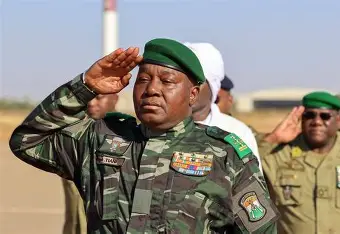
Three years after the coup: promises unfulfilled, challenges mounting
On July 26, 2023, General Abdourahamane Tiani led a military takeover in Niger, citing an unmanageable security crisis as justification for deposing President Mohamed Bazoum. Since then, the situation has only deteriorated further. Security remains elusive, the economy is faltering, diplomatic relations have weakened significantly, and the state’s financial leeway has shrunk. An examination of key indicators reveals a nation trapped in a spiral of interlinked crises.
Security promises remain unmet
The coup was framed as a necessary intervention to restore order and improve security. Yet, the reality on the ground tells a different story. Armed groups linked to the JNIM and the Islamic State in the Greater Sahara (EIGS) continue to expand their operational reach across multiple regions.
The tactics of these groups have evolved. No longer confined to isolated military outposts, they now target:
- military and logistical convoys;
- civilian villages and communities;
- key road networks;
- economic infrastructure;
- supply chains.
Several localities now face near-constant threats, severely restricting movement for both civilians and administrative services. The consequences are severe:
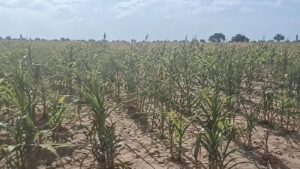
- widespread abandonment of farmland;
- slowdowns in domestic trade;
- closures of schools in multiple areas;
- limited access to healthcare;
- a surge in internally displaced persons.
The human toll continues to rise, with rural populations bearing the brunt of a conflict that shows no signs of resolution despite the change in leadership.
A military-centric approach under strain
Since the new regime took power, a substantial portion of public funds has been diverted to military efforts. Yet, despite increased spending, the security situation remains largely unchanged.
The armed forces are stretched thin, facing:
- a vast and difficult-to-control territory;
- multiple active fronts;
- highly mobile terrorist groups;
- logistical bottlenecks.
The relentless pressure has led to:
- increased wear and tear on personnel;
- higher operational costs;
- frequent strain on equipment and resources.
Each new attack underscores the limitations of a purely military response to a crisis rooted in economic, social, and territorial factors.
Economic decline accelerates
Niger’s economy remains heavily reliant on regional trade, particularly through the Benin-Niger corridor. However, prolonged border closures with Benin, combined with regional diplomatic tensions, have severely disrupted traditional trade flows.
The consequences have been immediate and far-reaching:
- longer supply delays;
- sharp increases in transport costs;
- frequent stock shortages;
- general price inflation.
Households are feeling the pinch, with declining purchasing power affecting daily necessities such as food, medicine, construction materials, and consumer goods.
Border communities bear the brunt
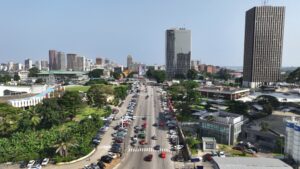
Cities along the Benin-Niger border, including Gaya, have long depended on cross-border commerce. Today, many businesses in regional markets and along major highways are struggling, with the most affected sectors being:
- transportation;
- customs and logistics;
- small-scale trade;
- roadside hospitality (hotels and restaurants).
The contraction in trade has also reduced state revenue, further limiting public investment capacity.
Investment climate deteriorates
Political and diplomatic instability has created an uncertain environment that discourages both domestic and foreign investment. Investors typically seek:
- stable institutions;
- predictable legal frameworks;
- smooth commercial relations;
- clear economic prospects.
Niger, however, now presents several red flags:
- ongoing sanctions and diplomatic disputes;
- logistical hurdles;
- high security risks;
- regulatory instability.
This climate has slowed capital inflows and pushed some operators to postpone or cancel projects.
The Niger-Benin pipeline: a strategic project at risk
The Niger-Benin oil pipeline, connecting Agadem to the Sèmè terminal, was once hailed as a transformative economic project. Projected oil revenues were expected to fund national development. However, persistent tensions between Niamey and Cotonou have jeopardized this initiative.
Beyond political friction, any uncertainty surrounding this infrastructure sends a negative signal to international investors, who prioritize stability for long-term ventures. What was meant to be an engine of growth has instead become a focal point of diplomatic friction.
Diplomatic realignment yields limited gains
The military regime has drastically reshaped Niger’s foreign policy, severing long-standing partnerships with Western nations while deepening ties with Russia and joining the Alliance of Sahel States (AES) alongside Mali and Burkina Faso.
The stated goal is to reclaim national sovereignty. Yet, this reorientation has not resolved the country’s core challenges. Instead, Niger now grapples with:
- reduced international funding;
- diminished technical cooperation;
- strained relations with regional neighbors;
- limited access to regional mechanisms.
The proclaimed sovereignty is accompanied by new economic and diplomatic constraints.
Sovereignty in question: new dependencies emerge
The withdrawal of French forces was framed as a step toward full autonomy. Yet, military cooperation with Russian partners has rapidly intensified. This shift raises a critical question: has Niger truly eliminated external dependence, or merely exchanged one form for another?
On the ground, national security still relies, in part, on foreign partners. This reality challenges the official narrative of strategic autonomy.
Political communication overshadows tangible results
Faced with persistent difficulties, the government has leaned heavily on a narrative that attributes challenges to external factors. Public debates often center on disputes with regional bodies, Benin, or former allies.
While this strategy fuels nationalist sentiment, it does little to address pressing concerns such as:
- rising inflation;
- youth unemployment;
- limited access to public services;
- declining purchasing power;
- food insecurity.
For many citizens, concrete improvements have become more important than political rhetoric.
Public services strain under military spending
The heavy allocation of resources to security has placed immense pressure on public finances. Social sectors, already underfunded, now face even greater strain, leading to:
- inadequate school infrastructure;
- medical supply shortages;
- delays in public investment;
- declining quality of local services.
There is a growing risk of a vicious cycle: as military spending rises, development investments lag—despite being essential to addressing the root causes of insecurity.
A fragile social climate
The crisis is not only economic but deeply social. Households are grappling with:
- persistent price hikes;
- fewer job opportunities;
- declining incomes in border regions;
- economic uncertainty.
This combination of pressures is eroding social cohesion and increasing the vulnerability of the most disadvantaged populations.
A governance model pushed to its limits
Three years into military rule, Niger finds itself in a paradox. The junta came to power promising to restore security, defend national sovereignty, and improve living conditions. Yet, the evidence points to the opposite: persistent insecurity, economic decline, strained public finances, and growing isolation. The concentration of resources on military efforts, regional tensions, and structural economic weaknesses have created a cycle where each crisis reinforces the others, making escape from this impasse increasingly difficult.