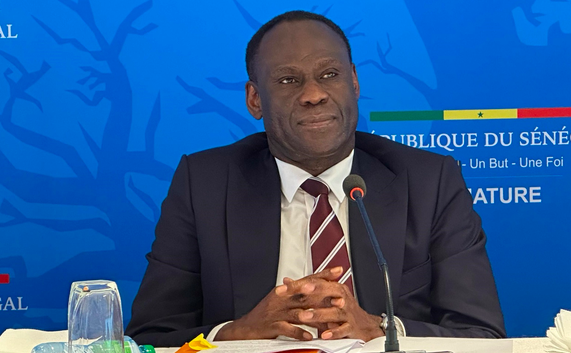
The Senegalese presidency has just announced a major shake-up at the helm of the country’s highest judicial body. In an official statement released on Monday, July 13, 2026, it was revealed that Ousmane Diagne, a seasoned magistrate and former Minister of Justice, has been appointed President of the Constitutional Council.
This appointment, formalized by Decree No. 2026-1318, marks a significant turn in Senegal’s institutional landscape. Ousmane Diagne, who previously held the same position during the early days of President Bassirou Diomaye Faye’s administration, returns to the helm of the council after being excluded from later government reshuffles. His comeback is seen as a strategic reinforcement of the country’s judicial independence.
A career of distinction in law and governance
With a distinguished career spanning decades, Ousmane Diagne brings unparalleled expertise to his new role. Prior to his ministerial position, he served as Attorney General at the Dakar Court of Appeal and First Advocate General at the Supreme Court. His deep understanding of Senegal’s legal framework and constitutional matters positions him as a key figure in safeguarding democratic institutions.
Politically, his tenure as Minister of Justice and Keeper of the Seals during the initial government of Ousmane Sonko was cut short by subsequent cabinet changes. However, his return to the Constitutional Council underscores his enduring influence and the government’s confidence in his leadership.
Succeeding a revered figure in Senegalese justice
Ousmane Diagne takes over from the late Mamadou Badio Camara, whose passing left a void at the heart of the council. Tasked with resolving critical institutional and electoral disputes, the Constitutional Council has played a pivotal role in recent political debates, including the contentious constitutional reform process. With Diagne at its helm, the council is poised to navigate these challenges with renewed authority and clarity.
The president’s decision reflects a commitment to judicial stability and continuity, ensuring that Senegal’s constitutional framework remains robust in the face of evolving political dynamics.