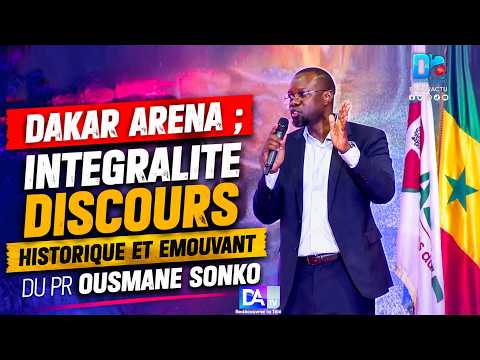
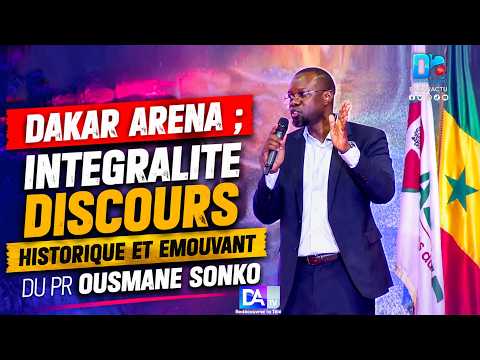
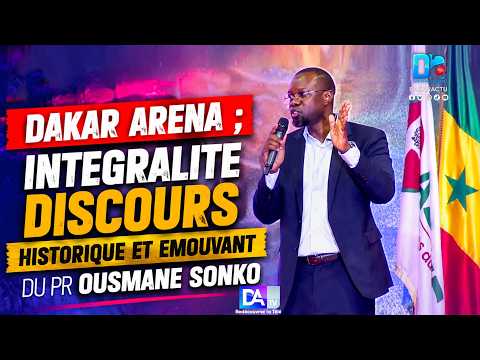
Ousmane Sonko seized the platform of the PASTEF congress at the Dakar Arena to declare an end to the era of unchecked rhetoric within his movement. He unveiled a sweeping overhaul of the party’s foundational approach, signaling a decisive shift toward disciplined, institutionally respectful engagement in Senegal’s political landscape.
Purging divisive language from political discourse
With a firm tone, the PASTEF leader condemned the use of insults, mockery, and derogatory labels, declaring such tactics incompatible with the party’s identity. “Mockery, nicknames, and insults must no longer define PASTEF,” he declared. Sonko framed this stance as both a strategic imperative and a moral obligation, urging his followers to uphold respect for national institutions, traditional leaders, and religious authorities.
This call for restraint comes as Sonko anticipates attempts by opponents to provoke his movement into reckless responses. By promoting a culture of dignity and responsibility, he seeks to fortify PASTEF’s public standing and reinforce its image as a credible force in Senegalese politics.
A bold electoral strategy rooted in grassroots mobilization
Dismissing recent defections among party cadres as insignificant, Sonko outlined ambitious organizational goals designed to saturate Senegal’s political terrain. Central to this plan is the enrollment of one million party members and the establishment of ten thousand local branches across the country.
He ordered his supporters to fan out across Senegal, prioritizing mass voter registration drives. This sweeping mobilization effort positions PASTEF not merely as a protest movement, but as a governing party in the making—one singularly focused on securing victory in upcoming elections.
The new direction reflects a calculated evolution: from activism to institutional engagement, from confrontation to constructive participation. Sonko’s vision for PASTEF is clear—a disciplined, professionalized force ready to lead Senegal into a new political chapter.