Bamako — A Russian-linked paramilitary group in Mali has reported thwarting a major coup attempt over the weekend, involving coordinated attacks across critical military and government sites. The alleged offensive, described as one of the most serious security threats in the Sahel in recent years, targeted key locations including the capital Bamako, the military stronghold of Kati, and northern cities such as Gao, Kidal, and Sévaré.
The group, identified as Africa Corps, estimated that between 10,000 and 12,000 fighters participated in the simultaneous assaults on Saturday. Their statement claimed the attackers sought to seize vital infrastructure, including the presidential palace, military barracks, and a major arms depot in Kati—a central hub for Mali’s armed forces.
Controversial claims and unverified reports
Africa Corps attributed the offensive to a coalition of militant factions, including the Front for the Liberation of Africa and an Al-Qaeda-affiliated group operating in the Sahara. The group also alleged the involvement of Ukrainian mercenaries and indirect support from Western intelligence agencies, though these claims remain unconfirmed. Neither Ukraine nor Western governments have issued immediate responses to the allegations.
According to the paramilitary force, their countermeasures secured all targeted sites and resulted in the neutralization of over 1,000 fighters. However, Mali’s transitional government has not provided independent confirmation or detailed figures regarding the incident.
escalating instability in Mali and the Sahel
If verified, the scale and coordination of the reported attacks would highlight the precarious security situation in Mali, where a military-led administration has struggled to manage a multifaceted insurgency since taking power. Northern regions such as Kidal and Gao have long been contested by separatist and jihadist groups, while Bamako had previously remained largely unaffected by large-scale violence—until now.
The alleged coup attempt coincides with renewed clashes between Tuareg factions and Islamist militants, underscoring the persistent volatility of the Sahel region.
Russia’s growing influence in west africa
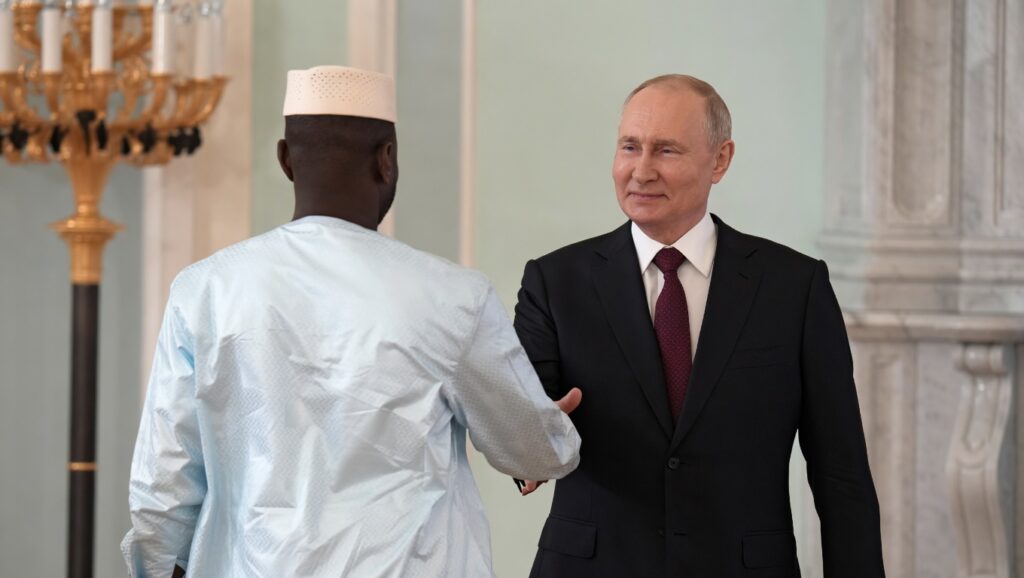
The reported intervention also highlights the expanding role of Russian-linked security actors in West Africa. Following the withdrawal of French forces and reduced Western military engagement, Mali has increasingly relied on paramilitary support from Moscow to combat insurgencies. Africa Corps is widely viewed as part of this shifting security landscape, filling a void left by Western-backed operations.
Analysts suggest this development reflects a broader geopolitical trend, as Russia strengthens its presence in Africa while Western powers reassess their involvement in the region.
strategic implications for regional stability
The alleged coup attempt—whether fully substantiated or not—signals a potential escalation in both domestic instability and international competition across the Sahel. The situation raises critical questions about the future of regional security arrangements, the risk of further fragmentation, and the broader consequences of external interference in African conflicts.
As Mali navigates a delicate political transition, the weekend’s events underscore the ongoing challenge of restoring stability in one of the world’s most volatile regions.